You may recognize this pattern: breakouts that appear at the same time every month, concentrated on the chin, jawline, or lower cheeks. It's not a coincidence - it's hormonal acne, and it follows a precise pattern.
What exactly is hormonal acne?
Hormonal acne differs from classic acne in its location (lower face, jawline, neck) and timing: it generally intensifies during the week before your period, due to falling estrogen levels and a relative increase in androgens.
These androgens - including testosterone - stimulate the sebaceous glands, increase sebum production, and promote hyperkeratinization (a buildup of dead cells that clogs pores). The result: comedones, inflammatory papules, and sometimes painful cysts.
This type of acne affects both teenage girls and women aged 25 to 40, often cyclically.
The biological mechanisms involved
Three main factors intertwine:
- Excess sebum - stimulated by androgens, it creates an environment conducive to bacterial proliferation.
- Inflammation - Cutibacterium acnes triggers a local immune response that transforms a comedone into an inflammatory pimple.
- Oxidative stress - it worsens skin inflammation and slows healing.
There can also be increased sensitivity of androgen receptors in skin cells, independently of circulating hormone levels.
What nutrition can do for your skin
Diet directly influences the hormonal and inflammatory environment. High-glycemic-index foods cause insulin levels to spike, which in turn stimulates androgen production - a well-documented vicious cycle. Conversely, certain nutrients act as natural regulators.
Zinc is the most studied: it inhibits 5-alpha-reductase (the enzyme that converts testosterone into DHT, which is more active in the skin), reduces inflammation, and supports healing. Controlled studies show a significant reduction in acne lesions with zinc supplementation.
Actrisave®: a plant-based synergy studied for hormonal acne
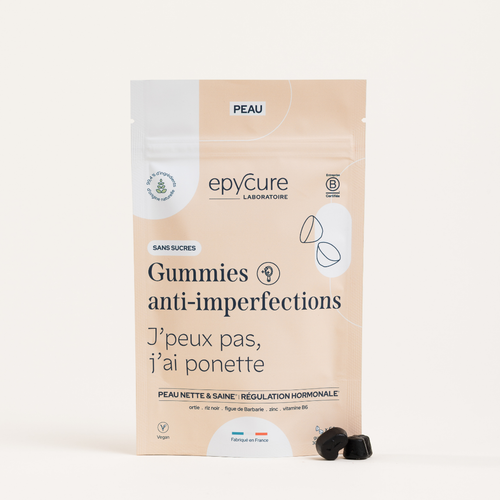
Beyond zinc, recent research has focused on botanical complexes capable of acting on several mechanisms simultaneously. This is the case with Actrisave®, a patented synergy of black rice and prickly pear, found in Epycure anti-blemish Gummies.
Black rice is naturally rich in anthocyanins (polyphenolic pigments with strong antioxidant properties) that neutralize free radicals involved in skin inflammation. Prickly pear (Opuntia ficus-indica) provides flavonoids that modulate sebum production.
In vitro and clinical studies have shown that Actrisave® helps reduce blemishes, regulate sebum, and improve skin radiance.
The role of vitamin A (beta-carotene)
Vitamin A is essential for skin cell renewal. Its precursor, plant-based beta-carotene, provides a safe, gradual intake without the risk of overdose. It supports keratinocyte differentiation and limits hyperkeratinization - one of the factors that triggers acne.
Incorporating an inside-out approach into your routine
Topical treatments (serums, creams, acids) work on the surface. Micronutrition works at the source - on sebum production, systemic inflammation, and hormonal balance. The two approaches are complementary, not competing.
For visible results, you should allow 8 to 12 weeks of regular use: this is the time required for one complete skin renewal cycle. Consistency matters more than occasional dosing.
What to remember
Hormonal acne is not inevitable. Understanding its mechanisms - sebum, inflammation, androgens - makes it possible to choose active ingredients that genuinely target these factors. Zinc, Actrisave® anthocyanins, and vitamin A form a coherent trio to support skin from within, alongside your topical routine and a low-glycemic-load diet.
💙 Our Epycure solutions
→ Anti-blemish Gummies - Actrisave®, zinc, and vitamin A in a daily gummy format
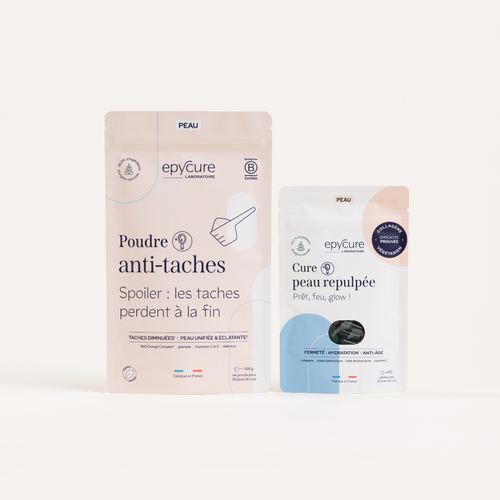
→ Beautiful Skin Duo - gummies + plumping skin treatment for comprehensive action