Pimples that appear just before your period, skin that becomes shinier during times of stress, blemishes that come back even when your skincare routine is perfect... If this sounds familiar, you’re probably dealing with hormonal acne. A type of acne that isn’t treated like other forms — because it doesn’t come from the outside, but from within.
What is hormonal acne and why does it appear?
Hormonal acne is directly linked to hormonal fluctuations, particularly androgens — hormones present in all women, but which can become excessive or imbalanced at certain points in the cycle. These fluctuations stimulate the sebaceous glands, which then produce too much sebum. This excess sebum clogs pores, creates an environment conducive to bacterial growth and triggers an inflammatory response. The result: red, inflamed, sometimes painful pimples.
Hormonal acne can easily be recognized by a few specific signs:
- cyclical breakouts (before your period, around the middle of your cycle);
- breakouts on the lower face, chin and jawline, sometimes on the back or décolleté;
- skin that becomes shinier during the premenstrual phase;
- blemishes that persist into adulthood, often after stopping the pill.
It affects both teenagers and adult women, and can be worsened by stress, which increases cortisol production and further disrupts hormonal balance.
Habits that make a real difference
Certain daily adjustments can help reduce hormone-related blemishes. When it comes to diet, limit foods with a high glycemic index (refined sugar, white flour, excess dairy), which tend to increase inflammation and sebum production. Choose vegetables, healthy fats (avocado, olive oil, oily fish) and foods rich in zinc.
For your skincare routine, choose non-comedogenic formulas, avoid over-cleansing your skin (which stimulates even more sebum production) and use targeted active ingredients such as salicylic acid or topical niacinamide.
But these approaches work on the surface. To address hormonal causes, you need to act from within.
How to choose a supplement for hormonal acne
The goal of a targeted supplement is threefold: rebalance hormonal activity, regulate sebum production and reduce inflammation. A few key ingredients to look for:
- Targeted plant extracts that act on 5-alpha-reductase, the enzyme involved in the stimulation of the sebaceous glands by androgens;
- Zinc — an essential trace element for acne-prone skin;
- Vitamin B6 — for its role in hormonal balance;
- A naturally derived formula, free from endocrine disruptors and vegan where possible.
Epycure’s Beautiful Skin Duo: act from within on acne and skin aging
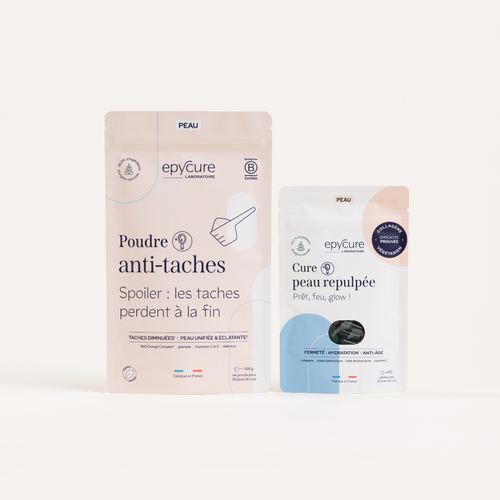
At Epycure, we developed two complementary products to care for your skin from within, which we have combined in the Beautiful Skin Duo.
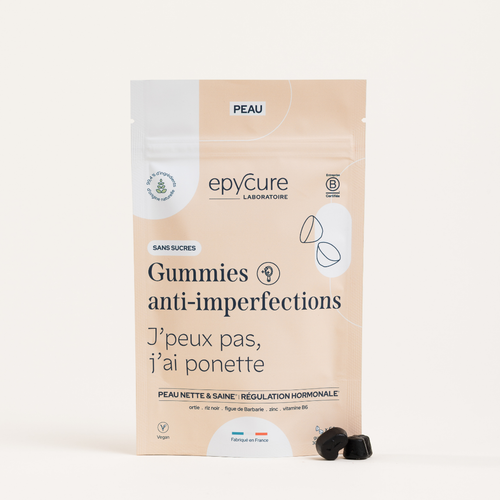
The Anti-Blemish Gummies are formulated with Actrisave®, an exclusive synergy of black rice & prickly pear developed specifically for blemish-prone skin:
- Prickly pear is rich in isorhamnetin, a flavonoid that helps rebalance the androgenic hormones involved in hormonal acne;
- Black rice provides anthocyanins with antioxidant properties, which help prevent sebum oxidation and limit pore clogging.
The formula also contains zinc (10 mg, 100% of the daily recommended intake), which contributes to the maintenance of normal skin, nettle, which helps problem skin by contributing to clear skin, and vitamin B6, which contributes to the regulation of hormonal activity.
Results from the Lab’Epycure (26 people, 3 months): 85% felt their skin looked better, 73% had fewer cysts and microcysts, and 73% found the treatment effective for their blemishes.
The Plumped Skin Treatment, included in the duo, provides complementary support for firmness and hydration thanks to the Reggenerate™ complex (eggshell membrane, a source of collagen, elastin and hyaluronic acid), combined with vitamin C, which contributes to normal collagen formation. 97% of Lab’Epycure participants had more hydrated skin after 3 months.
Both formulas are made in France, contain more than 95% naturally derived ingredients, are vegan (for the Gummies) and gluten-free.
In summary
Hormonal acne isn’t treated with more creams. It’s treated by restoring hormonal balance from within. With the right active ingredients — precisely dosed, patented and synergistic — your skin can gradually and sustainably regain its balance. Take care of yourself, without overcomplicating things.