Painful periods: how to naturally reduce menstrual cramps and pain
Painful periods - or dysmenorrhea - affect between 50 and 80% of women of childbearing age. For some, the pain is mild and manageable. For others, it is debilitating: intense abdominal cramps, lower back pain, nausea, headaches, and fatigue. Yet this pain is not inevitable. Natural solutions exist, and they are effective.
Why are periods painful?
Dysmenorrhea is mainly caused by prostaglandins, pro-inflammatory molecules produced by the uterine lining at the end of the cycle. They trigger the uterine contractions that enable the expulsion of the endometrium. But in excess, they cause painful spasms and can lead to vasoconstriction, worsening the pain.
There are two types of dysmenorrhea: primary dysmenorrhea (the most common type, with no identifiable pathological cause) and secondary dysmenorrhea (associated with an underlying condition: endometriosis, fibroids, adenomyosis).
Symptoms associated with painful periods
- Lower back and lumbar pain
- Nausea, sometimes vomiting
- Headaches or migraines
- Severe fatigue
- Bloating and digestive problems
- Irritability and mood swings (linked to hormonal fluctuations)
During its acute phase, this group of symptoms is referred to as premenstrual syndrome (PMS).
Natural strategies for relieving painful periods
1. Local heat
A hot-water bottle or heating patch placed on the lower abdomen relaxes the uterine muscles and reduces spasms. Studies show that heat can be as effective as ibuprofen for mild to moderate cramps.
2. An anti-inflammatory diet
A diet rich in omega-3s (oily fish, flax seeds, walnuts) tends to reduce the production of pro-inflammatory prostaglandins. Choose: salmon, sardines, turmeric, ginger. Reduce: alcohol, refined sugars, ultra-processed foods.
3. Physical exercise
Moderate physical activity releases endorphins that act as natural painkillers. Yoga, walking, and swimming are particularly well tolerated during periods.
4. Stress reduction
Cortisol can heighten sensitivity to pain and disrupt cycle hormones. Heart coherence, meditation, and relaxation techniques are valuable allies.
The best-documented natural ingredients for menstrual comfort
Shatavari (Asparagus racemosus)
Used for thousands of years in Ayurvedic medicine, shatavari is an adaptogenic plant whose steroidal saponins have phytoestrogenic activity. Thanks to its natural anti-inflammatory and antispasmodic properties, it helps relieve cramps and pelvic pain while contributing to emotional stability.
Lady's mantle (Alchemilla vulgaris)
Lady's mantle is a plant recognized in herbal medicine for its soothing properties in the gynecological sphere. It helps regulate the menstrual cycle and contributes to reducing the pain usually experienced during the cycle.
Magnesium
Magnesium acts as a natural muscle relaxant: it reduces the intensity of cramps, helps reduce fatigue, and supports nervous system balance during PMS.
Vitamin B6
Vitamin B6 plays a key role in hormonal regulation and helps ease irritability and mood swings associated with PMS.
Zinc
Zinc supports nervous system function and contributes to managing the emotional tension associated with hormonal fluctuations during the cycle.
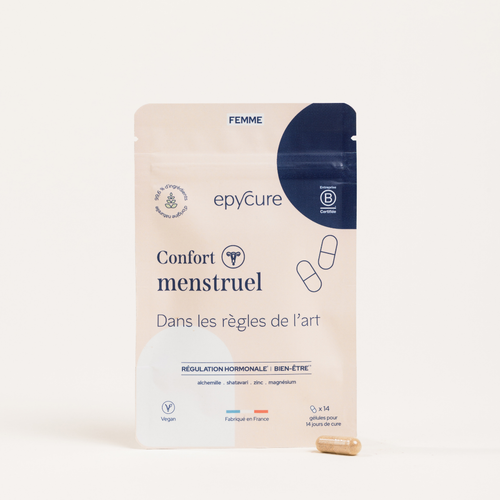
Epycure Menstrual Comfort Course
The Menstrual Comfort Course combines shatavari (the key ingredient, adaptogenic and phytoestrogenic), lady's mantle (soothing and cycle-regulating), magnesium (muscle relaxant), vitamin B6 (hormonal and nervous system balance), and zinc (emotional support). Targeted dual action: physical comfort and emotional balance, to help you experience every phase of your cycle more comfortably.
Take it 1 week before the start of your period and 1 week afterward, for at least 3 cycles. Lab'Epycure results: 74% of testers felt a reduction in their abdominal cramps, and 72% felt more in control of their emotions.
What to remember
Painful periods are common, but they can be managed. A combined approach - an anti-inflammatory diet, stress management, local heat, and targeted natural ingredients - can radically improve menstrual comfort. In cases of severe pain, a gynecological consultation remains essential to rule out endometriosis.
Food supplements. They should not be used as a substitute for medical treatment. If you experience severe menstrual pain, consult your gynecologist. Not recommended for children under 12.