Every month, millions of women experience the same symptoms: abdominal cramps, tender breasts, mood swings, and unexplained fatigue in the days leading up to their periods. Premenstrual syndrome (PMS) is real, measurable, and yet often trivialized. Here is what science understands about this mechanism - and what can be done.
PMS: a well-defined hormonal phenomenon
Premenstrual syndrome refers to all the physical and emotional symptoms that appear during the luteal phase - that is, after ovulation and before the period - and disappear within the first few days of the following cycle. This timing is the main diagnostic criterion.
It affects between 50 and 80% of women of childbearing age, with highly variable intensity. In its severe forms, it is called premenstrual dysphoric disorder (PMDD), which significantly affects quality of life.
Why do these symptoms occur?
The luteal phase is marked by a rise in progesterone, followed by an abrupt drop in the two main hormones (estrogen and progesterone) if pregnancy does not occur. This hormonal decline triggers several cascade reactions:
- Prostaglandin production - these pro-inflammatory molecules cause the uterus to contract to shed its lining, leading to cramps. Some women produce them in excess.
- Serotonin fluctuations - estrogen influences serotonin metabolism. Its decline may explain mood swings, irritability, and sadness.
- Water retention - hormonal fluctuations affect the sodium/potassium balance, promoting bloating and a feeling of swelling.
- Magnesium deficiency - frequently observed in studies of women with pronounced PMS, magnesium plays a role in muscle relaxation and serotonin synthesis.
Menstrual pain (dysmenorrhea): a different mechanism
Primary dysmenorrhea - cramps without an identified organic cause - is distinct from PMS, although they often coexist. It is directly linked to the concentration of uterine prostaglandins (particularly PGF2α and PGE2), which cause painful contractions.
In women with severe dysmenorrhea, the concentrations of these prostaglandins are significantly higher. An anti-inflammatory diet and certain medicinal plants may help modulate their production.
Shatavari: the adaptogenic plant for the female cycle
Asparagus racemosus, known as Shatavari, is a root plant used for centuries in Ayurvedic medicine as a female tonic. Its Sanskrit name literally means “the one with a hundred roots” - a reference to its ability to support and nourish.
It contains steroidal saponins (shatavarins) with a structure similar to phytoestrogens - plant molecules capable of binding to estrogen receptors in a modulating manner. Unlike synthetic estrogens, they have an adaptogenic effect: they help the body adapt according to its needs.
Clinical studies on Shatavari show beneficial effects on:
- Menstrual cycle regularity
- The intensity of premenstrual and menstrual pain
- Emotional balance during the luteal phase
- Cycle-related fatigue
Saffron: the “mood spice”
Saffron (Crocus sativus) is attracting growing interest in herbal medicine for its effects on mood. It contains crocin and safranal, which interact with the brain’s serotonergic and dopaminergic systems.
Several randomized controlled clinical trials have assessed its effects in the context of PMDD and PMS with an emotional component. The results are encouraging: reduced premenstrual irritability, sadness, and anxiety compared with placebo.
Lifestyle and diet: complementary approaches
Studies show that certain dietary adjustments can reduce the intensity of PMS:
- Reducing salt during the luteal phase limits water retention and bloating.
- Limiting alcohol and caffeine reduces breast tenderness and premenstrual sleep disturbances.
- Increasing omega-3 intake (oily fish, flaxseeds): they moderate the production of pro-inflammatory prostaglandins.
- Maintaining regular physical activity: even moderate exercise reduces pain and improves emotional balance through the release of endorphins.
When should you consult a doctor?
If menstrual pain is severe or disabling, or if PMS significantly disrupts your daily life, it is important to consult a doctor or gynecologist. Endometriosis or another underlying condition may mimic or worsen these symptoms and requires specific diagnosis and treatment.
Micronutrition and herbal medicine are useful complements, not substitutes for appropriate medical care.
What to remember
PMS and menstrual pain are biological realities, not simply discomfort to be “endured.” Ingredients such as Shatavari, saffron, and magnesium have been studied for their ability to support menstrual comfort by acting on several mechanisms: hormonal balance, inflammation, mood, and muscle relaxation. Regular use for at least two cycles is necessary to assess their effects.
💙 Our Epycure solutions
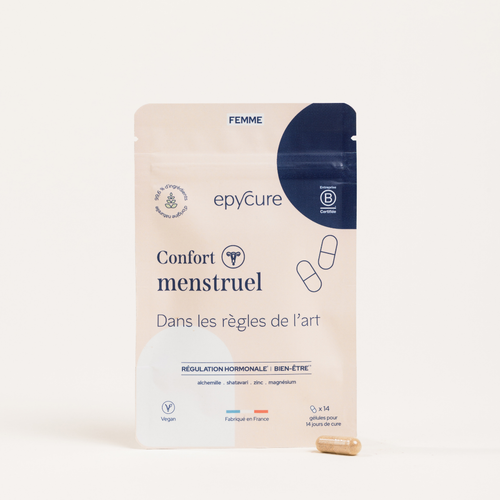
→ Menstrual comfort program - Shatavari, saffron, and magnesium to support your cycle every day