Abdominal cramps, tender breasts, unexplained irritability, uncontrollable sugar cravings, bloating: if these symptoms appear regularly in the days before your period, you may be experiencing premenstrual syndrome. PMS affects more than 80% of women at some point in their lives. It’s not “all in your head” - it’s hormonal, and above all, it can be managed.
Understanding premenstrual syndrome
PMS occurs during the luteal phase of the cycle, meaning the 7 to 14 days before your period. It is directly linked to the hormonal fluctuations characteristic of this period: progesterone rises and estrogen drops after ovulation. These fluctuations influence serotonin, a key neurotransmitter involved in emotional balance, which explains mood swings and irritability. They also affect water retention and pain sensitivity.
The most common symptoms fall into two categories. Physical: abdominal cramps, breast tenderness, headaches, bloating, fatigue, water retention. Emotional: irritability, anxiety, mood swings, difficulty concentrating, feelings of sadness.
For some women, symptoms can extend throughout their period and may be particularly intense with conditions such as PCOS (polycystic ovary syndrome) or endometriosis.
Natural approaches to better manage your cycle
Several non-drug approaches can help reduce PMS symptoms. Diet plays a significant role: reduce salt (which promotes water retention), limit caffeine and alcohol, and prioritize foods rich in magnesium (dark chocolate, nuts and seeds, green vegetables) and calcium.
Regular physical activity - even gentle exercise such as walking or yoga - helps reduce cortisol levels, stimulate endorphins and improve intestinal motility, reducing cycle-related bloating.
In herbal medicine, certain plants have a long history of use for women’s well-being and are beginning to be studied scientifically. Adaptogenic plants, in particular, help the body better regulate hormonal and emotional responses to cycle fluctuations.
Choosing the right supplements for PMS
Several active ingredients have shown potential in managing PMS. Magnesium is probably the best documented: it contributes to normal psychological function and helps reduce fatigue, two aspects directly affected by PMS. Vitamin B6 plays a role in regulating hormonal activity and the normal functioning of the nervous system, which may help stabilize emotional balance.
Among plants, lady’s mantle (Alchemilla vulgaris) is traditionally used in Europe for menstrual comfort: it helps regulate the menstrual cycle and contributes to reducing the pain usually experienced during the cycle. Shatavari (Asparagus racemosus), an adaptogenic plant used in Ayurvedic medicine, is also promising thanks to its steroidal saponins, which have phytoestrogenic activity and help modulate hormonal imbalances during the cycle.
Consistency is key: results for menstrual comfort generally require 2 to 3 cycles of supplementation to become firmly established.
Epycure’s solution for menstrual comfort
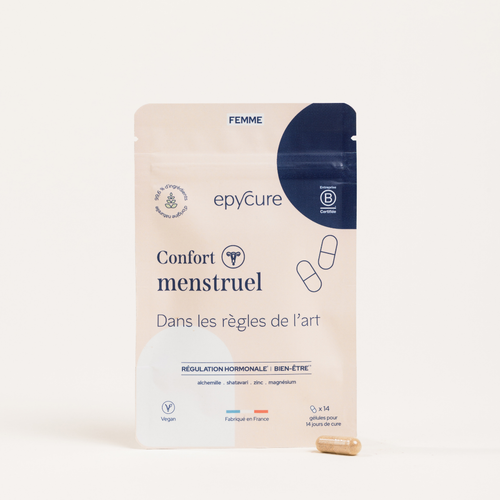
Epycure’s Menstrual Comfort Course was designed to address both physical discomfort and emotional balance throughout the cycle.
Its key active ingredient is shatavari (135 mg), an adaptogenic plant with phytoestrogenic and anti-inflammatory properties that helps rebalance hormonal fluctuations during the cycle, relieve cramps and soothe PMS-related irritability. It is combined with lady’s mantle (100 mg), which helps regulate the menstrual cycle and contributes to reducing the pain usually experienced during the cycle. Magnesium (56.25 mg) promotes muscle relaxation, contributes to normal psychological function and helps reduce fatigue. Vitamin B6 (1.4 mg) contributes to regulating hormonal activity and the normal functioning of the nervous system.
The formula is made with 99.6% ingredients of natural origin, with no hormones or known endocrine disruptors. Take 1 capsule per day for 2 weeks - starting 1 week before your period. Made in France, B Corp certified.
The Lab'Epycure results: 74% of women experienced a reduction in their discomfort and abdominal cramps, while 72% felt more in control of their emotions (31 women tested over 3 cycles). Effects increase from the first cycles and become more established from the 3rd cycle.
✨ Our Epycure solutions