Abdominal cramps, tender breasts, sudden irritability, bloating… If these symptoms occur every month in the days leading up to your period, you are among the 75% of women affected by premenstrual syndrome (PMS). It’s not “all in your head.” It’s biological. And it can be treated.
Understanding premenstrual syndrome
PMS refers to all the physical and emotional symptoms that occur during the luteal phase of the cycle, 1 to 2 weeks before your period. They generally disappear when menstruation begins.
The main cause: an imbalance between estrogen and progesterone during the luteal phase. When estrogen levels are relatively high compared with progesterone, several effects combine: water retention (responsible for bloating and temporary weight gain), nervous system hypersensitivity (irritability, anxiety, mood swings), and increased uterine contractility (cramps).
Other factors can worsen PMS: chronic stress (which raises cortisol and disrupts hormonal balance), magnesium and B-vitamin deficiencies, and a diet high in fast-acting sugars and low in fiber.
The most common symptoms
PMS affects women differently. The most common physical signs include abdominal and pelvic pain, breast tenderness, bloating, fatigue, headaches, and sleep problems. Emotional symptoms include irritability, anxiety, unexplained sadness, difficulty concentrating, and intense sugar cravings.
In severe cases - PMDD (premenstrual dysphoric disorder) -, these symptoms can be debilitating. Women with PCOS or endometriosis often experience more intense PMS.
Natural solutions for managing your cycle better
Several lifestyle adjustments can significantly reduce symptoms.
Reducing sugar and salt during the luteal phase helps limit water retention and cravings. Increasing foods rich in magnesium (dark chocolate, bananas, green vegetables) supports muscle and nervous system relaxation. Limiting caffeine and alcohol reduces nervous tension and headaches.
Moderate exercise (walking, yoga, swimming) releases endorphins and reduces cramps. Applying heat to the lower abdomen relieves uterine contractions. Managing stress through cardiac coherence or meditation directly influences hormonal balance.
Among herbal remedies, lady’s mantle is recognized for regulating the menstrual cycle and helping reduce pain. Shatavari, an Ayurvedic adaptogenic plant, has phytoestrogenic properties that help rebalance female hormones.
Choosing the right supplements for PMS
Dietary supplements can play a valuable role, provided they are properly formulated.
Female adaptogenic plants. Shatavari, lady’s mantle, chasteberry… These plants act on hormonal balance. Check that they are used at clinically relevant doses, rather than being underdosed as in many generic supplements.
Magnesium. Essential for muscle and nervous system relaxation. A magnesium deficiency directly increases premenstrual cramps and irritability.
Vitamin B6. It helps regulate hormonal activity and supports normal nervous system function. It is particularly beneficial during the premenstrual phase.
The logic behind a cycle-based course. The best PMS supplements should be taken strategically around the luteal phase, not necessarily all month long.
Epycure’s solution for menstrual comfort
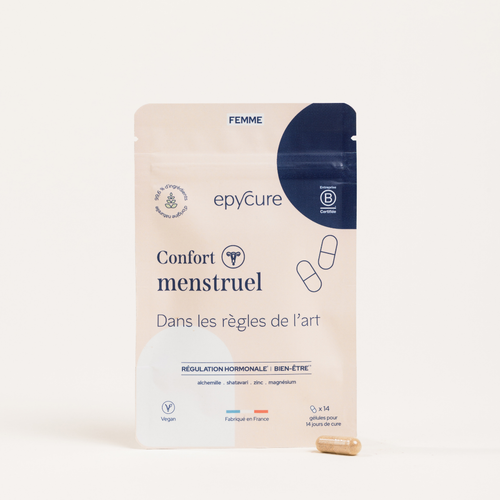
Epycure’s Menstrual Comfort Course was specifically formulated for women experiencing menstrual pain, intense PMS, or difficult cycles.
Its key ingredient: shatavari (Asparagus racemosus) at 135 mg. Used for thousands of years in Ayurvedic medicine, it acts on three levels thanks to its steroidal saponins (shatavarin IV): hormonal rebalancing, pain reduction through its natural anti-inflammatory properties, and emotional stability.
The formula combines:
- Lady’s mantle (100 mg) - helps regulate the menstrual cycle and contributes to reducing pain experienced during the cycle
- Magnesium (56.25 mg) - contributes to normal psychological function and helps reduce fatigue
- Vitamin B6 (1.4 mg) - helps regulate hormonal activity and supports normal nervous system function
Cycle-based instructions: 1 capsule per day, starting 1 week before your period and continuing for 1 week afterward. Results are expected from cycles 1 and 2 for pain, and from cycle 3 for irritability and mood swings.
Lab'Epycure results: 74% experienced a reduction in their discomfort, including abdominal cramps, and 72% felt more in control of their emotions - based on 31 women tested over 3 cycles.
Formulated with 99.6% ingredients of natural origin, without hormones or known endocrine disruptors, made in France, and B Corp certified. Compatible with the contraceptive pill.
Conclusion
PMS deserves better than “it’s normal, just put up with it.” With the right tools - a healthy lifestyle, targeted adaptogenic plants, magnesium, and B vitamins - it is possible to get through each cycle with much greater comfort. Taking care of your cycle simply means taking care of yourself.
📚 You may also like