Did you know that we spend about 25 years of our lives sleeping?
For the lucky ones, sleep comes naturally: all they have to do is rest their head on a pillow to drift off. Unfortunately, we are not all equal when it comes to sleep: there are early birds and night owls, “light” and “heavy” sleepers, and finally “good” and “poor” sleepers.
Although getting enough sleep is essential, sleep quality is an indispensable factor in waking up rested and energized. Indeed, failing to listen to your body is the best way to cause a general disruption to your health: concentration and mood disorders, reduced immunity, hormonal imbalance, difficulty remembering and learning…
According to the Ameli website, one in two French people suffered from sleep disorders in 2022, a figure that has been steadily increasing for years.
For a very long time, people have praised the benefits of plants for addressing these disorders. Some plants have stood out and can be highly effective when used appropriately.
Sleep disorders with various causes
Sleep disorders can occur for various reasons: stress, anxiety, heavy meals, intense physical exertion before bedtime, physical pain, sleep apnea, worries and ruminating thoughts… There are many factors, which makes it one of the most common disorders in France.
Identifying the cause of these disorders, as well as their effects, such as their frequency, duration, timing or even the way they manifest - when falling asleep, through nighttime awakenings or difficulty waking up - would make it possible to select the plant best suited to your situation.
Herbal medicine is the most natural way to achieve restful, deep sleep. Thanks to it, you can forget restless nights and enjoy better health.
What are the best plants for getting back to sleep?
Valerian
This plant, native to Europe, has been used since Antiquity for its medicinal properties, including sedative, hypnotic and calming benefits. Several doctors have agreed on its usefulness against sleep disorders, demonstrating its effects in treating insomnia and anxiety. Also known as “cat’s herb,” it is traditionally used for nervousness and palpitations.
Its effect on sleep is recognized by major health organizations, although, as a precautionary measure, its use is not recommended for pregnant or breastfeeding women, children under 12 and people with liver disorders. It can be consumed as a supplement or as an herbal tea, prepared as a decoction, with up to 9 g of powder added per day.
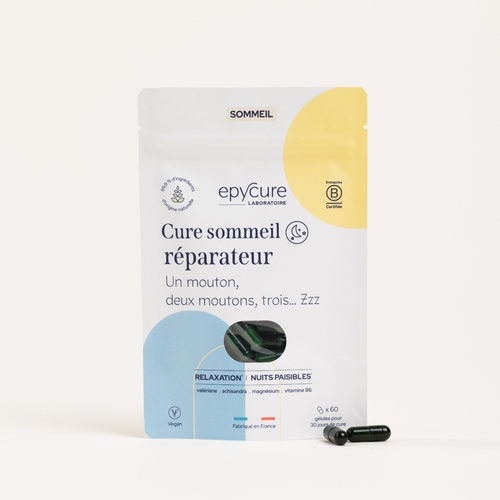
It is because of its proven effects that we chose to include it in our Peaceful & Serene Sleep Course, so it can help you every day while making it easier to use.
Passionflower
Native to Mexico, its leaves are traditionally used for their sedative properties against insomnia, anxiety and palpitations. According to studies, certain components, particularly alkaloids and maltol, may be responsible for its sedative and analgesic effects.
It is found in many supplements, often combined with hawthorn, another sedative plant. It can also be consumed as an infusion by steeping it for 30 minutes and drinking it about 1 hour before bedtime.
However, its use is not recommended for pregnant or breastfeeding women or children under 12.
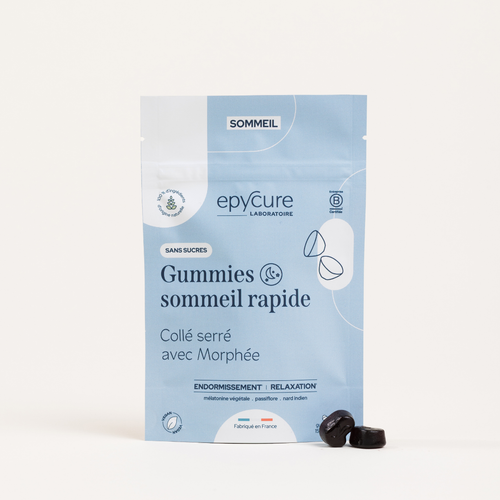
No more need to drink an herbal tea that will make you want to get up during the night because of an urgent need to urinate: you can find passionflower in our Gummies for fast sleep.
St. John’s wort
It is one of the most studied plants for its benefits, and its use in treating depressive states and sleep disorders is widely recognized. Its composition makes it particularly interesting due to the presence of plant-based melatonin. This hormone, often synthetic in origin, therefore becomes a preferred ingredient for the natural treatment of sleep disorders.
Whether used as an oil for topical application or as an herbal tea, its effects are felt after 2 to 4 weeks of use. For easier use, you can also choose our Gummies for fast sleep, which contain St. John’s wort! However, it is not recommended during pregnancy or breastfeeding or for children under 6, as a precautionary measure.
Hawthorn
In herbal medicine, its flowers are used for their beneficial effects on sleep disorders and heart rhythm disorders, nervousness and palpitations. Traditionally used, it demonstrates sedative effects on mild sleep disorders when up to 8 g of its dried flowers are consumed per day.
However, its use is not recommended for pregnant or breastfeeding women or children under 12.
Eschscholzia
Also known as California poppy, this plant is commonly used for anxiety, sleep disorders and nervousness. The alkaloids naturally present in its composition help reduce stress. Found in herbal teas, decoctions and capsules, it is recommended for insomnia and nighttime awakenings. However, it is contraindicated for pregnant or breastfeeding women and young children as a precautionary measure.
Chamomile
Whether in oil, tea or extract form, chamomile is found in many recipes to combat sleep disorders. Used as a traditional home remedy, its effects have nevertheless been demonstrated, particularly its soothing, sedative and analgesic qualities. It is also interesting because pregnant or breastfeeding women and children under 15 are contraindicated only when it is used in the form of essential oils. As an herbal tea, everyone can consume it.
Lemon balm
It has been used since Ancient Greece as a remedy for stomach aches. Its use has expanded to sleep disorders by relieving nervousness and anxiety. Since then, numerous studies have been conducted to scientifically prove its effectiveness and have established its relaxing effect.
The recommended dosage is 1.5 to 4.5 g of lemon balm powder, one to three times a day.
In the absence of evidence of safety, pregnant and breastfeeding women as well as children under 12 are advised not to consume it.
Lavender
It is widely used in aromatherapy for people who are ill and suffering from sleep disorders. Its benefits can be harnessed thanks to the volatile compounds in its essential oil. It is therefore very easy to use: drops on the pillow, spray in the bedroom or in the bath - it can be placed anywhere you want to feel relaxed and ready to fall asleep.
Hops
In Europe, it is primarily used to make beer. In herbal medicine, hops have proven useful for relieving sleep disorders and nervousness thanks to their sedative and hypnotic properties.
For a sleep disorder, it is recommended to consume 10 g as an herbal tea at least one hour before bedtime for optimal effects. However, its use is not recommended for pregnant or breastfeeding women or children under 12 as a precautionary measure.
Verbena
For centuries, it has been recognized for its medicinal properties against pain and stress- and sleep-related disorders, as well as for digestion. Its benefits in treating sleep disorders have been studied and scientifically proven, particularly in terms of improving sleep quality and reducing stress. However, using verbena requires particular care, especially for pregnant or breastfeeding women, and because of its interactions with medications.
These plants therefore provide a natural, non-habit-forming alternative to chemical sleeping pills, while allowing us to remain in control of our sleep. You can find some of these plants in our dietary supplements, particularly the Peaceful & Serene Sleep Course as well as our newest product: Gummies for fast sleep to provide you with peace and calm while preserving the natural approach you are looking for.📚 Read also
✨ Our Epycure solutions