Digestion is often thought of as a simple step between the moment we eat and the moment we go to the bathroom. But its role goes far beyond that: it transforms the food we eat into components small enough to be absorbed and used by the body, then eliminates what it does not need. Thanks to this process, the body can obtain the energy and nutrients it needs every day to function, build and repair tissues, and keep the immune system running.
The journey of food, in brief
Food passes through the entire digestive system, and each stage has its role. It all starts in the mouth, where chewing and saliva break food into small pieces and begin transforming it. The stomach then takes over to continue breaking it down, before the small intestine absorbs most of the nutrients. Anything that has not been absorbed finally reaches the colon, where the gut microbiota completes the fermentation process before elimination. One food, several organs, one goal: extract what is useful and get rid of the rest.
When digestion is temporarily disrupted
Certain situations, even when there is nothing concerning, can be enough to make digestion temporarily less comfortable:
- Travel or a change in routine: a different diet, altered schedules, disrupted sleep, different hydration habits... all changes to which the digestive system may react.
- An illness or digestive infection: it can disrupt the mucous membrane, the intestinal barrier, the microbiota, or digestive function as a whole.
- Antibiotic treatment: designed to eliminate certain bacteria responsible for infections, it may also affect some of the microbiota bacteria along the way, temporarily altering its composition.
- Excessive alcohol consumption: it can damage the cells lining the intestine and the junctions connecting them, which may increase the permeability of the intestinal barrier.
- Certain medications: some can slow transit, while others can cause softer stools or diarrhea.
Nor should every heavy meal be turned into a digestive problem: one particularly rich meal, a few days of eating differently, or a more stressful period may, on their own, be enough to make digestion temporarily less comfortable.
Good habits when discomfort is temporary
At times like these, a few simple habits can already help a lot: eat more slowly, chew thoroughly, drink enough, move around a little after meals, and choose lighter meals if your stomach is sensitive.
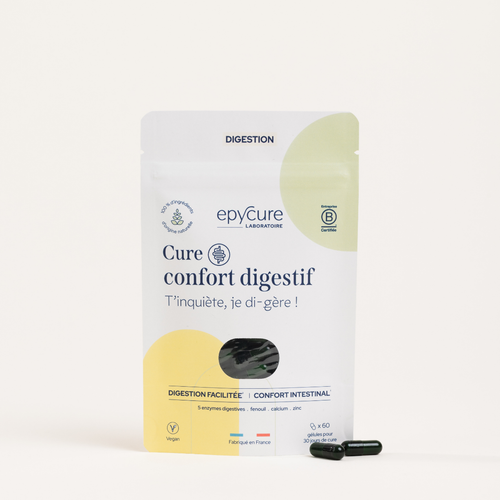
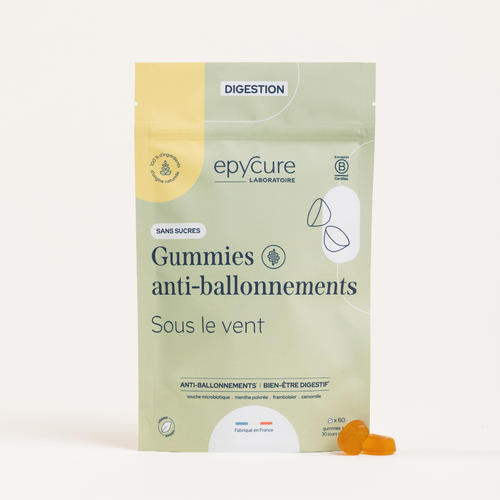
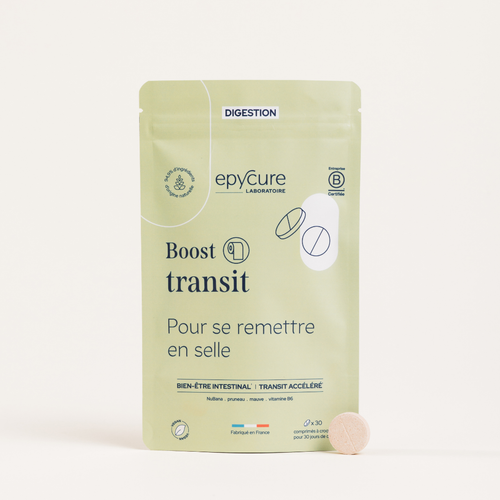
Need an extra boost? After a heavy meal or in case of bloating, digestive enzymes can support the digestion of proteins, carbohydrates, and fats. For faster, targeted relief from bloating, Gummies designed to help you feel lighter can help. And if your transit is slower than usual, a solution like Transit Boost can gently help speed things up.
Key takeaways
Temporary digestive disruption is, most of the time, nothing to worry about: it is simply reacting to a particular situation. The important thing is to identify what may have triggered it and give it time to return to its usual rhythm, while supporting it with a few good habits.
✨ Our Epycure solutions
- Digestive Comfort Course — digestive enzymes to support the digestion of heavy or rich meals.
- Anti-Bloating Gummies — to quickly relieve a bloated stomach and bloating.
- Transit Boost — to gently speed up slow transit.