Bloating after lunch, a feeling of abdominal pressure in the evening, gas arriving at the worst possible time... Bloating affects a large part of the population, often chronically. It doesn’t have to be this way.
Understanding why your stomach becomes bloated is the first step toward effectively addressing it.
Understanding bloating: what’s really happening
Bloating is the result of gas accumulating in the intestine. These gases are naturally produced during digestion, particularly when bacteria in your microbiome ferment food. The problem occurs when this production becomes excessive or when the gas has difficulty being expelled.
The main causes:
- Eating too quickly — air swallowed while eating builds up in the digestive tract
- Certain fermentable foods — legumes, cabbage, leeks, onions
- An imbalanced microbiome — too many harmful bacteria excessively ferment food
- Stress — it disrupts intestinal motility and can cause spasms
- Hormonal fluctuations — particularly around your period, when progesterone slows digestion
- Food intolerances — lactose, gluten or fructose that are poorly tolerated
Identifying your personal triggers is essential. Keeping a food diary for 2 weeks can be very revealing.
Natural solutions for bloating
- Eat slowly — digestion begins in the mouth. Chew well and put your fork down between each bite.
- Space out your meals — leaving 4 to 5 hours between meals gives your digestive system time to reset.
- Limit carbonated drinks — a direct source of swallowed air.
- Move after meals — even a 10-minute walk supports digestion and reduces gas.
- Manage stress — the gut-brain axis is real. A tense gut produces more gas.
When it comes to plants, peppermint (as an infusion after meals) and chamomile are known for their antispasmodic properties. Ginger stimulates the production of digestive enzymes.
Choosing the right supplements for bloating
- The probiotic strain — not all strains act on bloating. Choose those specifically studied for this purpose, supported by clinical studies.
- Antispasmodic plants — chamomile and peppermint have recognized claims relating to digestive comfort.
- Fast and lasting action — choose a product that works as a long-term course and can also be taken occasionally after a heavy meal.
- Natural ingredients — without unnecessary additives, in a format that is pleasant to take every day.
The Epycure solution: anti-bloating Gummies
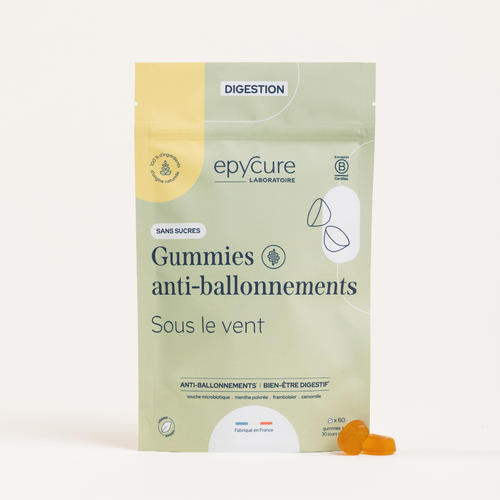
Epycure anti-bloating Gummies are formulated with the probiotic strain Bifidobacterium breve DSM 16604, whose effectiveness in reducing intestinal gas has been demonstrated in numerous clinical studies. It works on two levels: reducing gas production and strengthening the intestinal barrier against pathogenic bacteria.
It is combined with a trio of complementary plants:
- Peppermint extract (170 mg) — supports gastrointestinal well-being by aiding digestion
- Chamomile extract (20 mg) — helps with indigestion and flatulence and relaxes the intestinal muscles
- Raspberry leaf extract (15 mg) — supports liver and kidney function to ease the digestive workload
Made with 100% naturally sourced ingredients, vegan, gluten-free, lactose-free, and made in France. Epycure, a certified B Corp, formulates its products in-house and tests each one on a panel of real volunteers.
The Lab'Epycure results after 1 month of use: 96% experienced less daily bloating, 87% felt lighter after meals and 98% experienced less digestive heaviness (46 people tested). The effects can be felt from the first doses.
Discover the anti-bloating Gummies →
In summary
Chronic bloating is often a sign that your digestive system needs support. With good habits, better stress management and targeted supplements, getting back to a lighter-feeling stomach is within reach — without giving up the foods you love.
📚 Read also