A bloated stomach after meals, abdominal pain, the constant feeling of heaviness… Chronic bloating affects nearly one in three French people and can significantly impair quality of life. Yet this symptom is often dismissed, even though it reflects a genuine imbalance in the gut microbiome.
The good news: natural solutions exist. In this article, we take a look at the causes of bloating and how to relieve it sustainably.
Understanding bloating: where does it come from?
Bloating results from a buildup of gas in the digestive tract, often worsened by intestinal dysbiosis — that is, an imbalance in the bacterial flora. Several factors may be responsible:
- A depleted microbiome: a diet low in fiber or antibiotic treatments reduce bacterial diversity in the gut
- Slow digestion: slowed transit promotes the fermentation of undigested food
- Food intolerances: lactose, gluten, or FODMAPs can trigger bloating in sensitive individuals
- Stress: the gut-brain connection is direct — anxiety disrupts intestinal motility
- Eating too quickly: swallowing air while eating quickly contributes to abdominal distension
Understanding the source of your bloating is the first step toward treating it effectively.
Natural solutions for reducing bloating
Before turning to supplements, certain dietary and lifestyle habits can make a real difference:
- Eat slowly, chewing each bite thoroughly
- Temporarily reduce fermentable foods (cabbage, legumes, soft drinks)
- Include prebiotic foods: garlic, onion, green banana, and asparagus nourish beneficial bacteria
- Exercise regularly: 30 minutes of walking after a meal stimulates intestinal transit
- Manage stress: cardiac coherence, yoga, or meditation have a documented impact on digestive comfort
But when these adjustments are not enough, targeted dietary supplements can provide significant support.
How to choose your digestive supplements?
Faced with an overwhelming range of options, it can be difficult to find your way around. Here are the key criteria:
- Probiotic strains: not all strains are equal. Choose clinically documented strains at effective doses (several billion CFU)
- Carminative plants: chamomile, peppermint, and raspberry leaf have recognized digestive decongestant properties
- Prebiotics: inulin, for example, selectively nourishes beneficial bacteria in the colon
- Manufacturing quality: HACCP certifications, ingredient traceability, formulation without unnecessary additives
- Measurable results: ask for satisfaction data from real customers, not marketing promises
The Epycure solution: two complementary formulas for digestive comfort
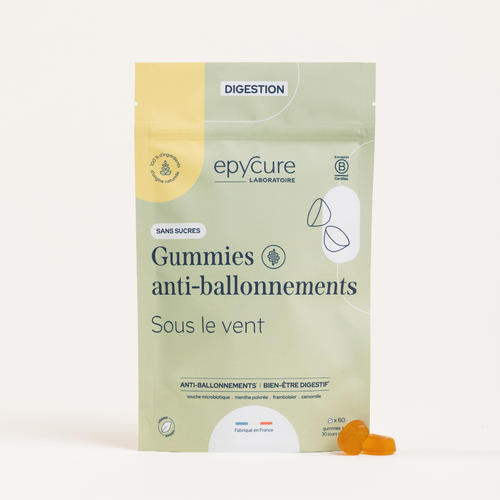
Anti-Bloating Gummies — Targeted, delicious action
Designed for people seeking fast, convenient relief, Epycure Anti-Bloating Gummies combine an elite probiotic strain with three plants traditionally used for digestion:
- Bifidobacterium breve DSM 16604: strain selected for its resistance to intestinal transit and its action on the colonic flora
- German chamomile: known for its antispasmodic and soothing properties on the digestive mucosa
- Peppermint: activates the intestine's cold receptors, reducing spasms and the feeling of bloating
- Raspberry leaf: astringent and digestive anti-inflammatory properties
Gummy format: a simple and enjoyable way to incorporate probiotics into your daily routine, without swallowing capsules.
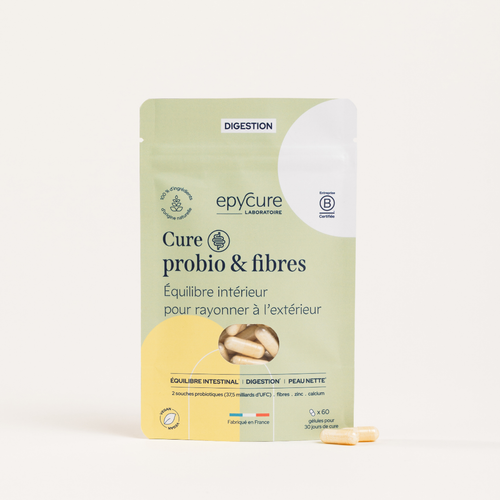
Probiotic and Fiber Cure — The complete rebiome
To go further in repopulating the microbiome, the Probiotic and Fiber Cure combines:
- 37.5 billion CFU per serving, from 6 complementary strains (Lactobacillus and Bifidobacterium)
- Prebiotic inulin: soluble fiber that selectively nourishes beneficial bacteria and promotes their multiplication
- Gluten-free, lactose-free, GMO-free formulation — suitable for specific diets
This course is particularly suitable for people suffering from established dysbiosis, after antibiotic treatment, or following a period of intense stress.
Anti-bloating Gummies — Probiotic + chamomile, peppermint, raspberry leaf
Probiotic and Fiber Course — 37.5 billion CFU + prebiotic inulin
Lab’Epycure results
Epycure formulas are tested under real-world conditions by volunteer testers. For the digestion range:
- 96% testers experienced less bloating after 4 weeks
- 87% felt lighter after meals
- 98% noticed a reduction in abdominal heaviness
- 100% testers of the Probiotic and Fiber Course reported being satisfied
In practice: how do you incorporate these supplements?
Recommended dosage: 2 Gummies per day for the Anti-bloating Gummies, preferably with a meal. For the Probiotic and Fiber Course, follow the instructions on the bottle (generally in the morning on an empty stomach to optimize strain implantation).
Course duration: at least 4 weeks to observe the first results. A 3-month course allows for lasting recolonization of the microbiota.
Please note: these supplements do not replace a balanced diet. They support a suitable healthy lifestyle.
Conclusion
Chronic bloating is not inevitable. By combining simple dietary adjustments with quality probiotic support, it is entirely possible to regain lasting digestive comfort. The key: choose formulas with documented strains, synergistic plants, and genuinely effective dosages.
At Epycure, every formula is designed with traceable ingredients, made in France according to HACCP standards, and tested by real users before being launched. Because your well-being deserves better than unverified promises.