After age 25, something changes in the skin. Not dramatically at first—but gradually, the first fine lines appear, the complexion loses its glow, and the skin seems less firm. Behind these signs is the same culprit: the natural decline in collagen production. Understanding this process is the first step toward knowing how to counter it.
Understanding collagen and its role in the skin
Collagen is the most abundant protein in the human body. In the skin, it forms the dermal framework: it provides strength and firmness (type I collagen), while elastin maintains elasticity and hyaluronic acid helps with hydration. Together, these three components form the skin’s support structure.
Collagen production peaks around age 25, then naturally declines by about 1% per year. By age 40, we’ve already lost nearly 15% of our collagen reserves. This loss accelerates at menopause as estrogen levels fall, reducing support for collagen synthesis in the skin.
Other factors accelerate this breakdown: sun exposure (UV rays fragment collagen fibers), tobacco, oxidative stress, a diet low in vitamin C and zinc, and excess sugar (which glycates collagen fibers, making them stiff and ineffective).
Natural ways to support collagen
L'diet is the first place to start. Vitamin C, found in citrus fruits, kiwi, bell peppers, and parsley, is essential for collagen synthesis: without it, the body cannot produce this protein properly. Zinc, found in pumpkin seeds, cashews, and eggs, supports cell regeneration. The amino acids glycine and proline—found in bone broth, fish, and legumes—are the building blocks of collagen.
Protecting existing fibers is just as important as stimulating their synthesis. Antioxidants—vitamin E, selenium, polyphenols—neutralize the free radicals that break down collagen. Limiting sun exposure, quitting smoking, and reducing sugar intake are concrete, measurable steps.
Choosing a collagen supplement
The collagen supplement market is vast, but they’re not all created equal. Several questions should guide your choice: Has the active ingredient been clinically studied for its effects on the skin? At what dosage? Is the collagen sourced ethically and traceably? Does the formula contain the cofactors needed for absorption (vitamin C, zinc)?
Marine collagens are often promoted, but they may not be well tolerated (taste, smell) and aren't suitable for vegetarians. Vegan collagens do exist, but their effectiveness remains limited: the body doesn't synthesize collagen from plant-based ingredients in the same way.
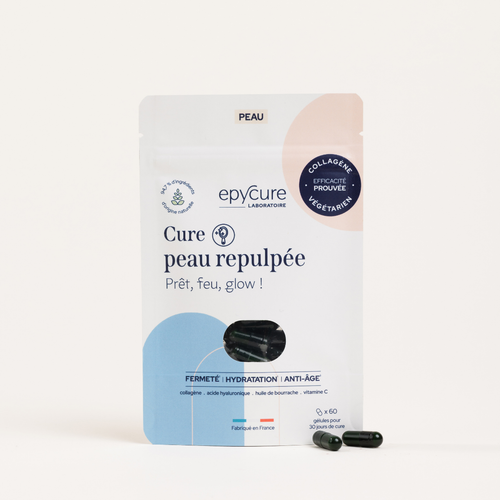
The Epycure solution: the Plump Skin Course
Epycure's Plump Skin Course was formulated to counter the natural decline in collagen from within. Its star active ingredient, Reggenerate™, is an eggshell membrane extract naturally concentrated in type I, V, and X collagen, elastin, and hyaluronic acid — a complete matrix that closely reproduces the structure of the dermis.
Its effectiveness was validated in a double-blind clinical study of 50 volunteers over 60 days, at 300 mg per day — exactly the dose used in the formula. Results: increased skin firmness and elasticity, reduced skin fatigue, and improved barrier function.
The combination is designed to maximize the effects:
- Vitamin C, which contributes to normal collagen formation for the normal function of the skin;
- L'borage oil, rich in essential fatty acids, to restore the skin's hydrolipidic film and limit water loss;
- Zinc and biotin, which help maintain normal skin;
- Vitamin E and selenium, which help protect cells from oxidative stress.
Results confirmed by the Lab'Epycure: 97% found the course effective for skin beauty and firmness, 78% saw less noticeable wrinkles and fine lines, and 97% had more hydrated skin — based on 32 people tested over 3 months.
A vegetarian alternative to marine collagen, made with 95.1% naturally derived ingredients and no excipients (no maltodextrin or magnesium stearate). Made in France and B Corp certified. Just 2 capsules a day, from age 12.
Timeline of effects: Day 30: improved skin hydration. Day 60: refined skin texture. Day 90: visibly firmer skin.
For even more benefits, the Sun-Kissed Beauty Duo combines the Plump Skin Course with sun-protective Gummies — the ideal routine to prepare your skin for summer while protecting it from the sun's oxidative damage.
📚 Read also