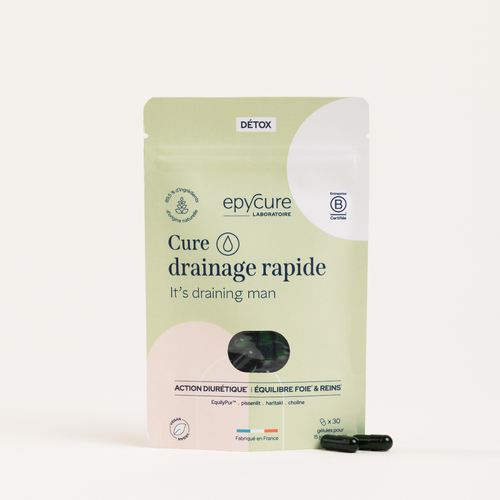
Detox cleanse: what it really means and how to effectively support the body's elimination systems
"Detox cleanse," "spring detox," "3-day cleanse"... The word detox is everywhere, often used indiscriminately. But behind the marketing lies a biological reality: the body has natural elimination systems (liver, kidneys, skin, lungs, intestines) that can be intelligently supported. Here's what "detoxifying" the body really means, what works, what doesn't, and how to effectively support elimination.
What your body already does on its own
The body is a permanent detoxification machine. The liver continuously filters the blood and transforms harmful substances (medications, alcohol, pesticides, used hormones) into water-soluble compounds that can be eliminated. The kidneys filter the blood every 30 minutes and eliminate nitrogenous waste through urine. The skin eliminates certain waste products through perspiration. The lungs expel CO₂ and other volatile compounds. Finally, the intestines eliminate food residue and toxins that the liver has converted into bile.
This system works 24/7. "Detoxifying" the body therefore does not mean "activating" something inactive - it means supporting and optimizing these existing mechanisms, especially when they are overloaded or slowed down.
When detox support may be helpful
Certain situations justify targeted support: after a period of dietary overindulgence (holidays, travel, excesses), when fatigue and digestive heaviness build up, at the change of seasons (spring and autumn are the traditional periods in naturopathy), in cases of persistent water retention, or when you want to "get back on track" after a period of less healthy eating.
This is not a medical requirement - it is a supportive choice. And contrary to what some products suggest, no "3-day detox" can erase years of habits. The minimum period for observing a noticeable effect is 3 to 4 weeks.
The real keys to an effective detox cleanse
Water: the first elimination aid
Hydration is the simplest and most powerful tool. Without enough water, the kidneys cannot eliminate waste effectively, and bile (which carries toxins processed by the liver) does not flow properly. The goal: 1.5 to 2 liters of water per day, including some mineral water rich in magnesium (which facilitates bowel movements) or low-mineral water to support the kidneys.
Bitter and cruciferous vegetables
Artichoke, black radish, dandelion, and milk thistle are traditional liver-supporting plants that support the liver's biliary function and facilitate the elimination of fat-soluble toxins. Cruciferous vegetables (broccoli, cabbage, cauliflower) contain glucosinolates that stimulate the liver's phase II detoxification enzymes.
Reduce sources of toxins
A "detox" accompanied by alcohol, ultra-processed foods, or tobacco consumption is contradictory. Temporarily or permanently reducing these toxic burdens is the most direct way to ease the workload of the elimination organs.
Movement and perspiration
Physical activity stimulates lymphatic circulation (lymph transports waste from cells to the elimination organs), promotes perspiration (a route of elimination through the skin), and stimulates intestinal peristalsis. 30 minutes of brisk walking or moderate exercise every day is a genuine component of a detox cleanse.
The best-documented draining plants and active ingredients
Black radish (Raphanus sativus var. niger) stimulates bile production and supports liver function. It is one of the most traditional and best-tolerated ingredients for supporting liver elimination.
Artichoke (leaf extract) promotes fat digestion and bile secretion, while also having a liver-protective effect. It contributes to digestive comfort and reduces the feeling of "heaviness" after meals.
Milk thistle (Silybum marianum) is the most extensively studied plant-based liver protector. Its active compound, silymarin, protects liver cells from oxidative stress and supports their regeneration.
Dandelion is both a mild diuretic (supporting the kidneys) and a liver-supporting plant (stimulating bile flow). Its leaves and root are used as an herbal tea or dry extract.
Prebiotics and fiber (inulin, psyllium) support intestinal elimination by speeding up transit and promoting the excretion in stools of toxins bound to bile.
What not to do
Several days of complete fasting without medical supervision can have the opposite effect - mobilizing toxins stored in fatty tissue without adequately supporting the elimination organs so they can process them. Aggressive "detox laxatives" (senna, cascara) can cause dependence and disrupt the microbiome. Detox supplements containing overly concentrated liver-supporting plants are contraindicated in cases of biliary disease (gallstones) or liver disease - medical advice is essential in these situations.
What to remember
A real detox cleanse is not a 3-day green juice. It is a period of 3 to 4 weeks during which you reduce toxic intake, optimize hydration, support the liver and kidneys with suitable plants, improve bowel regularity, and exercise regularly. The most reliable ingredients: black radish, artichoke, milk thistle, dandelion, and prebiotic fiber. Combined with a lighter diet, the effect on digestive lightness, mental clarity, and energy is often noticeable within 10 to 15 days.
Food supplements. Not recommended in cases of gallstones or diagnosed liver or kidney disease. Consult your doctor before beginning a detox cleanse if you are taking medication.