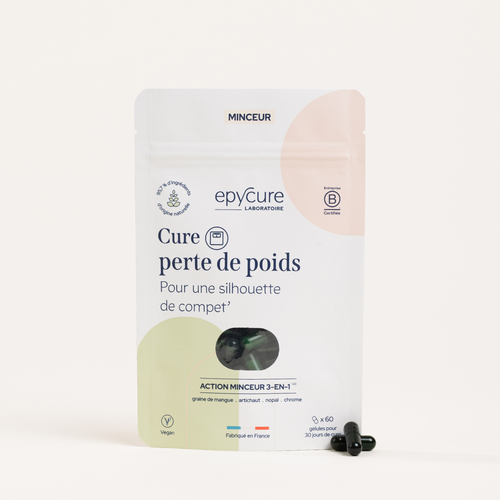
For several years now, nutrition and weight-management research has focused not only on the number of calories and the distribution of macronutrients, but above all on their source and quality. This is how the low-glycemic-index diet trend emerged around thirty years ago, based on the idea that the types of carbohydrates we choose to consume have a major influence not only on our weight, but also on our energy levels, cardiovascular health, and overall well-being. That is why, at Epycure, we have created effective, natural products that help you stay in control of your figure!
How does the glycemic index work?
To properly understand the glycemic index, you first need to know that, unlike consuming protein and fat, eating carbohydrates (sugars and starches) always causes blood sugar levels to rise (known as a blood sugar spike), which has two effects:
- Some of this sugar is transported directly into the cells so they can produce the energy the body needs at that moment.
- Any unused excess is stored for future needs, first in the limited reserves of the liver and muscles, and then in the form of... fat! Our cannonball powder helps drain this excess to prevent it from being stored in the body.
However, each type of sugar is absorbed at a different rate, and consequently, its effects on our body and our ability to store it also differ. This is what the famous glycemic index (or GI) of foods measures.
- High GI (= fast sugar): the type of sugar contained in the food causes blood sugar to rise quickly and sharply. A great deal of energy becomes immediately available, and if it is not used by the cells, it will be stored!
- Low GI (= slow sugar): conversely, the type of sugar contained in the food causes blood sugar to rise slowly and gradually. Energy is released moderately and gradually over time, so the carbohydrates are less likely to be stored.
Factors that influence the glycemic index of foods
To be completely accurate, it is important to take into account certain factors that can increase or decrease the glycemic index of foods:
- Degree of ripeness and aging: fruit has a higher glycemic index as it ripens and ages.
- Fiber content: a fruit's glycemic index will be much higher in juice form than when eaten whole. Similarly, whole grains have a lower glycemic index than refined (white) grains.
- Cooking: the more a food is cooked, the higher its glycemic index. Choose gentle steaming or slow-cooking methods.
- Food combinations: adding protein or healthy fats to a sweet or high-calorie (or carbohydrate-rich) product slows the rate at which blood sugar rises and therefore lowers its glycemic index.
Which carbohydrates are good for weight loss?
- Avoid high-GI foods: ultra-processed products, refined grains and their derivatives (bread, pasta, flour), baked, boiled, and mashed potatoes, dried fruit, sugar, and natural sweeteners (honey, maple syrup, etc.)
- Eat moderate-GI foods sensibly, preferably on the days when you are most active: whole foods (especially oat flakes, basmati rice, brown rice), whole-grain breads, flours, and pasta, steamed potatoes, banana, blackberry, melon.
- And if you're addicted to bread… always choose sourdough bread made with whole-grain flour. Natural yeasts predigest some of the sugars during fermentation, helping to lower its glycemic index.
- Eat low-GI foods at every meal: whole fruit, vegetables (half your plate!), legumes, buckwheat, quinoa, bulgur, wild rice, nuts and seeds, dark chocolate (>80%)
- Choose gentle cooking methods such as steaming or low-temperature cooking
- Eat quality protein and/or fats at every meal
- Finally, exercise to maintain your figure! You will gain muscle mass and therefore tolerate a higher carbohydrate intake without the risk of gaining weight ;)
Where can you find good carbohydrates?
- Fruit & vegetables: these are the best sources of carbohydrates. Vegetables are very good for your health, and you are advised to eat them daily. It is preferable to eat fruit whole, as it is extremely rich in fiber, antioxidants, and vitamins thanks to the fructose it contains. Opt for a smoothie bowl, which will allow you to combine fruit and vegetables and get a full dose of vitamins!
- Tubers: potatoes, carrots, beetroot, Jerusalem artichokes, for example.
- Whole grains: pasta, rice, barley, buckwheat, wheat, etc. Refined grains have a higher GI than less refined grains. Basmati rice is the most nutritious source, thanks to the starch it contains, which helps digestion take place more slowly and easily.
- Legumes: beans, broad beans, lentils, chickpeas, for example
Sources:
The New GI Diet, Angélique Houlbert and Elvire Nérin
📚 Also worth reading
✨ Our Epycure solutions