Pimples that appear cyclically around the chin, jawline, or cheeks and worsen before your period or during times of stress: if this sounds familiar, you may have hormonal acne. Very different from teenage acne, it affects a growing number of adults, particularly women aged 25 to 45. It may affect up to 40% of women aged 25 to 40 and often resists topical treatments alone.
Understanding its mechanisms helps you care for your skin better every day.
Understanding hormonal acne
L'hormonal acne is directly linked to fluctuations in androgen hormones: primarily testosterone and its derivative DHT (dihydrotestosterone). These hormones stimulate the sebaceous glands, increasing sebum production and promoting clogged pores.
Androgens also promote hyperkeratinization, meaning the buildup of dead skin cells that clog pores. This results in comedones, inflammatory papules, and sometimes painful cysts.
This excess sebum creates an environment conducive to bacterial growth (particularly Cutibacterium acnes) and triggers an inflammatory reaction: these are red, inflamed pimples. This bacterium triggers a local immune response that turns a comedone into an inflamed pimple.
Oxidative stress also plays a role: it worsens skin inflammation and slows healing. In addition, skin cell receptors may sometimes become more sensitive to androgens, regardless of circulating hormone levels.
Several situations can cause or worsen this imbalance. Here's how to group them:
Possible hormonal causes in women
- The menstrual cycle: the drop in progesterone and estrogen during the luteal phase (before your period) allows androgens to take over, causing a common breakout in the week before menstruation.
- Pregnancy and the postpartum period: the hormonal changes during this period can trigger or worsen blemishes, even in people who have never had them.
- L'stopping birth control pills: the return of the natural cycle can be accompanied by a rebound in androgen levels.
- Perimenopause: this transition period alters hormonal balance and can contribute to blemishes.
- Polycystic ovarian metabolic syndrome (POMS): polycystic ovary syndrome (PCOS) is the former name for POMS. This condition, characterized by excess androgens, is one of the most common causes of persistent hormonal acne in adult women.
Lifestyle factors
- Stress: cortisol directly stimulates the sebaceous glands and worsens skin inflammation. It also stimulates the adrenal glands, which produce DHEA, a precursor to androgens.
- L’high-glycemic-index diet: fast-acting sugars cause insulin spikes, which stimulate androgen production. Dairy products may also play a role for some people.
Metabolic and digestive factors
- Insulin resistance: it increases the production of IGF-1, a growth factor that amplifies the effect of androgens on the skin and stimulates sebum.
- Intestinal dysbiosis: an imbalanced microbiome can impair the elimination of excess hormones.
Unlike juvenile acne caused by generalized hormone production, adult hormonal acne is often localized: the U-zone (jaw, chin, neck), and sometimes the back and chest. These areas are particularly rich in androgen receptors.
Lesions are often deeper (microcysts, nodules), take longer to heal, and can leave lasting marks. They often follow a cyclical pattern, with flare-ups before menstruation.
Natural solutions for rebalancing the skin
Before turning to more intensive solutions, natural practices can support the skin every day. For deep or persistent lesions, medical advice is still useful.
L’diet
L’diet plays a major role. Foods with a high glycemic index (fast-acting sugars, white bread, soft drinks) cause insulin spikes that amplify androgen production. Adopting a low-GI diet rich in vegetables, oily fish, and fiber helps stabilize the hormonal response.
Also limit ultra-processed foods: rich in fast-acting sugars and pro-inflammatory fats, they sustain insulin spikes and inflammation.
If you notice a link with your skin, you can also reduce dairy products: they can stimulate IGF-1, the growth factor that activates the sebaceous glands.
Also consider omega-3s (fatty fish, flaxseeds, walnuts): they help regulate the inflammatory response, including in the skin.
As for minerals and vitamins, zinc is found in oysters, pumpkin seeds, and legumes. It contributes to the maintenance of normal skin and acts on 5-alpha-reductase, the enzyme that converts testosterone into DHT. It is also one of the most widely studied nutrients for skin: it helps reduce inflammation and supports healing, and controlled studies have shown a significant reduction in acne lesions with zinc supplementation.
Vitamin A, found in carrots and sweet potatoes, also contributes to the maintenance of normal skin. It is essential for skin cell renewal. Its plant-based precursor, beta-carotene, provides a gradual supply without the risk of overdosing: it supports keratinocyte differentiation and limits hyperkeratinization, one of the factors that can trigger acne.
Stress management
Stress management is just as essential. Reducing cortisol through meditation, regular physical activity, or deep breathing helps limit one of the main triggers of flare-ups.
Getting enough sleep and doing relaxing activities such as yoga can complement these habits: they help lower cortisol, which stimulates sebum production.
Topical products
Suitable topical products complement this approach: a gentle, non-stripping cleanser, a non-comedogenic moisturizer, and targeted active ingredients such as salicylic acid (to unclog pores), niacinamide, or azelaic acid.
Gently cleanse your skin morning and evening. Avoid alcohol-based or drying products: irritated skin produces more sebum in response. Regularly changing your pillowcase also limits contact with sebum residue.
Patience is key: it takes at least 4 to 6 weeks for the skin to complete its cell renewal cycle.
Choosing the right dietary supplements for your skin
Dietary supplements can support your skin from within. Topical products (serums, creams, acids) work on the surface, while micronutrition works from within: the two approaches complement each other rather than compete. Some micronutrients have recognized roles:
- Zinc contributes to the maintenance of normal skin and to the protection of cells from oxidative stress. It also acts on 5-alpha-reductase, the enzyme that converts testosterone into DHT.
- Selenium helps maintain normal skin and protect cells from oxidative stress. It supports the skin’s anti-inflammatory response.
- Vitamin C helps support normal collagen formation for normal skin function and protects cells from oxidative stress.
- Vitamin E helps protect cells from oxidative stress.
- Vitamin B6 helps regulate hormonal activity, particularly during changes in the menstrual cycle.
- Lnett le is known to help problem skin by promoting a clear complexion.
When choosing, look for a formula made with natural ingredients and researched, appropriately dosed actives: several complementary actives target more factors than a single ingredient.
Plan to use the supplement for at least 3 months: skin renews slowly, and results develop gradually. Taking it regularly matters more than occasional dosing.
For deep, recurring blemishes, additional support for the skin barrier and hydration can help: a supplement rich in collagen and restorative ingredients supports the skin’s structure and helps with healing.
Epycure’s solution for clearer skin
Epycure offers two complementary formulas designed for skin prone to hormonal blemishes.
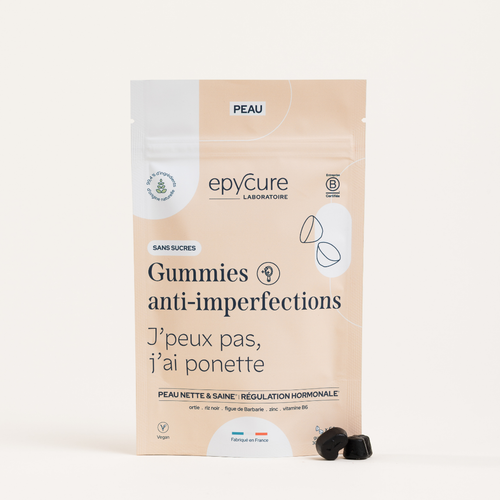
Anti-blemish Gummies
Anti-blemish Gummies work from within with a complex of zinc, selenium, and vitamins C and E to help balance the skin and protect skin cells from oxidative stress. Their gummy format makes them easy and enjoyable to add to your daily routine.
Its star ingredient is Actrisave® (250 mg per day), an exclusive blend of black rice and prickly pear (Opuntia ficus-indica):
- Prickly pear is rich in isorhamnetin, a flavonoid that helps rebalance androgen hormones. Its flavonoids also help regulate sebum production.
- Black rice is rich in anthocyanins, which have antioxidant properties and help limit sebum oxidation and clogged pores. These polyphenolic pigments neutralize free radicals involved in skin inflammation.
The formula also contains nettle (25 mg), zinc (10 mg, 100% of the NRV) and vitamin B6 (1.4 mg, 100% of the NRV).
At Lab'Epycure, after 3 months, 85% of the 26 testers found their skin looked better and 73% considered the course effective against their blemishes. The effects build over time: by day 30, reduced skin irritation; by day 60, sebum regulation; by day 90, visibly reduced blemishes.
Dosage: 2 gummies per day for adults, 1 gummy per day from age 12. The formula is made with 99.4% naturally sourced ingredients, is vegan and gelatin-free (apple pectin), and has a redcurrant flavor.
Plumping Skin Course
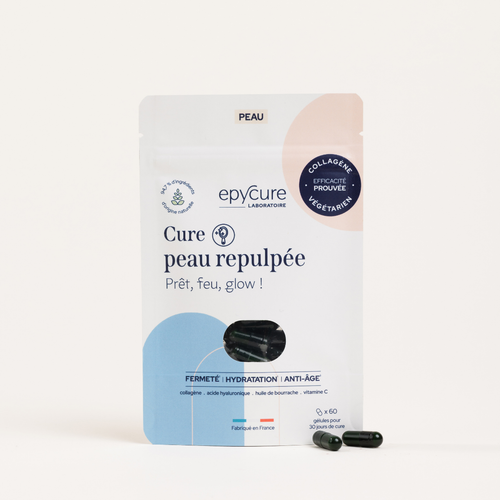
The Plumping Skin Course works deep within the skin's structure. Its star ingredient, Reggenerate™ (300 mg per day), is a patented eggshell membrane extract naturally rich in type I, V, and X collagen, elastin, and hyaluronic acid. It supports firmness, hydration, and healing. An asset for reducing the appearance of marks left by blemishes and restoring a radiant complexion.
It is combined with vitamin C, zinc, and borage oil, which is rich in gamma-linolenic acid (GLA) and strengthens the skin's lipid barrier. A double-blind clinical study involved 50 volunteers over 60 days.
In Epycure's internal test, 97% of testers noticed firmer skin and 97% more hydrated skin after 3 months. 78% also observed less pronounced wrinkles and fine lines.
Together, these two formulas cover the full spectrum: sebum-regulating and antioxidant action on one hand, deep repair and plumping on the other. A comprehensive, natural, and lasting approach to skincare.
Key takeaways
- Androgens stimulate the sebaceous glands: that's why spots cluster in the U-zone and follow the cycle.
- Fast sugars and ultra-processed foods cause insulin spikes, which stimulate androgen production.
- Omega-3s help modulate the inflammatory response, while zinc and vitamin A help maintain normal skin.
- Stress raises cortisol, which stimulates sebum production: sleep and relaxation are part of the routine.
- Gentle skincare is preferable: irritated skin produces more sebum.
- A 3-month course helps support several skin renewal cycles.