You toss and turn in bed, unable to fall asleep. Or you wake up at 3 a.m., your mind racing. Before blaming stress or screens, ask yourself a simple question: are you getting enough magnesium?
This mineral is one of the most involved in the quality of your nights - and one of the most commonly deficient. Let's take a closer look.
Magnesium and sleep: what's the connection?
Magnesium is involved in more than 300 enzymatic reactions in the body. Several of them have a direct impact on sleep.
First, it supports the nervous system. By regulating the activity of GABA receptors - the relaxation receptors - it helps the brain switch from alert mode to rest mode. In practical terms: fewer thoughts going round and round when it's time to fall asleep.
It also contributes to the production of melatonin, the sleep hormone. Without sufficient magnesium, this production may be compromised, making it harder to fall asleep.
Finally, magnesium deficiency is associated with lighter, more fragmented sleep and more nighttime awakenings. Studies show that people with a deficiency have less efficient sleep architecture - fewer deep-sleep phases and less recovery.
Why are we so often deficient in magnesium?
Several factors explain this near-endemic deficiency in France (80% of the population is reportedly below the recommended intake):
- Modern diets are low in magnesium: refined grains, ultra-processed foods and intensive farming techniques have depleted our dietary sources.
- Stress worsens the situation: the more stressed we are, the more magnesium we eliminate in our urine. A vicious cycle, since magnesium deficiency itself increases reactivity to stress.
- Intensive exercise increases losses through sweating.
- Caffeine and alcohol reduce intestinal absorption of this mineral.
The result: many people go to bed with insufficient magnesium reserves for a good night's sleep.
Choosing the right magnesium for sleep
Not all forms of magnesium are equal. The number one criterion? Bioavailability, meaning the body's ability to absorb and use it.
Magnesium oxide or carbonate, found in many inexpensive products, is poorly absorbed and may cause digestive issues. Magnesium bisglycinate is one of the forms best absorbed by the body, gentle on the intestines and particularly suitable for evening use.
But magnesium alone is not enough. To optimize sleep quality, it is often more effective to combine it with other complementary active ingredients: adaptogenic plants, amino acids that are precursors to serotonin, and B vitamins.
Epycure's solution for restorative nights
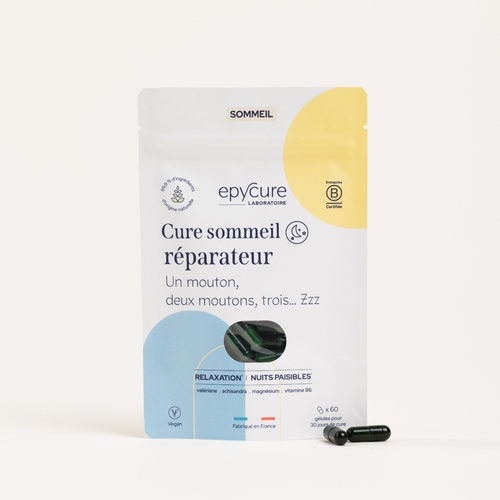
Epycure's Restorative Sleep Course has been formulated to act on several mechanisms at once: falling asleep, nighttime awakenings and overall sleep quality.
It combines:
- Valerian, a plant recognized for helping promote quality sleep by encouraging relaxation and reducing the time it takes to fall asleep.
- Melatonin, which helps reduce the time it takes to fall asleep and alleviate the effects of jet lag.
- Magnesium, which contributes to normal nervous system function and helps reduce fatigue.
- Schisandra, an adaptogenic plant that helps the body manage stress more effectively, thereby promoting calm at the end of the day.
- Vitamin B6, which helps regulate hormonal activity and supports the synthesis of neurotransmitters involved in relaxation.
- Zinc, which contributes to maintaining normal cognitive function and supports the immune system during the night.
The formula is made in France, in ISO 22000-certified laboratories, with 96% ingredients of natural origin. It is vegan, gluten-free, lactose-free and GMO-free.
The first effects can be felt within the first two weeks: reduced nervous tension and easier falling asleep. After one month, sleep improves more deeply. The course is designed to be followed for 3 months for lasting results.
Discover the Restorative Sleep Course →
Conclusion
Magnesium is not a sleeping pill. It is an essential cofactor that the body uses to relax, produce its own sleep hormones and recover deeply. When nights are difficult, checking your magnesium status - and correcting it intelligently - is often the first step that truly makes a difference.
Good night, truly.
📚 Read also