Natural self-tanner: achieve a sun-kissed complexion all year round without sun exposure
Achieving a lovely sun-kissed complexion without spending hours in the sun, tanning more evenly and making it last longer - that's what natural oral self-tanning actives can do. But how does it really work? Which plant pigments are involved? And what is the difference between a Self-Tanning Course and Solar Gummies?
Natural tanning: how does it work?
Tanning is the skin's protective response to UV radiation. Under the effect of sunlight, melanocytes (melanin-producing cells located in the basal layer of the epidermis) produce melanin - the brown pigment that gives skin its color and absorbs UV rays to protect the cells' DNA.
Melanin exists in two forms: eumelanin (brown-black, producing an intense and long-lasting tan) and pheomelanin (red-yellow, present in fair skin, offering little protection).
Natural oral self-tanners work differently: they provide plant pigments from the carotenoid family that settle in the skin's lipid layers and give it a gradual, natural color - without UV rays and without the risk of sunburn.
Plant pigments that give a sun-kissed complexion
Lycopene (tomato)
Lycopene is the red pigment from the carotenoid family, found in large quantities in tomatoes. It contributes to a sun-kissed complexion by balancing the skin's color while protecting it from premature aging thanks to its antioxidant properties.
Lutein (marigold)
Lutein is a carotenoid with a golden-yellow hue that brightens the complexion and helps limit skin aging. Its antioxidant activity is particularly valuable for preserving the skin's radiance.
Zeaxanthin (marigold or Indian rose)
Zeaxanthin has a yellow-orange hue and provides a natural healthy glow. Its structure, which is similar to that of lutein, gives it similar properties, with an additional contribution to complexion color.
Astaxanthin (the algae Haematococcus pluvialis)
Astaxanthin is a pinkish pigment with exceptional antioxidant power - up to 6000 times more effective than vitamin C according to some studies. The selected algae is the most concentrated plant source of astaxanthin. It gives the complexion a subtle tone while protecting the skin from oxidative stress.
Annatto (bixin and norbixin)
Annatto is a plant rich in bixin and norbixin, two pigments from the carotenoid family that increase the formula's natural pigment content for a more intense and even color.
Copper
Copper is an essential trace element for the functioning of tyrosinase, the key enzyme in melanin synthesis. It contributes to normal skin pigmentation and optimizes natural coloration. Without sufficient copper, melanocytes cannot produce melanin effectively.
Vitamin E
A powerful fat-soluble antioxidant, vitamin E protects skin cells from oxidative stress and helps prevent premature skin aging caused by UV rays.
Why choose the SynBronze™ complex rather than beta-carotene alone?
Beta-carotene is often associated with natural self-tanning - and it is true that it slightly colors the skin. But it has one well-known drawback: at high doses, it can give the complexion an overly orange color. It is also not recommended for smokers because of the documented risks at high doses.
The SynBronze™ complex takes a different approach: it combines 4 plant pigments with complementary hues (from yellow to red, including orange and pink) to reproduce the natural nuances of a harmonious tan - without an artificial effect or turning orange. The dosage is standardized and checked in every batch to ensure efficacy and stability.
Self-Tanning Course vs Solar Gummies: two complementary approaches
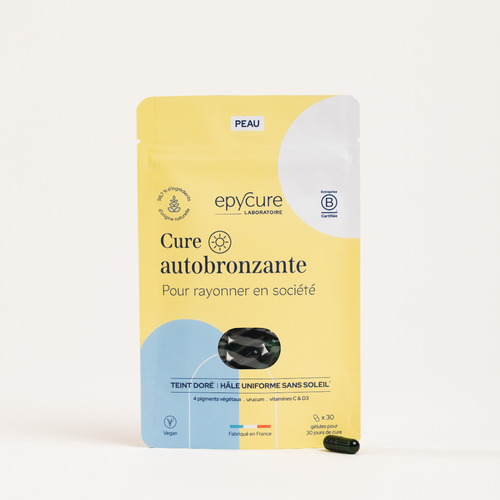
The Self-Tanning Course (capsules) is formulated around the SynBronze™ complex combined with annatto, copper, vitamin E and vitamin D3. It works from within to gradually pigment the skin and achieve an even tan without sun exposure. Gradual results: a healthy glow from Day 30, with a visibly brighter and more sun-kissed complexion by Day 60. Suitable from age 12.
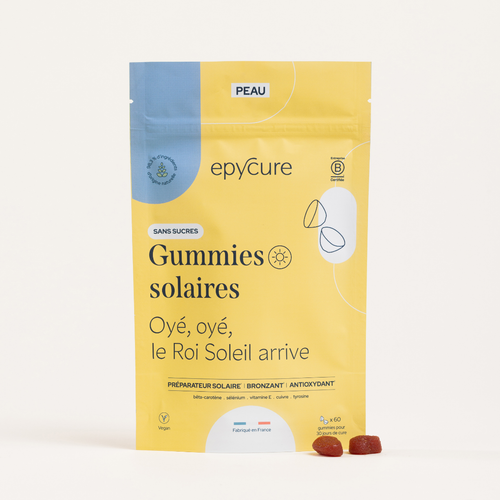
Solar Gummies are enriched with antioxidants (including beta-carotene) and protective actives to support sun exposure. Their formula is more focused on protection during exposure, while the Self-Tanning Course targets pigmentation without exposure. Note: Solar Gummies contain beta-carotene and are therefore not recommended for smokers, unlike the Self-Tanning Course.
Important precautions
These products do not replace sunscreen. The natural pigmentation provided by carotenoids is not equivalent to a sunscreen filter. Using suitable sun protection remains essential during exposure.
The Self-Tanning Course is not recommended for pregnant women (because it contains zeaxanthin from marigold flowers) or children under 12 (because of its copper content).
Key takeaways
Plant carotenoids - lycopene, lutein, zeaxanthin and astaxanthin - are the true actives behind natural oral tanning. A well-dosed multi-pigment complex, such as SynBronze™, produces a more harmonious and natural result than a single carotenoid taken alone. Allow 4 to 6 weeks for the pigments to accumulate in the skin and for the effect to become visible. Above all: sun protection is mandatory in case of exposure.
Food supplements. Do not replace sun protection products. Not recommended for pregnant women or children under 12.