You fall asleep late, wake up several times a night, and in the morning you are just as tired as you were at bedtime. This scenario is far from rare: in France, nearly one-third of adults suffer from sleep disorders, whether difficulty falling asleep, fragmented nights, or unrefreshing sleep. The good news? Natural solutions exist to help you regain control of your nights, without medication or the risk of dependence.
Understanding why you sleep poorly
Sleep is a finely orchestrated biological process regulated by two systems: the circadian clock (the day/night rhythm) and sleep pressure (the accumulation of adenosine throughout the day). When either is disrupted, the quality of your nights is immediately affected.
Among the most common causes of poor sleep:
- Chronic stress and mental overload: high cortisol levels in the evening prevent the body from switching into rest mode. Thoughts keep spinning, and falling asleep takes longer.
- Hormonal imbalances: particularly during perimenopause, declining estrogen and progesterone levels profoundly disrupt the sleep-wake cycle, causing frequent awakenings and night sweats.
- Magnesium deficiency: essential for muscle and nervous system relaxation, magnesium is often insufficient in our diets. A deficiency increases nighttime restlessness and muscle tension.
- Lifestyle: blue light from screens, late meals, a sedentary lifestyle - all factors that delay falling asleep and reduce the quality of deep sleep.
The consequences of poor sleep are not limited to next-day fatigue. Over time, unrefreshing nights weaken the immune system, disrupt appetite regulation, increase anxiety, and affect cognitive performance. Taking care of your sleep means taking care of your overall health.
Natural solutions to improve sleep quality
Before turning to sleeping pills - whose risks of dependence and side effects are well documented - several natural approaches have proven effective.
Improving sleep hygiene is the first step. Going to bed and getting up at regular times strengthens the circadian clock. Limiting screen use for an hour before bedtime, keeping the bedroom cool (around 18-19°C), and adopting a calming evening ritual are simple but effective habits in the long term.
Reducing stress levels is just as essential. Cardiac coherence breathing, yoga nidra, and mindfulness meditation are clinically validated tools for lowering evening cortisol and facilitating the transition to sleep.
Diet also plays a practical role. Foods rich in tryptophan - a precursor to serotonin and melatonin - such as nuts, eggs, and milk naturally promote falling asleep. Avoiding alcohol (which fragments deep sleep) and coffee after 2 p.m. completes this toolkit.
Plants and micronutrients are another powerful option, particularly for people whose sleep disorders are linked to stress or hormonal fluctuations.
Choosing the right dietary supplements for sleep
The sleep supplement market is extensive, but not all products are equal. Synthetic melatonin - found everywhere - only affects the time it takes to fall asleep, without improving deep sleep quality. It can also disrupt the body's natural production of the hormone over the long term.
For more comprehensive support, prioritize ingredients that address the causes of sleep disorders rather than just the symptoms:
- Valerian (Valeriana officinalis) has traditionally been used to help promote sleep and maintain natural sleep. Its valerenic acid acts on the brain's GABA receptors, encouraging mental relaxation and deep sleep phases.
- Schisandra (Schisandra chinensis) is an adaptogenic berry that has been used for centuries in traditional Chinese medicine. By strengthening resistance to stress, it helps calm the mind and limit sleep fragmentation caused by nervous hyperactivity.
- Magnesium contributes to the normal functioning of the nervous system and normal muscle function, thereby supporting uninterrupted sleep throughout the night.
- Vitamin B6 contributes to the normal functioning of the nervous system and is involved in the synthesis of serotonin, a precursor to melatonin.
Also pay attention to the naturalness of the formulas: some supplements contain unnecessary excipients or poorly bioavailable synthetic forms. Choose formulas that are as close as possible to 100% natural and free from superfluous additives.
Epycure's solution for restorative nights
Epycure has developed two complementary formulas to address different sleep disorder profiles.
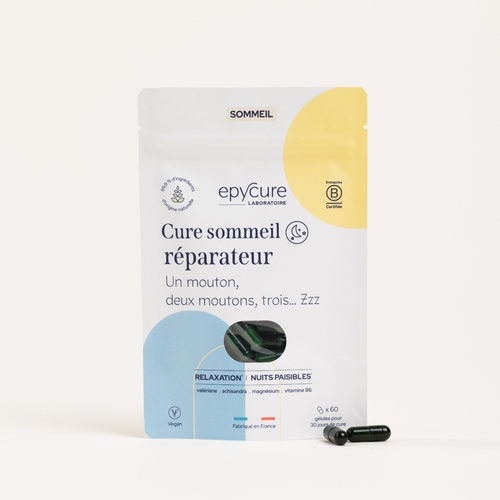
The Restorative Sleep Course is designed for people whose nights are deeply disrupted: frequent awakenings, unrefreshing sleep despite spending enough time in bed, and hormonal fatigue. Its formula combines schisandra and valerian in a synergy targeting the underlying causes, enhanced with magnesium and vitamin B6. Melatonin-free and with no risk of dependence, it is 99.9% natural. The first effects - a calmer mind and easier sleep onset - are felt from Day 15. Fewer nighttime awakenings begin from Day 30, and a lasting improvement in sleep quality is confirmed by Day 90.
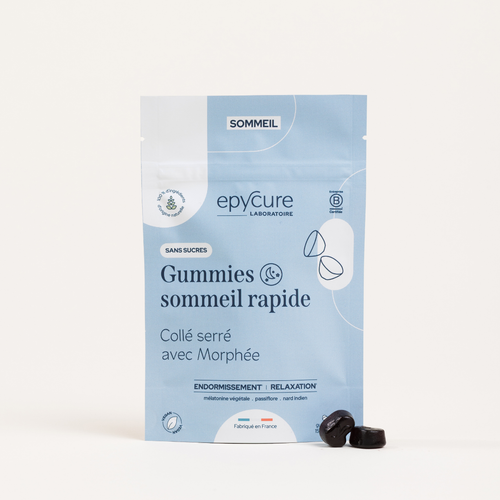
The Gummies sleep support are intended for people who have difficulty falling asleep at night. Enriched with plant-based melatonin, they combine passionflower and St. John's wort to reduce the time it takes to fall asleep from the first dose, in a pleasant-to-take formula.
The two formulas are complementary: the capsule course for lasting sleep quality and continuity, and the gummies for evenings when falling asleep is particularly difficult. Because sleep is the foundation of every balance - physical, emotional, and cognitive - it deserves a serious, natural, and personalized approach.