You wake up several times a night. Your alarm goes off at 7 a.m., but you feel just as exhausted as you did before going to bed. Yet you have slept the recommended 7 or 8 hours. This paradox affects millions of people — and it has an explanation.
Quality sleep is not measured solely in hours. It is the depth, continuity, and structure of the cycles that make all the difference. When something disrupts these cycles, sleep becomes fragmented — and recovery becomes elusive.
Why do we wake up in the middle of the night?
Sleep takes place in cycles of approximately 90 minutes, alternating between light sleep, deep sleep, and the rapid eye movement (REM) phase. Nighttime awakenings generally occur during transitions between these cycles — and several factors can cause them.
Stress and mental overload are the main culprits. When you are stressed, your body maintains a higher-than-normal level of cortisol (the arousal hormone), even at night. As a result, the brain remains partially alert, ready to wake up at the slightest stimulus.
Hormonal imbalances also play a major role. In women, cyclical fluctuations in estrogen and progesterone can disrupt sleep quality — particularly during perimenopause, when the hormonal decline often leads to insomnia or early awakenings.
Micronutrient deficiencies are often underestimated. A lack of magnesium, vitamin B6, or zinc can impair the synthesis of melatonin and serotonin, two key players in regulating the sleep-wake cycle.
Overactivity of the nervous system — linked to chronic stress, evening screen use, or a pro-inflammatory diet — maintains a state of alertness that is incompatible with deep, uninterrupted sleep.
Natural solutions to soothe your nights
First of all, a few fundamental adjustments can transform your nights:
- Establish a bedtime ritual: the same time, the same routine (reading, breathing exercises, a warm bath). The brain associates these signals with sleep and prepares for the drop in cortisol.
- Turn off screens 1 hour before bed: blue light blocks melatonin secretion and delays falling asleep by 1 to 2 hours.
- Choose foods rich in tryptophan in the evening: bananas, cashews, eggs, and oats. Tryptophan is the direct precursor of serotonin and melatonin.
- Reduce caffeine after 2 p.m.: its 5- to 6-hour half-life means that a coffee at 4 p.m. still represents half of its active dose at midnight.
- Engage in gentle physical activity in the late afternoon: yoga, walking, stretching. Moderate exercise promotes the drop in cortisol and improves the quality of deep sleep phases.
Choosing the right sleep supplements
With so many options available, how do you find your way around? A few essential criteria:
Adaptogenic plants such as schisandra and valerian deserve your attention. Valerian acts directly on the brain's GABA receptors, promoting sleep onset and limiting nighttime awakenings. Schisandra, meanwhile, strengthens resistance to the stress that disrupts the sleep-wake cycle.
Magnesium and vitamin B6 are essential for the synthesis of sleep-related neurotransmitters. Without them, even the best plants cannot work at full capacity.
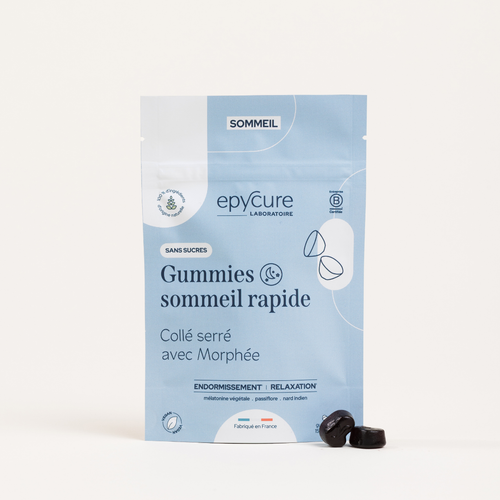
Beware of formulas containing only high-dose melatonin: they may help you fall asleep but do not address sleep fragmentation or nighttime awakenings. Hormone-free solutions that act on the root causes are often more sustainable.
Also check the quality of manufacturing: ingredient traceability, laboratory certification, and the absence of unnecessary excipients such as maltodextrin or magnesium stearate.
The Epycure solution for restorative nights
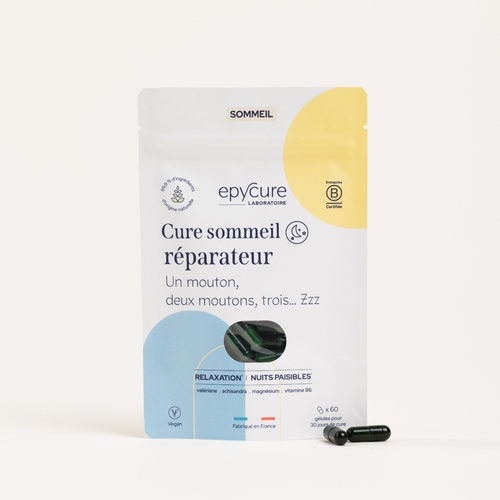
Epycure's Restorative Sleep Formula was specifically formulated for people who wake up frequently at night or get up tired despite getting enough sleep. Its distinguishing feature? A melatonin-free formula that targets the root causes of sleep problems.
Schisandra (Schisandra chinensis), the formula's key ingredient, is an adaptogenic plant that has been used for centuries in traditional Chinese medicine. By strengthening resistance to stress, it promotes a mental balance conducive to better-quality sleep and reduces nighttime fragmentation.
Working synergistically, valerian — rich in valerenic acid — acts on GABA receptors to make it easier to fall asleep and maintain deep sleep phases. Vitamin B6 contributes to the synthesis of serotonin, the precursor to melatonin. And magnesium, a general nervous-system relaxant, supports sleep continuity throughout the night.
The formula is produced in France in an AFNOR HACCP-certified laboratory, without maltodextrin or magnesium stearate, and with 99.9% naturally sourced ingredients.
The first effects are felt from Day 15 (calming and easier sleep onset), with a reduction in nighttime awakenings by Day 30 and a lasting improvement in sleep quality after 3 months of use.
Directions: 2 capsules per day, 30 minutes to 1 hour before bedtime.
📚 ALSO READ
✨ Our Epycure solutions
Your nights deserve better than a few hours of broken sleep. By addressing stress, nervous-system balance, and natural cycles, you can regain that precious feeling of waking up truly rested. Take care of yourself — a good night's sleep always begins with good habits and the right active ingredients.