Probiotic-Rich Foods: The Complete Guide to Nourishing Your Microbiome
Yogurt, kefir, kimchi, miso, kombucha... Fermented foods have made a strong comeback on our plates. They are naturally rich in beneficial bacteria that nourish and strengthen the gut microbiome. But not all of them are equal. Here are the best dietary sources of probiotics, how to consume them effectively, and when supplementation becomes necessary to go further.
Understanding the Link Between Fermented Foods and the Microbiome
Fermentation is a natural process in which microorganisms transform the sugars in a food into lactic acid or CO₂. This process generates billions of live bacteria that, when consumed regularly, support the intestinal flora. To be effective, these bacteria must be alive when consumed. This is why pasteurization destroys a food's probiotic benefits.
The Best Dietary Sources of Probiotics
Plain Yogurt
The best-known and most accessible source. Plain yogurt contains between 10⁸ and 10¹⁰ CFU per serving. Choose yogurts labeled "live cultures" and avoid flavored, heavily sweetened versions.
Milk Kefir
Much more concentrated than yogurt, kefir contains up to 30 different strains of bacteria and yeasts. Its microbial diversity makes it one of the most complete dietary sources.
Raw Sauerkraut (Unpasteurized)
Lacto-fermented white cabbage, rich in Lactobacillus plantarum. One essential requirement: it must be raw and unpasteurized. It can be found in jars in the refrigerated section or in organic food stores.
Kimchi
A Korean specialty made from spicy fermented cabbage, kimchi is one of the most extensively studied fermented foods. Rich in Lactobacillus kimchii, it has documented anti-inflammatory properties.
Miso
A fermented paste made from soybeans and koji. Do not heat it above 60°C to preserve the active microorganisms.
Tempeh
Fermented soybean cake, an excellent source of plant-based protein and probiotics. Particularly suitable for vegetarians and vegans.
Kombucha
Sweetened fermented tea containing probiotics, organic acids, and antioxidants. Choose unpasteurized versions with little residual sugar.
Raw-Milk Cheeses
Camembert de Normandie AOP, comté, parmesan... Raw-milk cheeses contain live bacteria resulting from natural fermentation.
How Much Should You Consume for a Real Effect?
Studies on the microbiome show that an observable effect requires regular consumption: ideally, one to two servings of fermented foods per day over several weeks. Variety is just as important as quantity - diversifying your sources increases the range of bacterial strains in the gut.
When Diet Alone Is Not Enough
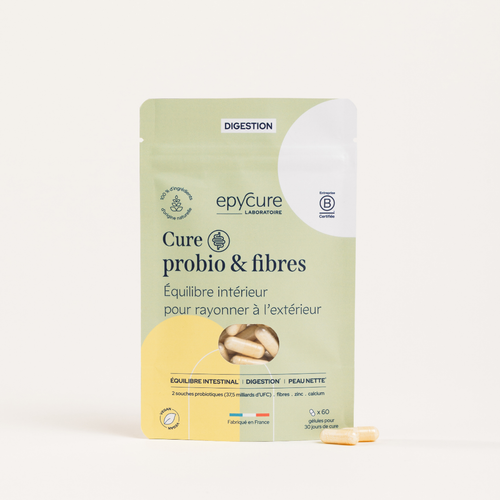
Fermented foods nourish and maintain the microbiome. But in certain situations, they are not enough: after taking antibiotics, in cases of irritable bowel syndrome or established dysbiosis, probiotic supplementation can provide targeted doses and strains. The fundamental difference: a well-formulated probiotic supplement provides selected strains in precise doses (10 to 50 billion CFU), in an enteric-coated capsule that protects the bacteria until they reach their site of action.
Key Takeaways
Fermented foods are the best natural sources of probiotics. For a noticeable effect, consistency and variety are the priorities. When the microbiome is under greater strain (after antibiotics, recurring digestive problems, chronic stress), targeted supplementation complements and enhances the effects of a daily fermented-food diet.
Food supplements. If you have persistent digestive problems, consult a doctor before adjusting your diet or supplementation.