You feel tired even after 8 hours of sleep. You lose your temper over nothing. You have gained weight around your stomach without changing your diet. Taken individually, these signs may seem harmless. Together, they may tell the same story: that your cortisol has been too high for too long.
What exactly is cortisol?
Cortisol is a hormone produced by the adrenal glands, often nicknamed “the stress hormone.” Its role is essential: it mobilizes energy, sharpens alertness, regulates blood pressure, and modulates inflammation. In the morning, it naturally rises to help you wake up. In the evening, it falls to make way for sleep.
The problem arises when stress becomes long-term. The body remains stuck in alert mode, cortisol stays elevated, and the body begins to pay the price.
8 signs of excessively high cortisol
1. Fatigue that doesn’t go away despite rest. Paradoxically, excess cortisol exhausts the adrenal glands and disrupts recovery cycles. The result: you sleep, but you don’t really recover.
2. Sleep problems despite feeling tired. Cortisol follows a circadian rhythm: high in the morning, low in the evening. In cases of chronic stress, this rhythm becomes disrupted. You have trouble falling asleep, wake up during the night, sometimes with your mind racing for no apparent reason.
3. Unusual irritability. A nervous system saturated with cortisol becomes hyperreactive. You overreact to situations that normally wouldn’t cause a problem. Your mood becomes unstable.
4. Brain fog. Poor concentration, an unreliable memory, difficulty making simple decisions. Excess cortisol directly affects cognitive function.
5. Abdominal weight gain. Cortisol promotes fat storage, particularly around the stomach, even in people who eat reasonably. It is one of the most characteristic signs of chronic stress.
6. Compulsive cravings for sugar and fatty foods. Cortisol disrupts hunger and satiety signals. It stimulates the appetite for energy-dense foods — this isn’t a lack of willpower, but a hormonal response.
7. Weakened immunity. Elevated cortisol over time suppresses the immune system. Repeated colds, lingering infections, and slow healing are all signs to take seriously.
8. A puffy or rounded face. Cortisol promotes water retention and can alter fat distribution, particularly around the face and neck.
How can you naturally rebalance your cortisol?
First and foremost, lifestyle matters: regular sleep, moderate exercise (intense exercise can instead increase cortisol), relaxation techniques, and reducing stimulants. These basics are non-negotiable.
However, certain natural ingredients play a decisive role in regulating cortisol. Plants known as adaptogens — such as ashwagandha — help the body respond better to stress without shutting it down. They act on the hypothalamic-pituitary-adrenal axis (HPA axis), which regulates cortisol production.
Magnesium, meanwhile, is essential for the proper functioning of the nervous system. Yet chronic stress causes increased magnesium loss: the more stressed you are, the more you lack, which further amplifies your reactivity to stress. It’s a vicious cycle that needs to be broken.
The Epycure solution: Cortisol Balance Supplement
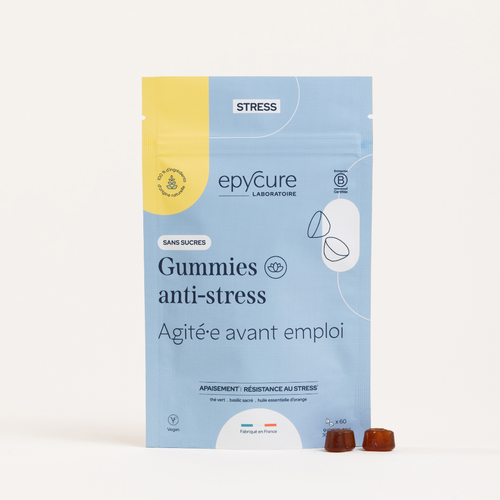
The Epycure Cortisol Balance Supplement was specifically formulated to support people exposed to chronic stress with persistently elevated cortisol levels.
It is based on a complete synergy:
- Ashwagandha KSM-66® (250 mg) — the market’s most studied patented ashwagandha root extract. In a double-blind clinical study conducted on 58 adults, a dose of 250 mg/day for 8 weeks showed a significant reduction in blood cortisol (from 16.3 to 13.61 µg/dL) and a major reduction in perceived stress. Ashwagandha has adaptogenic properties and helps the body withstand stress.
- Bisglycinate magnesium (56.25 mg) — a highly bioavailable form that contributes to the normal functioning of the nervous system and helps reduce fatigue.
- L-Tryptophan (100 mg) — an amino acid precursor to serotonin that promotes emotional balance and relaxation.
- Vitamins B5, B6, B9, and B12 — vitamin B5 contributes to the normal synthesis of steroid hormones; B6 supports the regulation of hormonal activity; B9 and B12 contribute to normal psychological functions and help reduce fatigue.
The formula contains no exogenous hormones, is made in France, certified B Corp, and 72.6% of its ingredients are of natural origin.
Timeline of effects: the first sensations of relaxation from Day 15. By Day 30, stress peaks occur less frequently. By Day 90, the effects become lasting.
Discover the Cortisol Balance Supplement →
Conclusion
Chronic stress is not inevitable, and its effects on the body are not irreversible. Identifying the signs of excess cortisol is already a way to take back control. The next step is to take action — with the right ingredients, at the right time.
📚 Read also