We invest in the best serums, stock up on SPF creams, and double-cleanse in the evening. And yet, dull skin, fine lines settling in, fleeting hydration despite the extensive routine. The reality: beautiful skin is largely built from within. The nutrients you provide your body determine the quality of collagen, cellular hydration, and your epidermis’s ability to regenerate.
Understanding the structure of the skin
The skin is a complex organ organized into three main layers:
- The epidermis: the surface layer, composed mainly of keratinocytes. This is where cell renewal and the hydrolipidic barrier take place.
- The dermis: the middle layer, rich in collagen (70% of dry mass), elastin, and hyaluronic acid. It is what gives the skin its firmness and elasticity.
- The hypodermis: the deep layer, made of adipose tissue that cushions and insulates.
From our twenties onward, collagen synthesis decreases by approximately 1% per year. Hyaluronic acid production also declines. The result: the dermis gradually loses volume and hydration, and the first signs of aging appear.
Key nutrients for healthy skin
Vitamin C: an essential collagen cofactor
Vitamin C plays a central role in collagen synthesis. It is a cofactor for the enzymes prolyl hydroxylase and lysyl hydroxylase, which stabilize collagen’s triple-helix structure. Without vitamin C, the collagen produced is poor in quality and breaks down quickly. The EFSA recognizes that vitamin C contributes to normal collagen formation for the normal function of the skin. It also has a powerful antioxidant action, protecting skin cells from oxidative stress caused by UV rays and pollution.
Zinc: guardian of normal skin
Zinc is a trace element with multiple roles in skin health. It contributes to cell division, wound healing, and the regulation of sebum production. The EFSA recognizes that zinc contributes to the maintenance of normal skin. Zinc deficiency often manifests as dull skin, persistent blemishes, and slower healing of lesions.
Biotin (vitamin B8): the beauty vitamin
Nicknamed the “beauty vitamin,” biotin contributes to the metabolism of fats and amino acids needed for healthy epithelial tissues. The EFSA recognizes that biotin contributes to the maintenance of normal skin. It is also involved in hair growth and nail strength, making it a key nutrient for overall beauty.
Hyaluronic acid: the skin’s water reservoir
Hyaluronic acid occurs naturally in the dermis, where it binds and retains up to 1,000 times its weight in water. It is what gives the skin its plump appearance and deep hydration. Its synthesis decreases with age — levels begin to decline as early as 25. Oral supplementation helps support dermal reserves alongside topical application.
Antioxidants: protectors of skin capital
Vitamin E, polyphenols, and carotenoids (beta-carotene, lutein) neutralize free radicals that accelerate skin aging. Their action is synergistic: vitamin C regenerates oxidized vitamin E, which in turn protects lipid cell membranes.
Diet and skin: the tangible connections
What you eat is literally reflected in your skin:
- Excess refined sugars: glycation of proteins (including collagen) produces AGEs (advanced glycation end-products), which stiffen fibers and accelerate aging.
- Omega-3s (oily fish, flax seeds, walnuts): reduce low-grade inflammation and strengthen the skin barrier.
- High-quality proteins: provide the amino acids (glycine, proline, hydroxyproline) needed for collagen synthesis.
- Hydration: drinking 1.5 to 2 L of water per day maintains cellular turgor and skin comfort.
The difference between topical products and nutricosmetics
Topically applied active ingredients act on the surface — they hydrate the epidermis, create a protective film, and may penetrate as far as the superficial dermis. Active ingredients taken orally, on the other hand, reach the deep dermis through the bloodstream: they nourish fibroblasts (collagen-producing cells), support melanoblasts, and contribute to cell renewal deep within the skin. The two approaches are complementary — not competing.
Our formulas for plumper skin from within
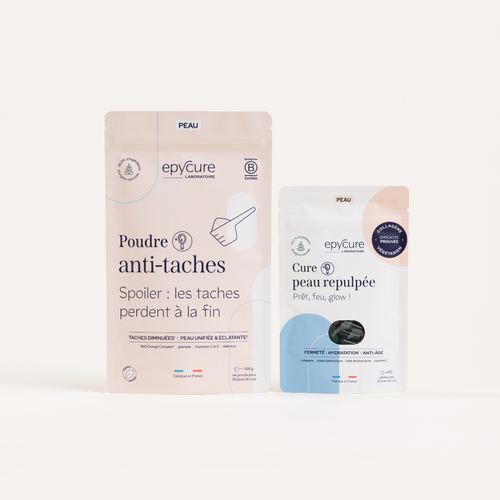
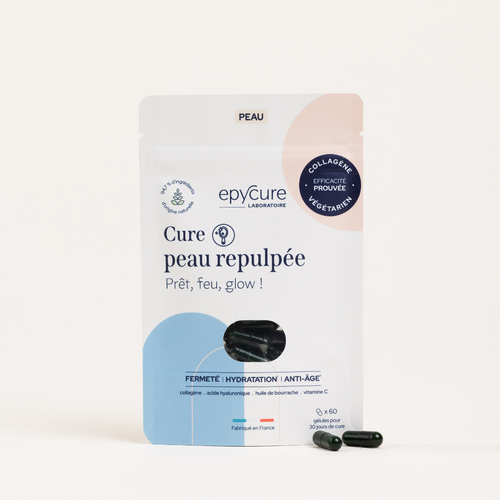
- Plumper Skin Program — marine collagen, hyaluronic acid, vitamin C, zinc, and biotin for comprehensive anti-aging action
- Beautiful Skin Duo — a synergistic combination designed to maximize radiance, firmness, and hydration over a 3-month program
What clinical studies show
Several randomized clinical trials have evaluated the effect of collagen supplements on the skin. A meta-analysis published in the Journal of Cosmetic Dermatology (2021, n=1,125 participants) concluded that hydration, elasticity, and dermal density improved significantly after 8 to 12 weeks of supplementation with hydrolyzed collagen peptides (2.5 to 10 g/day). The results are enhanced in the presence of vitamin C, which optimizes endogenous synthesis.
Regarding oral hyaluronic acid, a Japanese study (Kawada et al., Nutrition Journal, 2015) showed increased skin hydration and a reduction in superficial fine lines after 12 weeks of taking 120 mg/day of low-molecular-weight hyaluronic acid.
Your beauty-from-within routine — our practical tips
- In the morning: take your skin supplements with a glass of lemon water (the vitamin C in lemon enhances zinc absorption)
- Your plate: prioritize high-quality animal proteins (bone broth, fish, eggs), colorful antioxidant-rich vegetables, and healthy fats (avocados, olive oil)
- Sleep: skin regeneration is at its peak at night — 7 to 9 hours of quality sleep are essential
- Sun protection: SPF 30 minimum all year round — UV rays are the leading cause of collagen breakdown
- Duration: allow 8 to 12 weeks of supplementation to see visible effects, and 3 months for lasting results
Did you know? Lab'Epycure formulated the Plumper Skin Program with a low-molecular-weight form of hyaluronic acid specifically selected for its optimal oral bioavailability — a key distinction compared with generic formulas.