All long-term studies show that 80% of people who have followed a weight-loss diet regain weight after one year, and 95% do so after three years. But why doesn't the body want to maintain weight loss? Why is losing weight so difficult? And how can we overcome this resistance to weight loss? We answer all these questions in this article.
The physiological or metabolic issues that prevent us from losing weight sustainably.
- Inequality between men and women
The inequality between men and women is not a myth. Unfortunately, men and women are not equal when it comes to food. During adolescence, men develop muscle mass that enables them to burn calories more easily. Their basal metabolism, meaning the amount of energy they expend each day to maintain the proper functioning of their organs, is higher than that of women because muscles expend more energy. Conversely, women are programmed (solely genetically) to create life. They therefore tend to store more body fat in order to meet the child's needs should they become pregnant.
- The inevitable yo-yo effect
During repeated dieting, the body loses muscle before it loses fat. The body isn't foolish! It will do everything possible to preserve reserves, just in case a shortage or illness strikes. This muscle loss leads to a decrease in basal metabolism. As a result, a person will have to eat less to maintain their weight. This phenomenon is even more pronounced with a diet that provides no protein, an essential nutrient for building muscle.
With a very restrictive diet (fewer than 800 calories per day), the body becomes deficient in nutrients and enters a state of stress. We know today that stress is our number one enemy. Stress alerts our body to danger. To protect itself, metabolic changes occur. In particular, the satiety hormone is no longer released. Thus, when we resume a normal diet, the body catches up, it “eats,” and stores reserves. In short, the kilos come back…
Alternating periods of restriction and binge eating disrupts the body, increases deficiencies, stress, and fatigue, and losing weight becomes increasingly difficult. Hello, athletes who alternate between bulking and cutting!
Hormonal imbalances.
Everything is a question of balance. Weight and hormone secretion are linked. When there is an imbalance, the body tends to store more fat.
In cases of overweight, an imbalance in insulin is likely to be the cause. Insulin is, in fact, the hormone that enables the body to store its own energy. If it is out of control, the body will not store its energy properly. To regulate insulin production, it is important to avoid eating too many foods with a high glycemic index. It is also recommended to choose a breakfast low in sugar but rich in fat and protein.
An excess of estrogen leads to weight gain and fat storage. The excess estrogen will, in fact, accumulate. To prevent this weight gain and eliminate estrogen, it is a good idea to eat more cruciferous vegetables such as broccoli, cabbage, and arugula, which promote the detoxification of harmful estrogen. The liver responsible for this detoxification can also be supported with milk thistle.
Leptin is your body's satiety hormone. When leptin levels are low, hunger pangs during the day recur, and the body tends to store fat more easily. To facilitate its secretion, it is important to eat slowly and in a peaceful place (we can never repeat this enough), take the time to chew your food, and make sure you get enough good-quality sleep.
Cortisol, the stress hormone, increases blood sugar levels, hunger pangs, and cravings for sugar… Over time, having too much cortisol slows down the basal metabolism and therefore makes sustainable weight loss more difficult. To address this, it is essential to incorporate wellness routines into your daily life, such as yoga, meditation, breathing exercises, and taking care of your sleep and yourself.
Psychological issues that prevent you from losing weight sustainably
- Stress
As explained earlier, stress leads to an overproduction of cortisol. This hormone increases blood sugar levels to supply the organs with energy so they can cope with danger. Cortisol tells our fat cells to store even more fat. It blocks insulin secretion, so that sugar remains in the blood to fuel the organs. Recurrent overproduction of cortisol also disrupts serotonin secretion, the well-being hormone, causing temporary depression and addictive behaviors.
This is how the vicious cycles of diets begin: restriction, stress, compensation, guilt. All of this is highly detrimental to our mental health. Some people may even develop eating disorders and psychological disorders.
- Psychological barriers
Change begins on the inside. The American coach Tony Robbins says: “Change is 80% psychology and 20% implementation.” And by psychology, he does not mean motivation. Sometimes people have the willpower needed to lose weight, but at the unconscious level, something opposes it: “I don't want to lose weight because I love eating,” “Healthy diets are boring,” “If I lose weight, I am being disloyal to my family, who are also overweight.” All these beliefs oppose the weight-loss process.
To lose weight permanently, it is therefore important to understand our own inner saboteurs and put an end to them. Why have we gained weight? Why are we unable to lose weight?
Sigmund Freud said it: “We are the playthings of our unconscious.” Curves are like the knots in a tree; they conceal our inner world, its hidden vulnerabilities, repressed fears, and poorly healed wounds. To lose weight permanently, we will have to confront them. Our body gains the weight it needs at a given moment. If we need to take up space, it will grow larger; if we need to avoid being noticed, we will become thinner. Here are 4 psychological barriers preventing you from losing weight:
- The family circle: losing weight when all the family members have fuller figures means being different, or worse, valuing a body in complete opposition to the inherited genetics. At the risk of hurting those close to us, it is sometimes necessary to lose weight. As psychiatrist Gérard Apfeldorfer, author of Losing Weight Is All in the Mind, says: “Slimming down also means breaking with those who love us as we are and telling them, by losing weight, that they are wrong to love us this way, since we do not love ourselves.” Out of guilt over betraying those we love, the excess pounds remain attached to us.
- The need for comfort: Food is comforting. Eating activates the secretion of endorphins with anti-anxiety properties. Stress, disappointment, boredom? Nothing beats a raid on the fridge to neutralize this emotional overload that overwhelms us. Unfortunately, this only works for a while. "The problems that troubled us have not disappeared. And while we lament our ever-increasing weight, we forget why we started eating and do not confront our problems. And the more afraid we are of suffering, the more dependent we become on what prevents us from suffering," says nutritionist and psychotherapist Jean-Philippe Zermati, author of Lose Weight Without Dieting.
- Our relationship with the body and desire: Being overweight can also serve as a protective shield that keeps all male attention or desire at a distance in particular. By rejecting the image of the perfect body that conveys sex appeal, we protect ourselves and free ourselves from all fears related to sexuality. As we lose weight, we regain our power of seduction; we accept seducing and being seduced, desiring and being desirable. This physical and psychological exposure can be dizzying for some, as Dr. Waysfeld explains: "As a defense mechanism, caught between the desire to lose weight and the pain of confronting their fear, some unconsciously choose to protect themselves by keeping their extra weight."
- Being hard on oneself: Being thin means having one's life under control and succeeding at every level: romantic, professional, social... But excessive control over what we eat sooner or later leads to a loss of control: irresistible compulsive eating and substantial weight regain. Caught in a stark distortion between the projection of one's perfect life and reality, we wage an unwinnable battle.
When we are doing well, sleeping well, when everything is going well in our lives, and when our desires and actions are aligned, weight imbalance disappears and we naturally lose the weight we need to.
In conclusion, to lose weight sustainably, forget the terms “willpower, exercise & diet” and switch to “serenity, balance, and well-being.” Put an end to this endless war with your body and take care of it!
Weight-loss diets: a real danger to health
In naturopathy, we know that it is easier to add good foods every day than to eliminate bad ones. A diet that truly nourishes us makes our cravings and compulsive eating disappear, helping us regain our figure and energy.
Conversely, weight-loss diets are harmful to our physical and psychological health. Often completely unbalanced, they deprive us of the nutrients we need to be in top form.
The body is less able to eliminate toxins, digestion becomes more difficult, and hormone production becomes completely unbalanced. All of these factors prevent us from losing weight sustainably.
The most dangerous ones? Those that remove the essential fats needed for the brain to function properly! They can cause depression, poor memory, and fatigue.
High-protein diets aren't any better. They encourage excessive consumption of meat, fish, eggs, and dairy products, which acidifies the body. In short, your body turns into a real bottle of Coke… To restore its balance, it draws on its reserves of alkaline minerals (hair, teeth, and bones). The result? Hair loss, cavities, brittle nails, skin problems, fatigue, as well as osteoarthritis, osteoporosis, rheumatism, gout, heartburn…
Stop believing common weight-loss myths! The 11 mistakes we make that prevent us from losing weight
- Getting discouraged every time you weigh yourself
It's normal for your weight to fluctuate throughout the day and during your menstrual cycle. To assess your weight loss, there's nothing better than weighing yourself on the same scale, once during your cycle, on the same day, at the same time, and wearing the same clothes. And avoid Mondays! On weekends, you tend to eat more than during the week. In fact, researchers at Washington University School of Medicine in Saint Louis discovered that people on diets lost weight during the week but never over the weekend.
Above all, don't get discouraged if the number doesn't change or increases. Your weight can also vary depending on your level of hydration, the outside temperature, the type of food you've eaten, and your physical activity… What matters most is how you feel in your body. You may, in fact, have become slimmer by gaining muscle and losing water retention.
Don't focus on the number displayed on the bathroom scale; it isn't representative of your worth or of the success of your efforts.
- Skip a meal
In reality, it all depends on why you skip the meal. If you're not hungry, you're absolutely right not to eat at that time. Listen to your hunger and eat when you're hungry. On the other hand, if you're hungry and skip the meal, you can be certain that you'll trigger a binge later. By intensifying your hunger, you'll eat far more than you would have if you'd eaten at the right time.
For all those who skip breakfast because you simply don't have time in the morning, you're also making a serious mistake. After 8 hours of sleep, your body needs energy. By depriving it of food, it will draw the energy it needs from your muscles, thereby reducing your basal metabolic rate - in other words, significantly reducing your body's ability to burn calories.
- Taking too many weight-loss pills
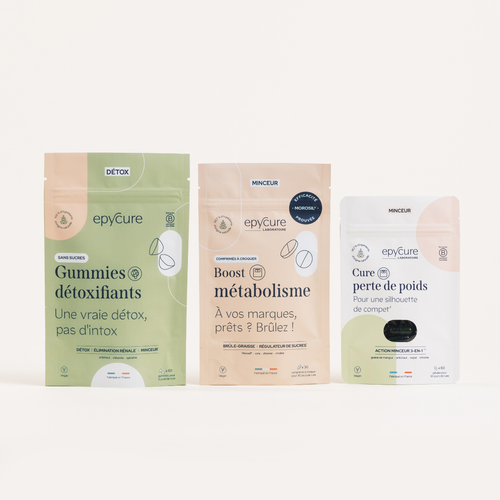
There is no miracle pill. In the case of an otherwise flawless diet, these pills may indeed help you lose a few kilos, but they will never make you lose weight on their own.
Appetite-suppressant capsules in particular make you temporarily forget your hunger. But your body is not fooled! Your hunger will return shortly afterward and with greater force.
Not to mention that these pills are not good for your health. Appetite suppressants derived from amphetamines cause serious psychiatric disorders, pulmonary hypertension, and sometimes death.
- Not getting enough sleep
We tend to forget about sleep. We feel that when we sleep, nothing happens and we do not burn any calories. FALSE! While we sleep, our bodies repair themselves and regain their balance. Lack of sleep can seriously hinder weight loss. It causes an imbalance between ghrelin and leptin, two appetite-regulating hormones. The result: we eat more and gain weight.
- Not drinking enough
We often tend to confuse hunger with thirst. Before eating, start by drinking something to see whether the hunger goes away.
Furthermore, even though drinking water will not make us burn calories, it helps us eliminate toxins from the body, combat water retention, and relieve its various unpleasant effects, particularly swelling of the face, hands, legs, and stomach.
- Banishing bread and starchy foods
Bread and starchy foods do not make you gain weight. On the contrary, they often make us chew more, thereby stimulating our satiety hormone. Furthermore, they provide our bodies with sustained energy over the long term. Bread and starchy foods cause weight gain only when consumed in excess. Everything is a matter of balance. Everything is poison, nothing is poison. It is only the dose that makes the poison.
- Banishing fat
We tend to avoid fats. During a diet, some people stop using fat for cooking or dressing vegetables. The French Food Safety Agency says it clearly: eating less fat does not lead to long-term weight loss. Its latest report on the subject, dated March 1, 2020, clearly explains that: "It is the total amount of energy, not the fat content of diets, that is very generally correlated with the risk of metabolic conditions such as diabetes or obesity."
Furthermore, from a health perspective, fat is very important. It helps maintain hormonal balance and the absorption of fat-soluble nutrients such as carotenoids, vitamin E, and polyphenols.
Curcumin, for example, an active compound in turmeric recognized for its anticancer properties, may be absorbed up to five times better in the presence of fat. Similarly, absorption of lutein, an antioxidant found in abundance in tomatoes that may protect us from aging, increases by 200% during a normal meal compared with a low-fat meal.
Finally, researchers have shown that when low-fat diets are compared with low-carbohydrate diets (with fewer starchy foods), weight loss is similar. However, in the long term, people whose diet retains a share of fat on their plate are in better cardiovascular health.
- Banning sugar
Sugar is our primary fuel. We need it to live, move, and maintain our motivation.
Generally speaking, depriving yourself of an entire food category or certain foods leads to cognitive restraint, meaning excessive self-control that can quickly become an eating disorder and always results in lapses, snacking, compulsive eating, distress, and guilt. It is important to listen to your cravings and needs.
- Eating only composed salads
Many people order a Caesar-style composed salad at a restaurant instead of steak and fries. Yet the two dishes contain roughly the same number of calories. Furthermore, by eating only salads, we tend not to feel full enough and therefore to supplement our meal with bread or dessert, which is not the case with a dish containing vegetables, protein, and starchy foods.
- Eating light products
Light cream, 0% yogurt, light margarine, sweetener, Coke Zero. These foods, which are low in calories and lacking in flavor, are less satisfying. We therefore tend to eat two instead of one. In terms of calories, this amounts to the same thing. And even if we do not eat two of them, we may end up eating something else.
Furthermore, synthetic sweeteners are often added to restore the sweet taste. These molecules have strong sweetening power but contain no nutrients. There are many of them; the best known are: aspartame, sucralose, cyclamate, saccharin, acesulfame potassium, neotame, alitame…
Although they contain no calories, that does not make them harmless to our health! Once in the mouth, our brain analyzes the sweet taste and thinks it will have to take in glucose. It therefore triggers insulin production to move glucose into our cells. But when it does not see the glucose arriving, it signals hypoglycemia. You will then feel tired, but above all, you will want to eat something sweet, quickly.
- Exhausting yourself through exercise
The more you exercise, the more your weight on the scale will increase because you will build muscle, which weighs more than fat.
Furthermore, we therefore tend to engage only in cardiovascular physical activities such as jogging because they are known to lead to faster weight loss. However, too much cardio over the long term causes you to lose muscle mass, which slows your metabolism. To maintain your ideal weight, you will therefore need to eat less. In the long term, you will have to eat like a bird, creating a constant struggle with yourself and leading to feelings of frustration. The risk of the yo-yo effect is then increased.
- Feeling guilty at the slightest slip-up
There can be no slip-up when there are no rules. Every body is unique and functions in its own way.
The word "slip-up" is already toxic! It reinforces the idea that some foods are forbidden. This idea of a slip-up promotes restriction and deprivation.
Don't forget that your brain does not understand negation, so the more you tell it not to eat something, the more it will want to give in to it.
Furthermore, if you stop eating a food over the long term, your body will no longer know how to recognize or digest it. This weakens your digestive and immune systems.
Allow yourself enjoyable meals without any guilt. During my naturopathy consultations, I always end my dietary recommendations with 3 enjoyable meals per week. No rules! Whether at a restaurant, at a party or at home, it doesn't matter - eat whatever you want. That's also the key to balance.
And I even want to go further: eating should be a celebration, a pleasure and a source of comfort every day! Don't try at all costs to eat healthily; first try to eat better. Stop when the taste pleasure ends.
To lose weight sustainably, stabilization is the key.
To lose weight sustainably, it is important to first return to a healthy diet and then stabilize your weight.
Eat healthily, yes! But don't forget about enjoyment! If you want to lose weight and stay slim, maintain your health and well-being, it is essential to adopt new eating habits:
- Give your body all the nutrients it needs with 3 balanced meals a day and an afternoon snack if necessary. Without deficiencies, there are no compulsive cravings or hunger pangs!
- Listen to your body and its three eating sensations: HUNGER, FULLNESS, SATIETY. If you listen to them by eating when hungry, taking your time, and chewing well, you will gradually feel fullness setting in, followed finally by a state of no hunger, satiety, which should make us stop eating. They are the safeguards of our weight balance.
- By following this, your relationship with food will remain healthy and your weight will be maintained over the long term. So do not force yourself to eat breakfast if you are not hungry, nor to finish your plate as your mother taught you. No, listen to your body: if you are hungry, eat; if you are not hungry, do not eat, even if it is mealtime, even if all your colleagues go to the cafeteria and leave you alone; listen to yourself. Gradually, in any case, your sensations will settle into a rhythm of three meals a day at socially accepted times.
- In general, a structured eating routine remains important for combating weight gain. Adopt a living, ancestral diet as much as possible. Raw vegetables and enzyme-rich foods are sorely lacking in our diet, which consists entirely of refined, cooked, hot foods denatured by chemicals.
- Therefore, start reintroducing RAW foods at every meal and at the beginning of the meal to provide digestive enzymes, fiber, minerals, and vitamins of excellent quality, which will nourish your body as healthily as possible, without tiring or overloading it, and even by restarting its metabolic activity.
- All food groups should be present at every meal, with moderation limited to one dairy product per day.
- Limit glycemic index levels that lead to cravings.
- Follow the right food combinations for good digestion.
- Avoid foods you are intolerant to, as they may be causing your excess weight.
- Eliminate ready-made dishes packed with additives.
- Choose lean proteins: oily and white fish, oysters, skinless white meats, lean red meats: minced steak with < &5% fat, roast beef, beef steak, duck breast strips, and pork tenderloin.
- Add aromatic herbs to your dishes: rosemary, herbes de Provence, ginger, turmeric, and cloves in cooking water instead of salt and stock cubes. Limit salt, which contributes to water retention and is found in cured meats, bread, cheese, ham, ready-made dishes from caterers, and industrial products.
- Avoid milk, cheese, and dairy products, which are inflammatory; limit yourself to one serving of sheep's or goat's dairy per day, preferably organic, as well as soy.
- Season with olive, flaxseed, walnut, and camelina oils; eat walnuts and lamb's lettuce for their anti-inflammatory omega-3 content.
- Drink enough water. Sometimes we eat when we're dehydrated, especially office workers in overheated spaces. The water should be low in minerals. Say goodbye to your weight-loss partner. Hello to waters suitable for babies' bottles, such as Volvic, Mont Roucous, and Evian. They don't tire the kidneys or leach calcium from your bones because they contain almost no sulfate, unlike other waters.
- Drink Sencha green tea, blue-green Oolong tea, and pu-erh black tea for their detoxifying and so-called “fat-burning” effects. A maximum of 75 cl per day to avoid tiring the kidneys.
- Drink smart and effectively! It's recommended to drink throughout the day in small sips, away from meals, so the water doesn't bind to salt, and before 7 p.m. Yes! Forget the one-liter teapot in front of the TV while cocooning; it's the easiest way to get bags under your eyes and cellulite!
- Nevertheless, you should always listen to your body and therefore to your thirst. If it's very hot or you've exercised, of course you need to hydrate. If that's not the case, it's either because you haven't drunk enough during the day or because you've eaten too much salt. Yes! Salt draws in and stores water. As you've understood, avoid the salt shaker in favor of herbs and spices.
- ABOVE ALL, enjoy yourself; eating healthily is a real pleasure!
And get moving! Walk for more than 30 minutes at a stretch; the first half-hour of activity only burns sugar, and after 30 minutes we draw energy from fat! Make the slightest physical activity enjoyable: clean to music, climb the stairs by fully extending your leg (your knee must not remain bent forward before climbing the next step; this works your glutes), carry your groceries with your arms slightly bent to work your biceps and triceps, contract your glutes while sitting in the car or at your desk, walk with your head held straight, shoulders back, and a brisk stride with your abs engaged - you've already lost an inch around your waist simply by standing like this... Be inventive and creative to tone your muscles at any time.
Go to the hammam and sauna, and massage yourself vigorously with a horsehair glove.
Sleep well to promote a healthy metabolism. It's proven that short sleepers are heavier than long sleepers, so go to bed early; from a metabolic perspective, the hours before midnight count double. It's better to sleep from 10 p.m. to 6 a.m. than from 1 a.m. to 9 a.m.
In case of persistent excess weight, don't hesitate to contact a dietitian, nutritionist, or naturopath to receive the best possible support.
📚 Read also
✨ Our Epycure solutions