What is digestion for?
Digestion transforms the food we eat into molecules that can be absorbed by the body. The digestive system consists of a series of organs, each of which plays a specific and essential role in digestion.
Food is transformed through mechanical and chemical digestive processes. Mechanical digestion softens and reduces food to a mush through chewing, and churns the food bolus through stomach contractions. Chemical digestion, which takes place throughout the digestive tract, dissolves nutrients and breaks down absorbable components with the help of digestive enzymes and digestive juices.
Through these two processes, the complex molecules we ingest are transformed into simpler elements that are more easily absorbed by the body: carbohydrates, proteins, fats, vitamins, minerals and trace elements.
After being absorbed in the digestive tract, nutrients enter the bloodstream and are directed to the liver, which distributes them throughout the rest of the body or stores them. All of this provides our bodies with the energy and nutrients they need to function. Non-digestible substances such as fiber are compacted into stools and expelled through the anus at the end of digestion.
Digestion is a long process that lasts around 24 hours and varies depending on the amount of food eaten and its fat content. The fattier a meal is, the longer it takes to digest.
What are the main stages of digestion?
As mealtime approaches, even before the first bite, a signal is sent to the digestive organs to begin digestion. The mouth produces saliva, the stomach contracts, and the pancreas and gallbladder secrete digestive juices. The journey of food can be summarized in four major stages.
Chewing
Digestion begins in the mouth through chewing. The food bolus is cut and crushed by the teeth and moistened with saliva. Saliva has 3 essential roles. It moistens food, reduces its size to facilitate swallowing and the action of digestive juices, and begins the digestion of carbohydrates through enzymes called amylases. Starch molecules found in bread, pasta and potatoes, for example, are converted into glucose.
The food then travels down the esophagus through muscle contractions and reaches the stomach.
This stage is essential, since chewing food thoroughly helps optimize and facilitate digestion throughout the rest of the digestive tract.
Gastric digestion
Once the food reaches the stomach, it contracts to churn and grind the food bolus into smaller pieces. The cells lining the stomach secrete gastric juices, a mixture of enzymes and hydrochloric acid. The enzymes break down complex molecules into simpler elements that can be more easily absorbed by the digestive tract. Some enzymes begin digesting proteins and fats, breaking them down into amino acids and fatty acids, respectively.
These partially digested foods, mixed with gastric juices, form a mush called chyme, which gradually passes into the small intestine.
Intestinal digestion
The chyme now passes into the duodenum, the first part of the small intestine, the longest organ in the digestive tract at approximately 7 meters long. This organ both continues to break down food and absorbs the nutrients produced by digestion.
As it reaches the duodenum, the chyme is acted on by new digestive juices:
- The pancreatic juice, secreted by the pancreas, neutralizes the acidity of gastric juices and completes the breakdown of starch into glucose,
- The intestinal juice, produced by the intestine, and the pancreatic juice ensure the final breakdown of large molecules such as proteins and fats, transforming them into amino acids and fatty acids, respectively,
- Bile, a liquid produced by the liver and stored in the gallbladder, plays a special role because it contains bile salts rather than enzymes. These salts solubilize fats and facilitate their intestinal absorption.
This long journey through the intestine gives the body enough time to absorb the various nutrients through the cells lining the intestinal wall. Once absorbed, nutrients useful to the body enter the bloodstream to be distributed to the body's various organs. Only indigestible matter such as dietary fiber and some of the water it contains continues its journey toward the large intestine.
Colonic digestion
The large intestine, known as the colon, is shorter than the small intestine and measures only one and a half meters. At this stage, most digestible substances have already been absorbed, and only the indigestible matter mentioned above reaches the entrance to the colon. Its role is therefore to recover the water remaining in this indigestible matter and then compact it into stools. This waste is stored in the rectum and expelled through the anus. Once these excrement products have been eliminated, the digestion process is complete.
Gut flora
Our digestive system is accompanied by our gut flora, also called the intestinal microbiota. It is found in the terminal part of the small intestine as well as throughout the colon. It consists of numerous beneficial microorganisms, approximately 10,000 billion “friendly” bacteria. They can complete the digestion of certain proteins, such as amino acids present in undigested matter, and indigestible fiber, sometimes causing gas and flatulence when foods are rich in sulfur (cabbage, onions, eggs) or milk proteins. It plays an essential role in the body because it contributes to the functioning of the immune system, protects the body against potentially dangerous bacteria, participates in the synthesis of certain vitamins, and can neutralize toxins produced by germs responsible for intestinal infections.
Disorders & solutions
Several factors can destabilize the gut flora, including medication, germs, food intolerance, an unhealthy diet, a spike in stress or fatigue, insufficient water intake, or a digestive disease. An imbalance in this gut flora, or dysbiosis, could contribute to increased susceptibility to infections, digestive disorders and food allergies. The most common disorders include heartburn and stomach cramps, regurgitation, bloating, diarrhea and constipation. They are usually mild but can be very uncomfortable.
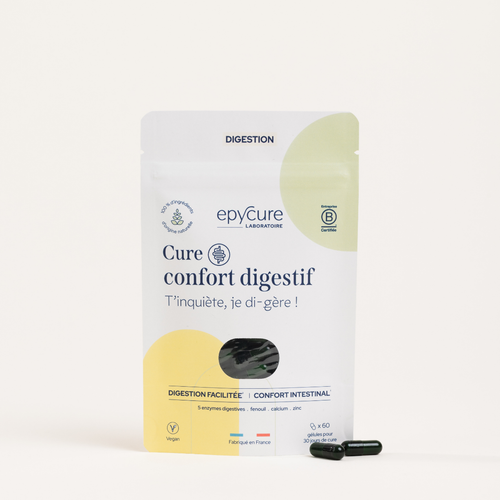
There are simple ways to promote good digestion. Eat more soluble fiber, such as carrots, zucchini, sweet potatoes and oat flour. Avoid fatty and spicy foods, vegetables that ferment such as cabbage and artichokes, and carbonated drinks. Drink at least 1.5 liters of water per day. Take at least 20 minutes to eat, in a calm environment, to optimize the work of the digestive tract. Engage in gentle, regular physical activity such as Pilates or yoga. You can also consider dietary supplements such as probiotics to soothe digestive disorders and facilitate digestion.
📚 Read also
✨ Our Epycure solutions