The meal is over, but your stomach has not caught up yet. It swells, feels tight, and sometimes hurts. This post-meal bloating is one of the most common digestive discomforts - and one of the most underestimated. The good news: you can take concrete action.
Understanding why your stomach swells after meals
Bloating is caused by a buildup of gas in the intestines. Several factors can be responsible. Eating too quickly or swallowing air while eating (aerophagia) directly introduces air into the digestive tract. The fermentation of certain foods - particularly legumes, cabbage, onions, or foods rich in fermentable fiber - produces gas during digestion.
Stress also plays a major role: it disrupts intestinal motility and can make the intestines hypersensitive. Hormonal fluctuations, particularly around menstruation, also promote abdominal swelling by altering water retention and intestinal sensitivity.
An imbalanced microbiome (dysbiosis) is often responsible for chronic bloating: certain pathogenic bacteria produce more gas, while the protective flora becomes less effective at regulating fermentation.
Natural solutions to ease your stomach
A few simple habits can make a real difference. Eat slowly and chew well: digestion begins in the mouth, and insufficient chewing places extra strain on the intestines. Avoid talking while eating and drinking a lot during meals - this limits air intake. Favor regular mealtimes and temporarily reduce the most fermentable foods if you are experiencing an acute episode.
Certain plants have been used for centuries to relieve digestive discomfort. Peppermint is recognized for its ability to support gastrointestinal well-being and promote digestion. Chamomile helps with indigestion and flatulence thanks to its antispasmodic properties, which relax the intestinal muscles. Ginger and fennel are also traditional digestive allies.
When it comes to the microbiome, certain probiotic strains have been studied for their specific action in reducing bloating: they limit colonization by gas-producing bacteria and reduce intestinal inflammation.
Choosing the right anti-bloating supplements
Not all probiotics are created equal. The strain matters just as much as the dose: you need a strain whose effectiveness for digestion has been specifically studied, along with a sufficient dosage for it to colonize the intestines. For fast action, combining plants + probiotics is particularly interesting: plants act within minutes on spasms and gas, while probiotics rebalance the microbiome over time.
The gummies format deserves a special mention: unlike capsules, it cannot contain live probiotics (the heat used during manufacturing destroys them). However, certain tyndallized strains - inactivated while retaining their benefits - are compatible with this format and are just as effective for digestion.
The Epycure solution for a lighter stomach
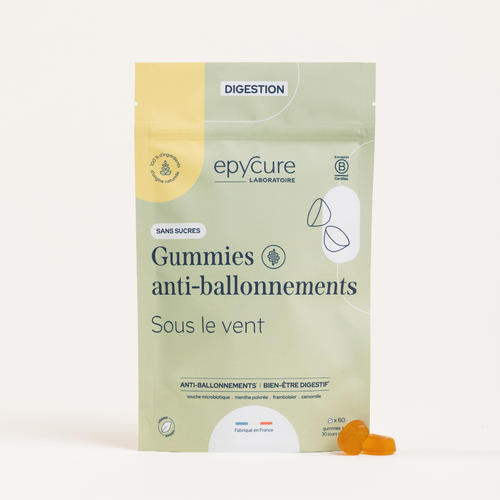
Epycure's Anti-Bloating Gummies have been formulated to act both quickly and over time on bloating. Their exclusive formula combines:
- The strain Bifidobacterium breve DSM 16604 (100 mg, tyndallized form), a probiotic whose effectiveness in reducing gastrointestinal discomfort has been demonstrated in several clinical studies. It acts by limiting colonization by pathogenic bacteria and reducing intestinal inflammation;
- Peppermint extract (170 mg), which contributes to gastrointestinal well-being by supporting digestion;
- Chamomile extract (20 mg), which helps with indigestion and flatulence thanks to its antispasmodic properties;
- Raspberry leaf extract (15 mg), which supports liver function and eases the digestive workload.
The formula is made from 100% ingredients of natural origin, manufactured in France, vegan, and gluten-free. The delicious apple-pear Gummies are taken after meals: 2 Gummies after a heavy meal for occasional use, or 1 gummy after each main meal as a course of treatment.
Results validated by Lab'Epycure: 96% experience less daily bloating, 87% feel lighter after meals, and 98% experience less digestive heaviness*.
*46 people tested the course for 1 month.
→ Discover the Anti-Bloating Gummies
What to remember
Bloating is not inevitable. Eating slowly, managing stress, adapting your diet, and choosing the right digestive ingredients can completely transform your comfort after meals. Your stomach deserves to feel light.
📚 Read also