A bloated stomach after a meal, uncomfortable gas, a lingering feeling of heaviness… Bloating regularly affects nearly 1 in 3 French people. And contrary to popular belief, it is not inevitable. Understanding its causes is the first step toward getting rid of it.
Understanding bloating
Bloating results from an excessive buildup of gas in the intestines. Several mechanisms may be involved:
An imbalanced microbiome (dysbiosis). When harmful bacteria overtake beneficial bacteria, intestinal fermentation goes into overdrive. The result: excessive gas production and inflammation. A weakened microbiome may be caused by antibiotic treatment, prolonged stress, or a diet low in fiber.
Transit speed. Eating too quickly, swallowing air, or consuming excessive amounts of fermentable foods (FODMAPs) contributes to gas formation. Legumes, cabbage, onions, and gluten are often involved.
Hormonal fluctuations. In women, bloating often intensifies before menstruation, due to estrogen, which slows transit and promotes water retention in the colon.
Stress. The gut-brain axis is very real. Stress activates the autonomic nervous system, disrupts intestinal motility, and impairs the permeability of the intestinal barrier.
Natural solutions for bloating
The first line of defense is dietary. Temporarily reducing FODMAP foods (pitted fruits, legumes, cow's milk, wheat), eating slowly, chewing carefully, and avoiding drinking while eating can provide rapid relief.
Digestive herbs also provide immediate support. Peppermint relaxes the intestinal muscles. Chamomile soothes spasms. Ginger stimulates gastric motility. These herbs can be consumed as an infusion after meals.
Over the long term, rebalancing the microbiome is essential. Regularly consuming fermented foods (yogurt, kefir, sauerkraut) and prebiotic fibers (artichokes, bananas that are not too ripe, leeks) nourishes beneficial bacteria and restores lasting balance.
Choosing the right supplements for digestion
Dietary supplements can speed up the restoration of digestive comfort, provided you choose them carefully.
Probiotics. Not all strains are equal. Choose strains whose effectiveness has been demonstrated in clinical studies specifically on bloating. Dosage also matters: dosages used in studies are generally around several billion CFUs.
Probiotics + prebiotics. This combination (synbiotic) is more effective than probiotics alone: prebiotic fibers nourish the introduced strains and enhance their effects.
Combined herbs. Peppermint, chamomile, cumin… a product combining probiotics and herbs with digestive properties provides both rapid action (on gas) and lasting action (on the microbiome).
Dosage form. For capsules containing live probiotics, gastro-resistant capsules protect the strains from stomach acid and ensure release in the intestines.
Epycure's solution for bloating
Epycure offers two complementary approaches depending on your needs.
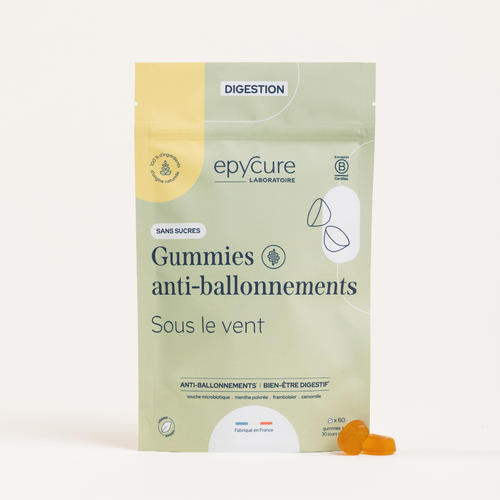
For rapid and occasional action, the Anti-Bloating Gummies combine the probiotic strain Bifidobacterium breve DSM 16604 — clinically studied for reducing gastrointestinal discomfort — with a trio of complementary herbs:
- Peppermint — contributes to gastrointestinal well-being by supporting digestion
- Chamomile — helps in cases of indigestion and flatulence
- Raspberry leaf — supports liver and kidney function
Lab'Epycure results: 96% of testers experienced less bloating on a daily basis, 87% felt lighter after meals, and 98% experienced less digestive heaviness — based on 46 people tested for 1 month. 100% ingredients of natural origin, made in France.
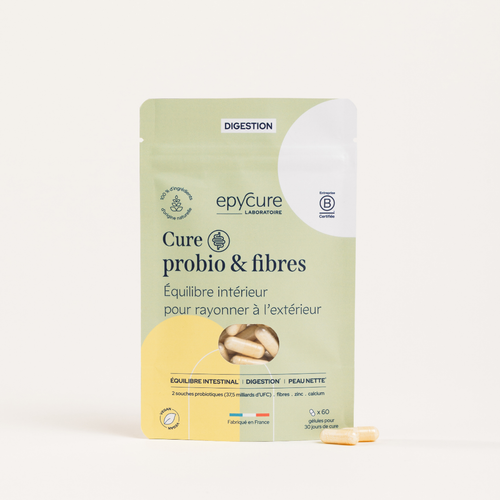
For deep and lasting action on the microbiome, the Probiotic and Fiber Course (Healthy Guts) combines two clinically studied strains — Bifidobacterium lactis LMG P-21384 and Bifidobacterium breve DSM 16604 — with inulin (a prebiotic fiber derived from agave bulbs), zinc, and calcium. Dosage: 37.5 billion CFUs. The capsules are gastro-resistant to protect the strains until they reach the intestines.
Lab'Epycure result: 100% of testers experienced less digestive discomfort and 100% noticed less tightness — based on 27 people over 3 months. An additional benefit: this course also acts on skin inflammation (rosacea, dermatitis) through the gut-skin axis.
Both products are B Corp certified, made in France, vegan, gluten-free, and lactose-free.
Conclusion
Bloating is uncomfortable, but it sends a message: your microbiome needs attention. By combining a suitable diet, digestive herbs, and carefully selected probiotics, it is entirely possible to regain a light feeling in your stomach — without giving up the foods you love.
📚 Read also