Digestion is not limited to abdominal comfort. When digestive discomfort persists over time, its effects can be felt far beyond the gut: food tolerance, energy levels, immune defenses, and even the appearance of the skin. Why? The digestive system is far more connected to the rest of the body than we might imagine.
The intestinal barrier, a key interface
The intestinal barrier constantly sorts what should pass into the body from what should remain in the intestine. It works closely with the microbiota, the community of intestinal bacteria involved in numerous processes: digestion, immunity, inflammation, and even skin balance. When either one is disrupted over time, an entire balance can be thrown off.
Decreasing food tolerance
Some foods no longer agree with you as well as they used to, causing new discomfort after meals? Several mechanisms may explain this: insufficient production of a specific enzyme (making lactose, for example, more difficult to digest), an altered microbiota that no longer ferments foods in the same way, a less effective intestinal barrier in its exchanges with the body, or simply the natural changes in digestion that come with age.
Low energy
Fatigue, lack of motivation, more difficult recovery: when the body absorbs the nutrients it needs less efficiently, or when an insufficiently varied diet reduces certain essential nutrients, everyday energy levels can suffer. Prolonged digestive discomfort can also contribute to certain deficiencies, while sleep and stress also play a major role in energy levels and recovery.
Weakened immune defenses
A large part of the immune system is built and maintained with the help of intestinal bacteria. A disrupted microbiota or a less effective intestinal barrier can therefore affect the body's ability to defend itself, as can a diet lacking key nutrients or insufficient sleep combined with prolonged stress.
More reactive skin
Blemishes, sensitivity, unusual changes in the skin: the intestinal microbiota communicates with the immune system and contributes to certain inflammatory processes that can show up on the skin. The intestinal barrier, diet, lifestyle, and stress all influence both the intestine and the skin through shared nervous, hormonal, and immune mechanisms.
Everyday factors not to overlook
Two key factors stand out when it comes to supporting digestion over time. In terms of diet: too little fiber, low plant diversity, an excess of ultra-processed foods, or overly sudden dietary changes can weaken intestinal balance. In terms of hydration: it is particularly important for bowel transit and stool consistency.
What to remember
The gut is rarely an isolated concern: when digestion becomes weaker over time, it can affect energy, immunity, or the skin. Opting for a varied, fiber-rich diet, good hydration, and a supported microbiota remains the best way to preserve this balance over time.
✨ Our Epycure solution
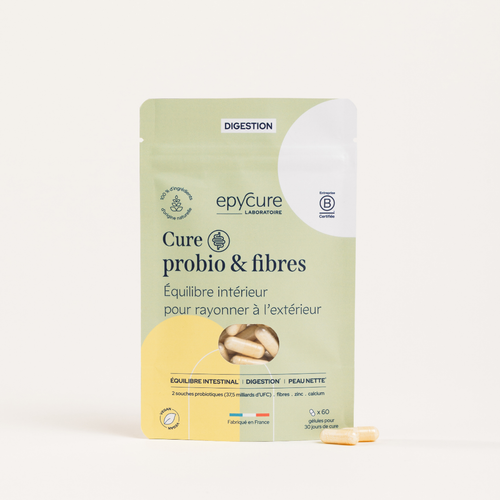
- Probiotic & fiber course — to rebalance the intestinal microbiota over time and soothe digestive inflammation in the long term.