Profound fatigue that does not go away, emotional detachment, feeling at the end of your tether… Burn-out is not simply temporary fatigue. It is total exhaustion - physical, mental, and emotional - that develops gradually, often in those who give the most. In France, it is estimated that more than 3 million people experience severe burn-out each year.
Recognizing the warning signs, understanding what is happening in the body, and establishing a recovery protocol - here is what you need to know.
What exactly is burn-out?
Burn-out (or occupational exhaustion syndrome) is defined by the WHO as a “work-related phenomenon” characterized by three dimensions:
- Energy depletion: chronic fatigue that sleep no longer relieves
- Mental distancing: cynicism, detachment from one's work, feeling ineffective
- Reduced professional effectiveness: difficulty concentrating, unusual mistakes, loss of motivation
This is not a character flaw. It is a physiological response to prolonged, unresolved stress.
Burn-out symptoms: how can you recognize them?
Burn-out develops gradually in several phases. The signs vary depending on the person and the stage.
Physical signs
Overwhelming fatigue: profound exhaustion that does not go away with rest. Getting up in the morning becomes a considerable effort, even after 8 hours of sleep.
Sleep disorders: insomnia, frequent awakenings, unrefreshing sleep - paradoxically, you sleep but do not recover.
Digestive problems: nausea, stomach aches, irritable bowel syndrome - chronic stress profoundly disrupts digestion.
Physical pain: back pain, muscle tension, headaches, heart palpitations - the body somatizes mental overload.
Weakened immune system: repeated infections (colds, sore throats), frequent flu-like syndromes.
Psychological and emotional signs
Detachment and cynicism: you no longer identify with your work, colleagues irritate you, and the meaning of what you do disappears.
Difficulty concentrating: it becomes impossible to read a document to the end, memory fails, and decision-making becomes exhausting.
Irritability and mood swings: disproportionate emotional reactions to situations that are usually harmless.
Feeling incompetent: even tasks mastered for years seem insurmountable.
Social isolation: interactions become unbearable, even with loved ones.
What happens in the body during burnout
Burnout is not “just psychological.” It is a measurable biological reality:
Cortisol dysregulation: during burnout, the HPA axis (hypothalamic-pituitary-adrenal axis) is dysfunctional. After a phase of hypercortisolism (too much cortisol), the body enters a state of exhaustion in which cortisol is abnormally low — explaining the profound exhaustion even in the morning.
Chronic inflammation: prolonged stress chronically activates inflammatory markers, contributing to pain, low immunity, and mood disorders.
Nutritional deficiencies: stress depletes stores of magnesium, vitamin C, B vitamins, omega-3s, and zinc — micronutrients essential for brain and nervous system function.
Neurotransmitter disruption: serotonin, dopamine, and GABA levels decrease — amplifying mood, sleep, and motivation problems.
Risk factors
Some people are more at risk:
- Perfectionists and people who overinvest in their work
- Helping professions (healthcare workers, teachers, social workers)
- People experiencing chronic overload without autonomy or recognition
- Managers and entrepreneurs under constant pressure
- Parents juggling demanding professional and family lives
How to recover from burnout: the key steps
Recovering from burnout takes time and a multidimensional approach. There is no quick fix.
1. Stop and take a break
The first step is often the most difficult: allowing yourself to stop. A doctor-supported sick leave may be necessary. The body and mind need to get away from the stressful environment to begin recovering.
2. Putting sleep back at the center
Recovery starts with sleep. Prioritize regular schedules, a supportive environment, and, if appropriate, natural active ingredients that support restorative sleep (magnesium, melatonin, ashwagandha).
3. Rebalancing your diet
Replenishing deficiencies caused by chronic stress: magnesium, omega-3s, B vitamins, vitamin C, zinc. An anti-inflammatory diet - rich in colorful vegetables, quality proteins, and healthy fats - supports neurological recovery.
4. Move gently
Light physical exercise (walking, yoga, swimming) helps regulate cortisol, rebalance neurotransmitters, and improve sleep. No performance goals: the aim is gentle, regular movement.
5. Psychological support
Support from a mental health professional (psychologist, psychiatrist) is often necessary to understand the underlying causes and prevent relapse. CBT (cognitive behavioral therapy) has shown good results in managing burnout.
Preventing relapse: changing your relationship with work
Burnout can recur if the underlying structural causes are not addressed. Some prevention strategies:
- Learning to set boundaries: saying no, delegating, distinguishing the urgent from the important
- Cultivating restorative activities outside of work
- Practicing active recovery: regular breaks, vacations, truly disconnected weekends
- Watching for early warning signs: increasing irritability, sleep disturbances, loss of enjoyment at work
- Supporting the nervous system daily with the right micronutrients
Nutritional support: what the science says
Certain natural active ingredients help support resilience in the face of stress and recovery:
- Ashwagandha (Withania somnifera): an adaptogenic plant whose effectiveness has been evaluated in controlled clinical trials for supporting stress management and reducing fatigue
- Magnesium bisglycinate: contributes to the normal functioning of the nervous system and normal psychological functions
- L-tryptophan: precursor to serotonin, supports mood balance and sleep quality
- B vitamins (B1, B2, B5, B6, B9, B12): contribute to normal energy metabolism and the normal functioning of the nervous system
- Zinc: contributes to normal cognitive function and the protection of cells from oxidative stress
Epycure solutions to support recovery
Two Epycure formulas are particularly suitable for people recovering from burnout or wishing to strengthen their resilience to stress:
Cortisol balance course - formulated with KSM-66® ashwagandha, bisglycinate magnesium and L-tryptophan to help reduce fatigue, maintain normal psychological functions and support cortisol regulation.
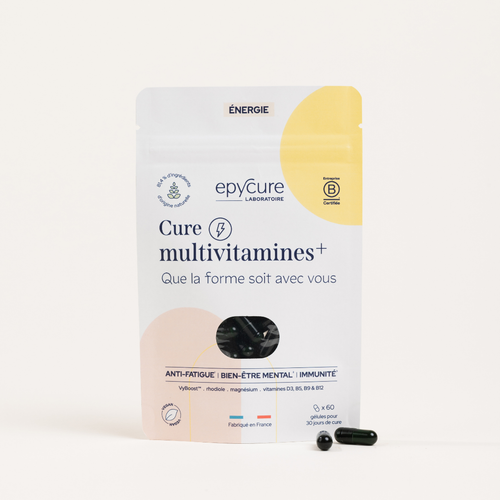
Multivitamin course+ - to replenish deficiencies caused by chronic stress: B vitamins, vitamin C, zinc, selenium and magnesium in a complete, bioavailable formula.
FAQ - Burnout
Burnout vs depression: what is the difference?
Burnout is linked to the professional context and mainly manifests in that setting. Depression is a generalized mood disorder that affects all areas of life. The two can coexist and always require medical advice.
How long does it take to recover from burnout?
Recovery varies considerably depending on the intensity of the burnout and the care received. In general: a few weeks for mild cases, several months for severe cases. You should not rush back to work.
Can burnout be prevented with dietary supplements alone?
No - supplements support the nervous system and help manage stress, but they do not replace organizational or psychological change. They are part of a holistic approach.
Is burnout recognized as an occupational disease?
In France, burnout is not yet recognized as an occupational disease in its own right, but it may entitle you to sick leave prescribed by a doctor and be covered by Health Insurance.