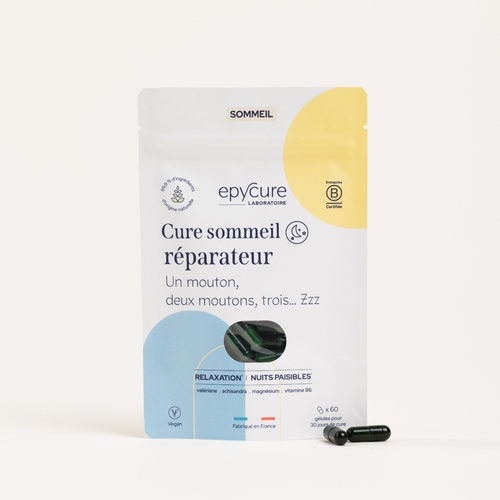
You sleep 7 to 8 hours a night, you don't go to bed late - and yet, waking up is a struggle every morning. Fatigue sets in before the day has even begun. It is one of the most common and most overlooked symptoms, even though it often has clearly identifiable causes.
Understanding the difference between sleeping and recovering
Sleep duration and quality are two distinct things. You can spend 8 hours in bed without ever reaching the deep sleep stages where true recovery takes place: cellular repair, memory consolidation, and hormonal rebalancing. Fragmented, overly shallow, or poorly timed sleep does not fulfill these functions - even if it lasts a long time.
The 5 most common causes
1. Disrupted morning cortisol. Normally, cortisol naturally rises between 6 a.m. and 8 a.m. to wake us from sleep (the “cortisol awakening response”). Under chronic stress, this peak is either too early (waking at 3-4 a.m.) or blunted (difficult waking, mental fog). In both cases, the nighttime recovery phase is compromised.
2. Magnesium deficiency. Magnesium is essential for nighttime muscle and nervous system relaxation. A deficiency typically manifests as nighttime awakenings, cramps, restlessness, and persistent fatigue upon waking.
3. Excessive blue light in the evening. Screens delay melatonin secretion, postpone falling asleep, and reduce the proportion of deep sleep - even when the total duration appears normal.
4. Unstable blood sugar levels. A dinner high in fast-acting sugars causes nighttime blood sugar to drop. The body compensates by releasing cortisol and adrenaline - fragmenting sleep without you being aware of it.
5. Iron or vitamin B12 deficiency. These two nutrients are essential for cellular energy production. A deficiency causes deep fatigue, often accompanied by difficulty concentrating.
Natural solutions
- Stop using screens 1 hour before bed: replace them with reading, stretching, or soft music.
- Eat a light, early dinner: finishing your meal 2 hours before bedtime limits nighttime blood sugar disturbances.
- Keep a consistent bedtime: the body syncs to regular circadian rhythms.
- Get natural light in the morning: it resets the internal clock and strengthens the morning cortisol peak.
How to choose the right supplements
To support sleep quality and nighttime recovery, the most relevant active ingredients are: adaptogenic herbs to rebalance cortisol, magnesium bisglycinate for nervous system and muscle relaxation, L-Tryptophan, a precursor to serotonin and then melatonin, and B vitamins to support psychological functions. Prefer taking them at the end of the day.
The Epycure solution
The Cortisol Balance Formula acts specifically on these mechanisms. Ashwagandha KSM-66® helps modulate the stress response (a clinical study showed a significant improvement in sleep after 8 weeks), magnesium bisglycinate contributes to the normal functioning of the nervous system and helps reduce fatigue, and L-Tryptophan supports the production of serotonin and melatonin. Vitamins B9 and B12 contribute to normal psychological functions.
📚 Read also
✨ Our Epycure solutions