A cycle that does whatever it wants, increasingly burdensome premenstrual syndrome, skin that suddenly becomes unpredictable for no apparent reason… Most women experience the effects of a hormonal imbalance at some point, without always understanding why or knowing what to do about it. Before looking for solutions, it is better to first understand how the female hormonal system really works and set the record straight on a few persistent misconceptions.
Hormones: true or false?
“A ‘normal’ cycle always lasts 28 days.” False. 28 days is a statistical average, not a standard to meet. A cycle lasting 24 to 35 days is perfectly physiological: what matters above all is its regularity from one month to the next, more than its exact duration.
“If my cycle changes, it must be a sign of an imbalance.” False. A shift of a few days after traveling, during a stressful period or due to lack of sleep is very common and does not automatically mean there is an underlying problem. It is the repetition of marked irregularities, month after month, that deserves attention.
“Premenstrual syndrome is only about hormones.” False, or at least incomplete. Hormones do play a role, of course, but sleep, stress, blood sugar balance and the nervous system influence just as much how it is experienced day to day. Two women with the same hormonal profile may experience PMS very differently.
“PCOS is simply an ovarian problem.” False. This is precisely one of the most widespread misconceptions: PCOS actually involves several systems at once (blood sugar regulation, hormone production, inflammation, stress), which explains why it can manifest very differently from one woman to another.
The 4 phases of the cycle, simply explained
Contrary to popular belief, the cycle is not limited to menstruation: it is a continuous 4-stage process, marked by variations in two main hormones, estrogen and progesterone.
1. The menstrual phase (approximately 3 to 6 days) marks the beginning of the cycle: hormone levels are at their lowest, which explains the fatigue or drop in energy often felt at this time.
2. The follicular phase begins at the same time as menstruation and continues until ovulation: estrogen levels gradually rise, often associated with renewed energy and motivation.
3. Ovulation, around the middle of the cycle, corresponds to the release of an egg by the ovary. It is an essential turning point: without ovulation, there is no meaningful luteal phase and no sufficient progesterone production afterward.
4. The luteal phase (approximately 12 to 14 days) follows ovulation: progesterone takes over and promotes a calmer state, before dropping at the very end of the cycle if no pregnancy occurs, which triggers the next period and, for some women, the discomfort associated with premenstrual syndrome.
A quick glossary of the hormones we hear about everywhere
Estrogen: a group of several hormones produced mainly by the ovaries, often associated with energy, vitality and the first part of the cycle.
Progesterone: produced after ovulation, it promotes a calmer state and contributes to cycle regularity during the second half.
Androgens (including testosterone): hormones also present in women, in small amounts. Excess levels can contribute to hormonal acne or increased hair growth, as is often the case with PCOS.
Insulin: the hormone that regulates blood sugar levels. Insulin resistance indirectly disrupts the balance of other hormones, a key mechanism in PCOS.
Cortisol: the stress hormone. When produced in excess chronically, it can interfere with the brain-ovary axis and disrupt the cycle.
Recognizing the signs of a hormonal imbalance
A hormonal imbalance does not manifest in the same way for every woman. Here are the most common signs, especially when they persist over time:
- Pronounced premenstrual syndrome: irritability, mood swings, breast tenderness, water retention, migraines or sugar cravings during the second half of the cycle.
- Irregular, very long or unpredictable cycles, with ovulation that is difficult to identify.
- Hormonal acne, often located on the lower face and jawline, which follows the rhythm of the cycle.
- Changes in weight or energy that cannot be explained solely by diet or physical activity.
- A transition phase after stopping hormonal contraception, while natural hormone production gets back on track.
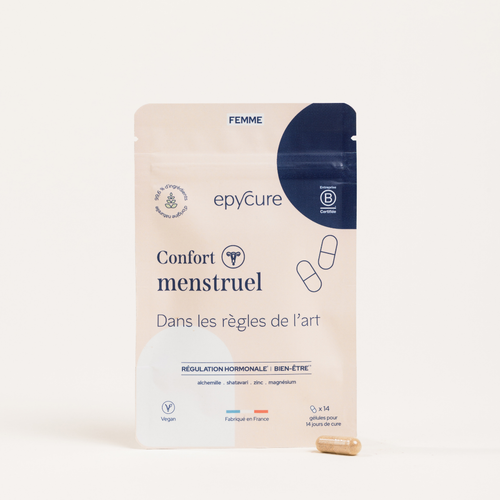
An isolated and occasional sign is not inherently concerning. It is mainly their recurrence and intensity that should prompt you to pay attention. If premenstrual syndrome is a particularly significant part of your daily life, the Menstrual Comfort Treatment may provide targeted initial support, alongside these healthy habits.
A closer look at PCOS
Polycystic ovary syndrome (PCOS), sometimes referred to by the acronym SMOP, is one of the most common hormonal imbalances in women of reproductive age. It is generally associated with insulin resistance and excess androgens, two mechanisms that disrupt hormonal communication between the brain and the ovaries.
In practice, this can result in long or irregular cycles, ovulation disorders, hormonal acne, increased hair growth, fatigue or weight changes - with highly variable intensity from one woman to another. It is precisely this diversity of symptoms that can make PCOS difficult to identify.
PCOS can never be diagnosed on your own: it is based on several factors assessed by a doctor or gynecologist (symptoms, hormonal blood tests and, if necessary, a pelvic ultrasound). If several of these signs sound familiar, the first step is always to discuss them with a healthcare professional.
Everyday habits that really make a difference
Whatever the underlying imbalance, four everyday pillars genuinely help support the hormonal system over time:
- Diet: complete, regular meals rich in protein, fiber and healthy fats help stabilize blood sugar, a key factor in hormonal balance.
- Sleep: regular bedtimes and sufficiently long nights support hormone production, which largely takes place during deep sleep.
- Physical activity: moving regularly, even moderately, helps maintain good insulin sensitivity.
- Stress management: chronic stress keeps cortisol levels high and can disrupt ovulation; taking real breaks during the day helps regulate it.
Key takeaways
Hormonal balance does not depend on one hormone or one symptom: it is an overall balance, built over time and responsive to small, repeated habits. Hormones do not demand perfection, but they particularly appreciate one thing: consistency.
✨ Our Epycure solutions