The gut microbiome - this ecosystem of more than 100 trillion bacteria that colonizes our intestines - is now at the heart of health research. Its balance affects digestion, immunity, mood, metabolism, and much more. And one of the most effective ways to nourish it is through fermented foods, natural sources of live probiotics.
Unlike supplements, fermented foods provide a diversity of bacterial strains, often better tolerated by the gut, along with fiber, vitamins, and digestive enzymes.
What is a probiotic food?
A probiotic food is a food that contains live microorganisms (bacteria, yeasts) that, when consumed in sufficient quantities, have a beneficial effect on the host’s health. The condition is that these microorganisms must survive passage through the stomach and reach the colon alive.
Warning: not all fermented foods are probiotics. Pasteurized sauerkraut in jars, for example, no longer contains live bacteria. Choose unpasteurized versions instead, often sold in the refrigerated section.
The Top Probiotic-Rich Foods
1. Plain yogurt
Yogurt is the most accessible and best-documented source of probiotics. It mainly contains Lactobacillus bulgaricus and Streptococcus thermophilus, two strains that help improve lactose digestion and strengthen the intestinal barrier.
How to consume it: plain, with no added sugar. Yogurts with prepared fruit and added sugars reduce the benefits. Choose a yogurt labeled “live active cultures.”
2. Kefir
Milk kefir is a fermented drink that is even richer in probiotics than yogurt. It contains up to 60 different strains of bacteria and yeasts. Studies have shown its benefits for gut health, immunity, and even blood sugar levels.
There is also water kefir (or fruit kefir), a dairy-free and vegan version that is just as rich in probiotics.
3. Raw sauerkraut
Unpasteurized sauerkraut - lactic-fermented cabbage - is one of Europe's oldest sources of probiotics. It mainly contains Lactobacillus and is also rich in vitamins C and K2. Be sure to choose raw sauerkraut from the refrigerated section, not the canned or pasteurized version.
4. Kimchi
Korean kimchi is cabbage fermented with spices (ginger, garlic, chili). It contains a wide diversity of probiotic strains (especially Lactobacillus kimchii) and is rich in antioxidants. Be mindful of its salt and chili content if you have sensitive intestines.
5. Miso
A fermented paste made from soybeans (and sometimes rice or barley), miso is rich in probiotics (Aspergillus oryzae), complete proteins, and B vitamins. Use it in soup (do not boil it to preserve the live bacteria), marinades, or vinaigrettes.
6. Tempeh
Tempeh is soy fermented by Rhizopus oligosporus. It is an excellent source of plant-based protein and probiotics, with a superior nutritional profile to tofu. It also contains vitamin B12 (rare in plant-based foods).
7. Kombucha
A fermented drink made from black or green tea, kombucha contains beneficial bacteria and yeasts as well as organic acids (acetic, gluconic). Choose unpasteurized, low-sugar kombucha — some commercial versions contain too much sugar.
8. Unpasteurized soft cheeses
Certain raw-milk cheeses (Camembert, Roquefort, Gruyère) contain live lactic acid bacteria. Fermentation produces enzymes that improve lactose digestibility. Consume in moderation because of their saturated fat content.
How can you incorporate fermented foods into your daily routine?
You don't need to eat everything at once. Here's a gradual approach:
- Week 1: 1 plain yogurt a day at breakfast
- Week 2: Add 1 serving of raw sauerkraut 3 times a week with meals
- Week 3: Include a glass of kefir or kombucha 3-4 times a week
- Next: Vary the sources (miso, kimchi, tempeh) to diversify the strains
Starting gently is important: increasing too quickly can cause temporary bloating while the microbiota adapts.
Prebiotic foods: the fuel for probiotics
Prebiotics are indigestible fibres that serve as food for beneficial bacteria in the microbiome. To maximize the effect of probiotics, combine them with prebiotic foods:
- Garlic, onions, leeks (inulin, FOS)
- Jerusalem artichoke, chicory
- Slightly underripe banana (resistant starch)
- Oats, barley (beta-glucans)
- Asparagus, artichoke
Fermented foods vs probiotic supplements: which should you choose?
The two are complementary rather than competing:
- Fermented foods provide a wide variety of strains, fibres and associated nutrients. They are ideal for maintaining daily intestinal health.
- Probiotic supplements provide specific strains at therapeutic concentrations, which are useful during identified disruptions (antibiotic use, irritable bowel syndrome, post-stress imbalances).
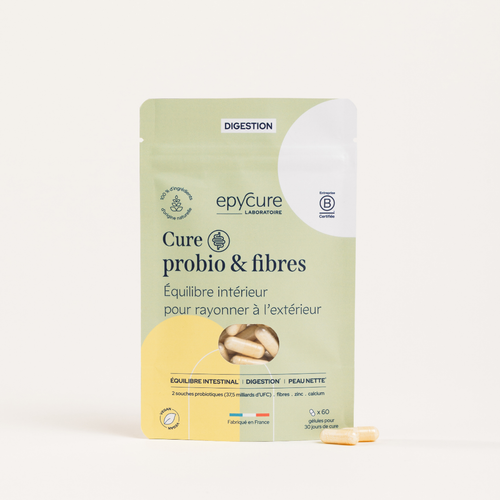
At Epycure, the Probiotic & fibre course combines selected strains of Lactobacillus and Bifidobacterium with prebiotic fibres for a synergistic effect on the microbiome. The Anti-bloating Gummies combine probiotics and digestive ingredients for optimal intestinal comfort.
FAQ — Probiotic foods
Do probiotics survive cooking?
Heat kills most live bacteria above 60°C. Miso should not be boiled. Raw sauerkraut should be eaten cold or lukewarm. Yogurt should not be heated.
Can you eat fermented foods if you are lactose intolerant?
Yes, often. Fermentation pre-digests lactose, making yogurt and kefir well tolerated by many people with lactose intolerance. Water kefir and plant-based fermented foods are lactose-free in any case.
How many servings of fermented foods per day?
One to two servings per day is a realistic and sufficient goal for most people. The diversity of sources matters more than the total quantity.