Achieving a flatter, more toned stomach is the goal of many of us! However, despite restrictive diets and intense exercise, it is often difficult to achieve the desired results. A flat stomach goes far beyond physical appearance; it also reflects optimal digestive health. Various factors can cause a bloated stomach, such as certain digestive problems (bloating, gastric discomfort, heaviness, constipation, …). So, rather than focusing on your weight, it is essential to pay attention to your digestion and lifestyle in general. In this article, we explain the various reasons for a bloated stomach and offer some tips for overcoming it.
What you need to remember:
"Avoid focusing on your weight and throwing yourself headlong into a low-calorie diet. Take the time to assess your lifestyle and the various adjustments you can make."
"A flat stomach is often a reflection of efficient digestion."
"Intermittent fasting, when combined with a healthy diet, naturally reduces calorie intake and promotes fat burning […]."
"Pilates helps strengthen the deep muscles, particularly those of the core, abdominals, and back, while improving posture."
"[…] people who do not get enough sleep and are subjected to significant stress tend to accumulate more fat around the abdomen."
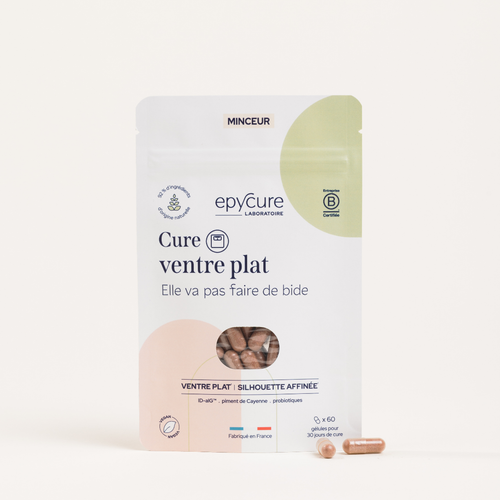
"Opt for our new slimming program, the Flat Stomach Program, which helps optimize digestion and release fat stored around the stomach."
Why can the stomach look bloated?
First of all, it is essential to understand the origins of a slightly rounded belly and the desire to get rid of it.
Fragile digestion
Digestion, transit, and a flat stomach are closely linked. Bloating in the abdomen, often accompanied by heaviness, stomach pain, spasms, can result from an unsuitable diet rich in refined products. These foods have a significant impact on digestion and intestinal transit, causing fermentation problems and excess gas, which automatically makes the lower abdomen swell. Besides being unpleasant, these symptoms indicate that the digestive system is not functioning properly, slowing the metabolism and elimination of fats.
Fat accumulation
The belly may appear swollen due to a poor diet and visible fat accumulation around the abdomen. It is important to distinguish between subcutaneous fat, which is more visible and harmless and lies beneath the skin, and visceral fat, which surrounds the organs and is therefore more dangerous to cardiovascular health. In this case, we are generally referring to subcutaneous abdominal fat.
Influential factors
Age, hormones, stress, genes, diet, and sleep all greatly influence fat storage and elimination, as well as digestion. It is therefore essential to take stock of your personal lifestyle in order to assess the various factors responsible for fat accumulation around the belly.
Women’s health
During menstruation, it is not uncommon to experience a swollen belly and bloating, often triggered by hormonal fluctuations in the body. These symptoms do not last and fade as the cycle progresses. In addition, during the stages of perimenopause and menopause, the body changes and the metabolism slows down. It is therefore common to accumulate more fat in the lower abdomen during these stages of life. Be careful not to confuse fat with loose skin… particularly in the context of pregnancy and the postpartum period.
To achieve a flatter stomach, avoid focusing on your weight and throwing yourself wholeheartedly into a low-calorie diet. Take the time to assess your lifestyle and the various adjustments you could make. A balanced, frustration-free diet, optimal digestion, regular physical activity that you enjoy, restorative sleep, reduced daily stress, and more are all key factors that will help you regain a healthy body and a flat stomach. We will detail some of them in the rest of this article!
What to eat for a lighter belly?
A healthy and balanced diet
To get a flat stomach, it is essential to focus on whole, natural foods, rich in nutrients that benefit the body. Fruits and vegetables provide plenty of vitamins and minerals, fiber helps facilitate intestinal transit, and protein helps boost metabolism, among other benefits. To take things further, discover even more dietary tips for a flat stomach by clicking on this article.
|
Foods high in fiber |
Foods rich in lean protein |
Foods to avoid |
|---|---|---|
|
Vegetables: spinach, broccoli, bell peppers, carrots, zucchini |
Lean meats: skinless chicken, turkey, pork tenderloin |
Cruciferous vegetables: cauliflower, broccoli, Brussels sprouts |
|
Fruits: raspberries, pears, apples, oranges, avocados |
Fish: salmon, trout, tuna, cod |
Foods high in refined sugar: candy, soda, pastries |
|
Legumes: lentils, black beans, chickpeas |
Dairy products: Greek yogurt, low-fat cottage cheese |
Foods high in saturated fat: dishes with sauces, fried foods, deli meats, cheeses, etc., can be difficult to digest |
|
Whole grains: quinoa, oats, brown rice, whole-grain bread |
Eggs: egg whites |
Foods high in salt: salt, found in processed foods for example, is often responsible for water retention |
|
|
Tofu and tempeh |
Raw vegetables that can irritate the digestive system and cause bloating |
What about intermittent fasting?
Intermittent fasting has gained popularity in recent years because it is said to have numerous health benefits, including benefits for immunity, memory, vitality, weight management, and more. Its benefits are based on the fact that digestion is a process that consumes a great deal of energy. It would therefore involve giving your digestive system and body a rest. Several studies have shown that it can lead to weight loss. Indeed, intermittent fasting, when accompanied by a healthy diet, naturally helps reduce calorie intake and promote fat burning, as it draws the energy it needs first from glucose stores and then from the body's fat stores. It is up to each person to determine which method suits them best by trying it for themselves; the goal is not to endure it, but to stick with it. For more information on the subject, we invite you to read this article.
Understanding your digestion
A flat stomach is often a reflection of efficient digestion. When our digestive system functions properly, it is easier for our body to digest, eliminate toxins, and promote healthy intestinal transit, contributing to a flatter stomach. However, various factors can disrupt our digestion, leading to problems such as bloating, intestinal gas, constipation, water retention, and a feeling of heaviness after meals.
Digestive discomfort, causes and solutions
Bloating and intestinal gas
Bloating and gas can result from slow digestion or the fermentation of certain foods in the intestine. To alleviate these problems, it is essential to eat slowly, chew food thoroughly, and avoid carbonated drinks. Adding probiotics to your diet may also promote a healthy balance of intestinal flora and reduce bloating.
Constipation
Constipation can be caused by a lack of fiber in the diet or insufficient hydration. To improve intestinal transit, make sure you consume enough fiber every day by including fruits, vegetables, and whole grains in your diet. Increasing your water intake also facilitates the passage of stools and relieves constipation.
Water retention
Water retention consists of an accumulation of water in certain parts of the body, which can cause a feeling of bloating. To reduce water retention, avoid foods high in sodium and favor diuretic foods such as cucumber, melon, and celery. Natural diuretic supplements may also be considered, but be sure to consult a healthcare professional before using them.
A few tips?
- We recommend leaving two to three hours between dinner and bedtime. This allows digestion to begin before lying down. If you eat too late, it forces the body to become active at a time when it should be resting. Digestion may be less efficient and more difficult, which could disrupt your sleep.
-
We also recommend that you drink during meals. In addition to having a positive impact on the feeling of fullness, and contrary to popular belief, this may help with the digestion of dry foods and facilitate the action of digestive juices. Obviously, in moderation. We recommend two to three small glasses per meal, no more.
-
Finally, our Digestion & Transit Pack, consisting of 4 patented probiotic strains and prebiotics, is an ideal boost for quickly restoring comfortable digestion and more regular bowel movements.
What sport helps you lose belly fat?
Physical exercise is key to increasing energy expenditure and eliminating this excess abdominal fat, which is so difficult to shift. Depending on your age and physiology, here are a few simple but effective exercises you can incorporate into your daily routine. Creating a cardio & fitness workout program will help you eliminate excess fat stored in your body and slim your figure. As a reminder, always remember to pay close attention to your posture to avoid injuring yourself, particularly your back.
Crunches
Lie on your back, bend your knees, and place your hands behind your head. Gently lift your head and shoulders while contracting your abdominal muscles. Do 3 sets of 15 crunches. Often banned, the crunch is nevertheless a valuable exercise for activating both the rectus abdominis and the obliques. Crunches play a major role in pulling in your stomach (while keeping the pelvic floor properly contracted), giving you the opportunity to achieve a very flat stomach or even maintain it. Do not hesitate to give them all the attention they deserve, as their benefits for your figure will be remarkable.
Planking
Adopt a plank position, supporting yourself on your elbows and toes. Hold the position for 30 to 60 seconds while contracting your abdominal and deep core muscles, keeping your upper body straight. This strengthening exercise can be repeated 2 or 3 times during the session and several times a week if possible. It is also important to contract your glutes properly to avoid arching your back and hurting yourself.
The stomach vacuum
The stomach vacuum is a strength-training exercise inspired by yoga. Its aim is to work the abdominal muscles without injuring yourself. A 5-minute routine per day is more than enough! With consistent practice, you will see that the results are quite impressive: a flatter, more toned stomach, reduced bloating, and more regular bowel movements.
Wall Pilates
Pilates helps strengthen the deep muscles, particularly those of the core, abdominals, and back, while improving posture. To get started, wall Pilates can be a good way to practice at home. You can try the chair exercise: press your back against the wall, slide down until your legs form a 90-degree angle, as if you were sitting on an invisible chair. Hold for 30 seconds to one minute, take a short break, then repeat three to four times.
Calm your nervous system
To facilitate weight loss, sleep plays an essential role. This is excellent news for those who love to sleep and can enjoy more than 8 hours of sleep per night. On the other hand, for those who have difficulty getting restorative sleep, losing weight can prove more complicated. In fact, lack of sleep can increase the feeling of hunger. It causes an increase in levels of hunger hormones (ghrelin) as well as stress hormones (cortisol). As a result, people who lack sleep and are subjected to a significant amount of stress tend to accumulate more fat around the abdomen. To promote restorative sleep, develop good habits: prioritize calm and relaxing activities before bedtime, establishing a bedtime ritual to follow every evening, for example (herbal tea, bath, reading, breathing exercises, etc.), and opt for lighter meals!
Stress can also cause hormonal imbalances by increasing the level of cortisol in the body, which promotes fat storage around the abdomen. Beyond the hormonal aspect, it can also cause emotional eating. In this situation, affected individuals manage their emotions by eating compulsively. In fact, they do not feel capable of soothing their emotions, whether positive or negative, in any other way than by eating. It is generally associated with cravings for sweet, salty, or fatty products, foods perceived as comforting that trigger the secretion of feel-good hormones. To better manage stress, you can incorporate relaxation activities into your daily routine, such as yoga or meditation, or take part in artistic activities like coloring, music, or writing, which calm the mind by distracting us from negative thoughts. Taking care of your emotional well-being will have a significant impact on your quest for a flat, toned stomach.
Our natural boost for a flat stomach
Choose our new slimming course, the Flat stomach course, which helps optimize digestion and release fat around the stomach. It has a dual action: it aims both to improve intestinal health, particularly by limiting bloating, and to accelerate abdominal fat burning through its fat-burning action.
Thanks to its complete formula, which combines the power of plants, algae, and probiotics, this 100% natural course has a targeted effect on the stomach and figure:
-
The patented ID-alG™ complex, composed of ascophyllum and grape seed, is the key active ingredient in this formula. Thanks to its high polyphenol content, it blocks the absorption of sugars and fats, reducing calorie intake; the body will thus draw on its own reserves to produce energy.
-
Cayenne pepper, which is rich in capsaicin, is a natural fat burner that helps the body release stored fat.
-
The probiotic strain Bifidobacterium breve DSM 16604 supports the balance of the intestinal flora by reducing bloating. In addition, it helps restore the balance between omega-3 and omega-6, while stimulating the production of conjugated linoleic acid (CLA), a fatty acid that promotes fat burning in the body.
This course should preferably be taken for 3 months to act durably on abdominal fat, and can be combined with other products in the Slimming range for enhanced effectiveness.
In conclusion
As you will have understood, good digestive health combined with a healthy lifestyle is essential for achieving a flatter stomach. We ban low-calorie diets and five workouts per week that give you no pleasure and opt for balanced meals, rich in fiber, protein, and micronutrients, combined with varied workouts that make you feel good, both physically and mentally. If needed, you can turn to dietary supplements, which can be a great help in activating weight loss, particularly around the lower abdomen.
Finally, whether you are dealing with weight issues or digestive problems, do not hesitate to consult a healthcare professional if you have any doubts. A blood test may be necessary to determine whether an underlying condition is present (irritable bowel syndrome, metabolic syndrome, etc.).
📚 Also worth reading
✨ Our Epycure solutions