Do you constantly feel on edge, exhausted for no apparent reason, and unable to unwind at the end of the day? Magnesium may be the culprit. This essential mineral is involved in more than 300 enzymatic reactions in the body - and yet, the vast majority of French people do not consume enough of it on a daily basis. Let’s take a closer look.
Magnesium and stress: a very real connection
Magnesium plays a central role in regulating the nervous system. It acts as a natural regulator of neuronal excitability: when magnesium is lacking, neurons become more sensitive to stimuli, making the stress response more intense and harder to control.
The paradox is that stress itself worsens the deficiency. It stimulates the urinary excretion of magnesium, creating a vicious cycle that is difficult to break: the more stressed you are, the more magnesium you lose, and the less you have available to cope with the next bout of pressure.
The signs of a deficiency are not always easy to identify, but some occur frequently: increased irritability, muscle tension (neck, jaw, shoulders), sleep problems, persistent fatigue despite rest, cramps, and difficulty concentrating.
Understanding chronic stress
Acute stress - a temporary reaction to danger - is a normal and useful response. The problem is chronic stress: the kind that sets in over weeks or months, linked to a heavy workload, constant pressure, or an accumulation of responsibilities.
This chronic stress exhausts the body and mind. It causes prolonged secretion of cortisol, the stress hormone, which in turn disrupts sleep, affects mood, promotes muscle tension, and weakens the nervous system. To respond effectively, the body needs specific resources - including magnesium, but also active ingredients capable of directly supporting cortisol regulation.
Natural solutions for restoring balance
Diet remains the first place to start. The foods richest in magnesium are nuts (Brazil nuts, almonds, cashews), legumes, green leafy vegetables, dark cocoa, and whole grains. In practice, reaching the recommended 375 mg per day through food alone is difficult - especially during periods of intense stress, when needs increase.
When it comes to lifestyle, regular practices such as cardiac coherence breathing, yoga, or spending time in nature help regulate cortisol and mechanically limit magnesium losses. Sleep is also fundamental: it is at night that the nervous system regenerates.
Adaptogenic plants are a third pillar. Unlike solutions that mask stress, these plants help the body adapt to it - modulating its hormonal response instead of merely enduring it. Ashwagandha (Withania somnifera) is one of the most extensively documented adaptogenic plants: it helps the body resist stress and rebalance cortisol levels via the hypothalamic-pituitary-adrenal axis.
Choosing the right anti-stress supplement
Here are the essential criteria to check before buying.
Extract quality: when it comes to ashwagandha, not all extracts are equal. Choose an extract standardized for withanolides (at least 5%), made exclusively from the root (which is more concentrated in active compounds than the leaves). Patented extracts such as KSM-66® have been clinically evaluated at precise dosages.
The form of magnesium: bisglycinate is one of the best-absorbed forms and is particularly well tolerated from a digestive standpoint - an advantage during periods of stress, when the digestive system is already under strain.
Synergistic active ingredients: an effective anti-stress supplement combines an adaptogenic plant, minerals (magnesium), and B vitamins to act on several mechanisms at once: cortisol regulation, nervous system support, and neurotransmitter production.
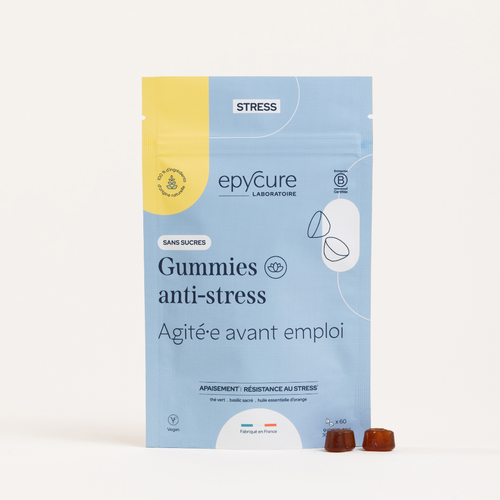
Epycure’s solution for chronic stress
The Epycure Cortisol Balance Cure was specifically formulated for chronic stress - the kind that persists over time and keeps cortisol levels too high. Its key ingredient is Ashwagandha KSM-66® (250 mg/day, including 12.5 mg of withanolides), a patented extract made exclusively from ashwagandha root, whose effectiveness was evaluated in a placebo-controlled clinical study (58 adults, 8 weeks) showing a significant decrease in blood cortisol and a reduction in perceived stress.
Ashwagandha has adaptogenic properties and helps the body resist stress. It also supports daily vitality and energy.
The formula also contains:
- L-tryptophan (100 mg/day) - an amino acid precursor to serotonin that supports emotional balance and sleep quality
- Magnesium bisglycinate (56.25 mg/day) - a highly assimilable form; magnesium contributes to the normal functioning of the nervous system and helps reduce fatigue
- Vitamin B5 (6 mg/day, 100% of the NRV) - contributes to the normal synthesis of steroid hormones and supports the adrenal glands, which are heavily involved during prolonged periods of stress
- Vitamins B6, B9, and B12 - contribute to normal psychological functions and help reduce fatigue; B6 supports the regulation of hormonal activity
The formula is made in France in an ISO 22000- and AFNOR HACCP+-certified laboratory, with no exogenous hormones and no endocrine disruptors. Preferably take it at the end of the day.
Timeline of effects: from day 15, the first signs of nervous relaxation. By day 30, less frequent stress spikes and a more stable mood. By day 90, lasting control over your response to stress.
Discover the Cortisol Balance Cure →
In summary
Chronic stress and magnesium deficiency fuel each other. To break this cycle, the best approach combines a magnesium-rich diet, stress-management practices, and targeted supplementation - with a high-quality ashwagandha extract, magnesium bisglycinate, and B vitamins to support the nervous system as a whole.
Taking care of yourself in the face of stress is not a weakness. It is a decision not to let everyday life exhaust you.
📚 Read also