You finish a meal and a few hours later, your stomach feels bloated, tight, and heavy. Bloating affects a large majority of the population - and all too often, we resign ourselves to it as an inevitability. Yet understanding its causes makes it possible to find concrete, lasting solutions adapted to your individual needs.
Why do we get bloated?
Bloating results from a buildup of gas in the digestive tract - the small intestine or colon - which stretches the intestinal wall and creates a feeling of discomfort or even pain. Several mechanisms are involved:
- An imbalanced gut flora: a depleted microbiome excessively ferments certain carbohydrates, producing gases (H₂, CO₂, methane).
- Slowed intestinal motility: when transit is sluggish, food remains in the digestive tract and ferments for longer.
- Visceral hypersensitivity: some people perceive intestinal distension more intensely, even when the volume of gas is normal.
- Food intolerances: lactose, fructose, FODMAPs - certain fermentable sugars pass through the small intestine undigested and are fermented in the colon.
- Stress and the gut-brain axis: the enteric nervous system is directly affected by stress, disrupting intestinal motility and permeability.
Natural ingredients that relieve bloating
Activated vegetable charcoal
Activated vegetable charcoal is obtained by pyrolyzing organic materials (often coconut shells). Its microporous structure gives it an exceptional adsorption surface area - up to 1,000 m² per gram. It captures excess intestinal gases and helps reduce flatulence and abdominal discomfort. The EFSA recognizes that activated vegetable charcoal contributes to reducing excessive flatulence after meals.
Fennel
Used since Antiquity in digestive herbal teas, fennel (Foeniculum vulgare) contains essential oils - mainly anethole - with antispasmodic properties. It promotes relaxation of the intestinal smooth muscles, relieves spasms, and helps expel gas.
Tyndallized probiotics
A balanced microbiome is the first line of defense against excessive fermentation. In gummy formulations, live probiotics are difficult to stabilize - heat and humidity reduce their viability. Tyndallized probiotics (or postbiotics) offer a reliable alternative: these heat-inactivated strains retain their cellular structures intact and exert beneficial effects on the intestinal ecosystem.
Turmeric and ginger
Turmeric and ginger promote gastrointestinal motility and support healthy digestion. Their active compounds (curcuminoids, gingerols) have a soothing effect on the intestinal lining.
Adjusting your diet to reduce bloating
A few simple dietary adjustments can make a noticeable difference:
- Chew slowly and avoid talking while eating (aerophagia)
- Temporarily reduce foods high in FODMAPs (legumes, cabbage, leeks, apples)
- Choose gentle cooking methods that partially predigest fiber
- Drink enough water between meals to support transit
- Take walks after meals to stimulate intestinal motility
When should you see a doctor?
Chronic bloating accompanied by severe pain, blood in the stool, unexplained weight loss, or fever requires medical consultation. If SIBO or inflammatory bowel disease is suspected, a specialist assessment is necessary.
Our selection for a lighter-feeling stomach every day
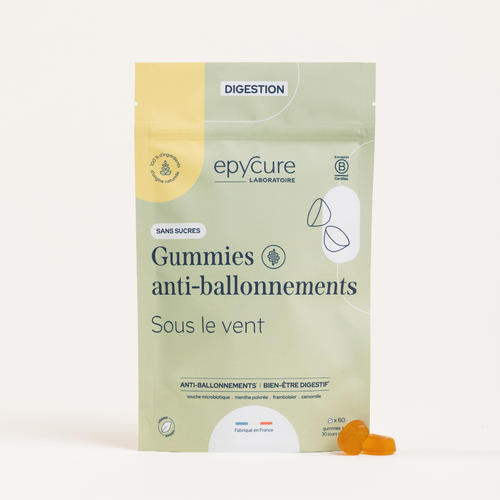
- Anti-bloating Gummies - activated vegetable charcoal + fennel + tyndallized probiotics
- Digestive comfort trio - a synergistic combination for a comprehensive approach to digestive comfort
Your daily anti-bloating routine
For optimal results, combine supplements with a consistent healthy lifestyle: a cup of hot water with lemon in the morning, thorough chewing at every meal, fennel-peppermint herbal tea after dinner, and a minimum 3-month course to rebalance the microbiome in depth.
Did you know? The gut microbiome weighs approximately 1.5 kg and contains more than 100 trillion bacteria - 10 times more than the total number of cells in the human body. Its composition is unique to each individual, like a digestive fingerprint.