What exactly is a probiotic?
The WHO defines probiotics as “live microorganisms that, when administered in adequate amounts, confer a health benefit on the host.” The gut microbiome contains approximately 100 trillion bacteria and influences almost everything: digestion, immunity, mood, weight, inflammation, and skin.
The documented benefits of probiotics
Improved digestive comfort
Reduction of bloating and gas, regulation of bowel movements, relief from irritable bowel syndrome, prevention and reduction of antibiotic-associated diarrhea.
Strengthening the immune system
70 to 80% of the immune system is located in the gut. Well-chosen probiotics can reduce the frequency and duration of respiratory infections.
Impact on mood (gut-brain axis)
The gut produces 90% of the body's serotonin. Clinical studies show that certain strains (Lactobacillus helveticus, Bifidobacterium longum) reduce markers of stress and anxiety.
Skin health
The gut-skin axis is well established. Rebalancing the microbiome may improve acne, eczema, and rosacea by reducing systemic inflammation.
Not all strains are created equal
The effects are strain-specific. The best-documented strains: Lactobacillus rhamnosus GG, Bifidobacterium longum, Lactobacillus acidophilus NCFM, Saccharomyces boulardii CNCM I-745.
Probiotics vs. prebiotics vs. synbiotics
Probiotics are the bacteria themselves. Prebiotics are their food. Synbiotics combine both. The synbiotic approach maximizes effectiveness by ensuring that the bacteria immediately have the resources to proliferate.
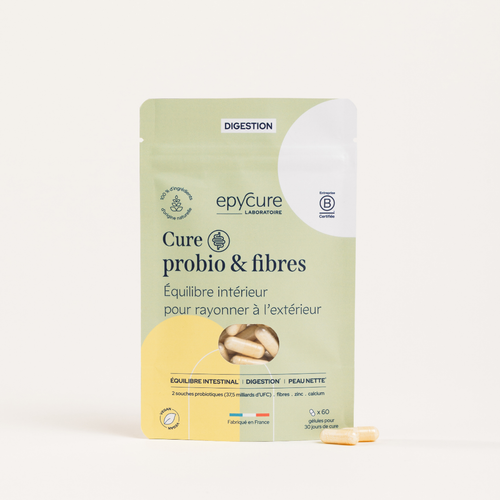
The Epycure Probiotic and Fiber Course
A synbiotic formula combining clinically documented strains and complementary prebiotics, in a gastro-resistant capsule to ensure the bacteria remain viable until they reach the colon. Made in France, 96% natural ingredients.
Dietary supplements. In cases of severe immunosuppression or immunosuppressive treatment, consult your doctor before taking any probiotic supplements.