What are probiotics?
These are all the living microorganisms that make up the various floras of our body (oral, intestinal, skin, and vaginal) and have a beneficial effect on the body. Put simply, they are the positive bacteria in our intestines.
Probiotics form, together with other bacteria, a group of microorganisms called "human microbiota". Considered a fully fledged organ, its function relies on the balance between beneficial and harmful bacteria; this is what is called "symbiosis". This symbiosis, a sign of good intestinal health, could be disrupted by an overgrowth of harmful bacteria, thereby causing an imbalance in the microbiota, known as "dysbiosis". This imbalance can be the cause of certain health problems such as infectious or chronic diseases like Crohn's disease, ulcerative colitis, or irritable bowel syndrome (IBS). The presence of probiotics in the intestine therefore helps maintain the balance of this flora by preventing and countering attacks from harmful bacteria.
Which probiotics provide which benefits?
Over the years, probiotics have become a benchmark for taking care of one's health. Today, the most studied and used genera are Lactobacillus and Bifidobacterium for their many benefits:
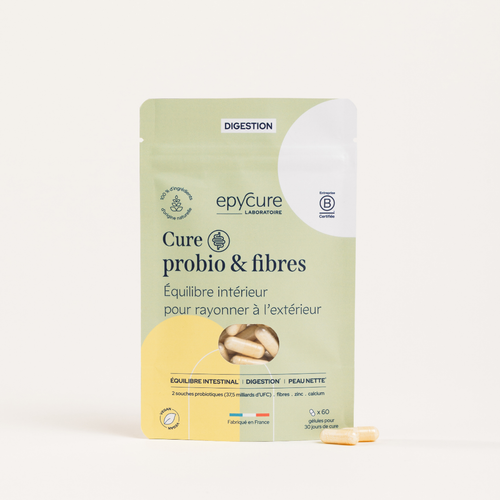
Better digestion : Probiotics contribute to the digestibility of dietary fibers, which are not digested by the small intestine. They therefore enable optimal nutrient absorption, a factor influencing digestion. These include the strains Bifidobacterium lactis LMG-21384 and Bifidobacterium breve DSM16604 in synergy in our Probiotic & Fiber Program, whose effectiveness has been clinically proven in improving intestinal transit with a reduction in gastrointestinal discomfort.
Strengthened immune system : Approximately 70% of immune cells are found in the intestine. These cells "work together" with the microbiota to identify pathogenic bacteria and prevent them from proliferating. In particular, the Lactobacillus plantarum LMG P-21020 and Lactobacillus rhamnosus DSM 16605 strains have been clinically proven to strengthen natural defenses and reduce the duration and severity of acute respiratory infections during winter.
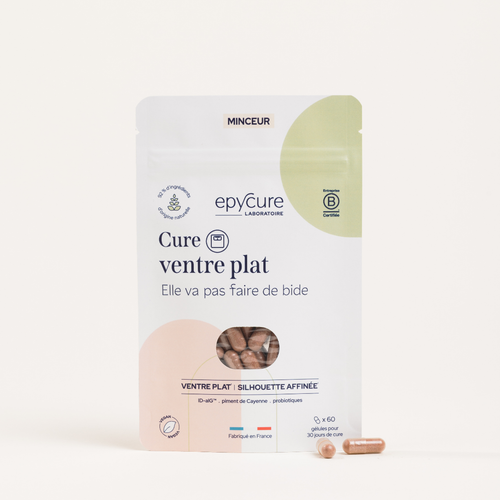
Weight regulation : The Bifidobacterium breve DSM 16604 strain also showed very positive results in reducing the body fat percentage by influencing the production of CLA, fatty acids that help burn fat, as well as the reduction of ghrelin (the appetite hormone) and the stimulation of leptin (the satiety hormone). This is why we selected it for the formula of our Flat stomach regimen, combined with two clinically proven active ingredients for weight control: ID-alG™ (seaweed and grape seeds) and cayenne pepper, for a 100% natural fat-burning and anti-bloating effect.
Dermatology and skin aging : The Bifidobacterium breve DSM16604 and Bifidobacterium lactis LMG-21384 strains are included again for their benefits for skin beauty, and more specifically for soothing atopic dermatitis and rosacea, as well as for their antioxidant properties, which act against premature skin aging.
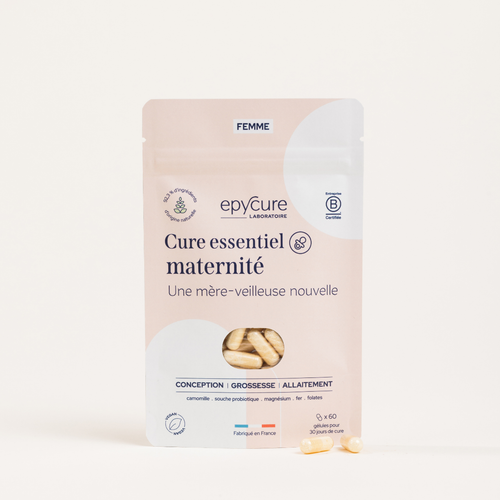
Pregnancy : During pregnancy, hormonal fluctuations can disrupt the gut microbiota, potentially leading to dysbiosis. To address this, it is recommended that both mother and child consume probiotics. Indeed, they are particularly useful both for relieving the expectant mother's digestive discomfort and for the development of the baby's immune system. The Lactobacillus rhamnosus GG strain was therefore selected for the formula of our Essential pregnancy regimen to prevent and relieve issues related to this imbalance.
Foods naturally rich in probiotics
While taking probiotic-based dietary supplements is an effective and convenient solution to incorporate into your daily routine, it is also entirely possible to consume them directly with your meals! To lend a helping hand to the beneficial bacteria naturally present in the body, you can find foods such as fermented vegetables (sauerkraut, kimchi, pickles, etc.), yogurt and cheese, kombucha, milk or fruit kefir, and sourdough bread.
And what about postbiotics?
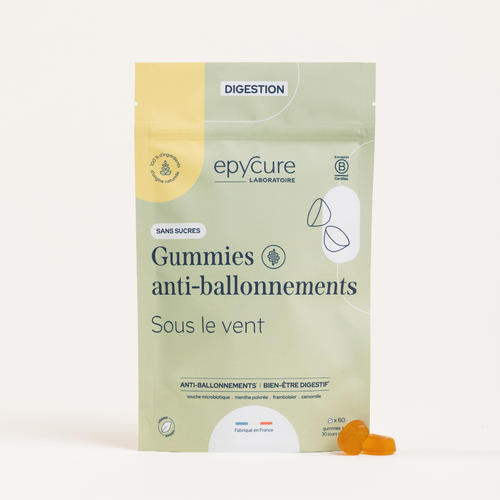
As with nutrients when cooking food, the higher the temperature, the more vitamins and minerals the food loses. Probiotics are living microorganisms and are therefore ineffective in Gummies because their production requires heating the pectin to encapsulate the active ingredients, thereby destroying all living organisms.
However, there are microbiotic strains that are effective both in their live and inactivated forms, also known as "tyndallized". This is what we call "postbiotics". These microbiotic strains are sterilized, making them resistant to higher temperatures without losing their benefits. This is notably the case with the Bifidobacterium breve DSM 16604 strain, in its tyndallized form, which we added to our anti-bloating Gummies.
What are prebiotics?
Not to be confused with probiotics, prebiotics serve as their food, thanks to their high dietary fiber content, and are therefore essential to their proper functioning. Indeed, they promote the diversity of bacteria in the gut and support their proper development, at the expense of pathogens. Consuming them contributes to the balance of our gut flora and therefore to our health.
As complex carbohydrates, our bodies alone cannot digest or absorb them. They therefore come directly into contact with beneficial bacteria to be digested and broken down, providing a dual action: fiber digestion and probiotic growth. By feeding on these dietary fibers, probiotics grow more quickly, diversify, and thus increase their health benefits. Prebiotics therefore help maintain a healthy intestinal barrier, regulate nutrient absorption in the colon, strengthen our natural defenses, and reduce digestive disorders.
Which foods are sources of prebiotics?
Fructo-, gluco-, and galacto-oligosaccharides (FOS & GOS) are the best-known and most studied prebiotics today. As explained above, prebiotics are found mainly in fiber-rich foods (asparagus, bananas, leeks, squash, beans, etc.), omega-3 and omega-9 fatty acids (olive oil, avocado, oily fish, etc.), and polyphenols (spices, berries, dried fruit, etc.).
Our Probiotic & Fiber Program contains a natural prebiotic derived from agave, inulin, which is rich in dietary fiber and serves as food for intestinal bacteria while releasing molecules beneficial to health. Widely present in plants, it has demonstrated a remarkable effect on regulating the intestinal microbiota.
What are synbiotics?
Simply put: probiotics + prebiotics = synbiotics.
Indeed, synbiotics are the synergistic combination of probiotics and prebiotics for a comprehensive effect on the health of our intestinal flora. This synergy allows the probiotic to persist and thus enhances its biological properties by feeding directly on the prebiotic.
How to choose the right probiotics?
While probiotics address a wide range of concerns, it is not always easy to make the right choice given the growing selection of dietary supplements on the market. To help you make the right choice, we are sharing 6 tips for choosing your probiotics:
-
Prefer multi-strain supplements to single-strain supplements
There are 4 main genera of probiotic strains: Lactobacillus, Bifidobacterium, Streptococcus and Lactococcus. For each genus, there are thousands of different species and strains, each acting on a specific health issue. It is not essential to combine several strains in the same formula, but this is strongly recommended because each individual is unique. Indeed, the action of a probiotic can vary from one person to another. Consequently, a multi-strain supplement not only helps address different issues but also suit most individuals, thereby increasing the chances of feeling better!
-
Choose scientifically proven strains
When Hélène, our fantastic Head of R&D, develops formulas, one of the key criteria in selecting active ingredients is the presence of scientific or clinical evidence. Probiotics are no exception, having been the subject of numerous studies as their popularity continues to grow, which helps guarantee their effectiveness for the various issues studied.
-
More CFUs do not mean greater effectiveness!
What is a CFU? This term stands for Colony-Forming Unit and is used to estimate the number of bacteria present in the medium being studied.
It is often thought that the higher the CFU count, the more effective the supplement will be. Indeed, most studies assess the effectiveness of probiotic strains at between 5 and 10 billion CFU: Lactobacillus strains have demonstrated their effectiveness at between 5 and 40 billion CFU, while Bifidobacteria have done so at between 1 and 40 billion CFU. However, for each strain, the goal is to use the appropriate dose demonstrated by its clinical study. An overdose will therefore not necessarily have a greater effect than the "optimal" dose, studied and scientifically proven.
However, overdosing can be useful in the production of probiotic-based supplements because, due to their "fragile" nature, which tends to degrade over time, the strains can be provided in higher doses to guarantee minimum effectiveness throughout the product's minimum durability period (DDM).
-
Choose probiotics with 100% transparent traceability
It is important to choose a fully identified strain, meaning that its genus, species, and identification number are defined and that it exactly matches the strain evaluated in clinical studies. Not all probiotics from the same genus and/or species necessarily have the same properties, so their identification is essential. At Epycure, we have made it a priority to know the exact identification of every strain we select, which is not always the case for all supplements on the market.
-
Choose synbiotic complexes
As explained above, synbiotics combine probiotics with prebiotics. This synergy provides all the benefits of good bacteria while ensuring their proper development for a balanced microbiome. As you will have understood, our Probiotic & Fiber Cure contains synbiotics, combining 4 probiotic strains and 1 natural prebiotic.
-
Choose gastro-resistant capsules
To reach the intestines, probiotics must pass through the stomach, which means passing through a highly acidic pH where probiotics cannot survive. It is therefore essential to choose a supplement with a gastro-resistant coating to protect them in this acidic environment and ensure they arrive intact in the intestines. This type of capsule also has the advantage of being suitable for consumption at any time, no need to take it on an empty stomach!
Probiotic & Fiber Cure, the formula that checks all the boxes
In synergy with a prebiotic and minerals, we chose to combine 4 strains supported by 20 clinical studies and provided in high doses (35 billion CFUs) in our Probiotic & Fiber Cure, all concentrated into 2 gastro-resistant capsules, to offer a 100% naturally sourced synbiotic complex that contributes to strengthening the immune system, improving digestion, and maintaining healthy skin, hair, and nails.
You may also like
Our Epycure solutions