It is estimated that an adult normally loses 50 to 100 hairs per day. Above this, it is referred to as effluvium - excessive hair loss that may be temporary or chronic. In women, this phenomenon is common, often silent at first, and deeply anxiety-inducing. The good news: a large majority of cases have identifiable - and therefore treatable - causes.
The hair cycle: understanding it to take action
Each hair follows a three-phase cycle:
- Anagen (active growth): lasts 2 to 6 years. 85 to 90% of hair is permanently in this phase.
- Catagen (transition): a few weeks. The follicle slows its production.
- Telogen (resting): 2 to 4 months before shedding and the cycle restarts.
Severe stress, a nutritional deficiency, or a hormonal upheaval can abruptly shift follicles from the anagen phase to the telogen phase, causing massive shedding 2 to 3 months later. This is known as telogen effluvium.
The main causes of hair loss in women
1. Nutritional deficiencies
The hair follicle is one of the most metabolically active tissues in the human body. It is extremely sensitive to nutritional deficiencies:
- Iron: low ferritin levels (even without clear anemia) are the most common cause of female hair loss. Iron contributes to oxygen transport to the follicles and keratin metabolism. The EFSA recognizes that iron contributes to the normal formation of red blood cells and hemoglobin and to the normal transport of oxygen in the body.
- Zinc: the EFSA recognizes that zinc contributes to the maintenance of normal hair. It is a cofactor for enzymes involved in the synthesis of hair's structural proteins.
- Biotin (B8): the EFSA recognizes that biotin contributes to the maintenance of normal hair. It participates in the metabolism of fatty acids and amino acids required for keratinization.
- Selenium: the EFSA recognizes that selenium contributes to the maintenance of normal hair. It plays an antioxidant role in the scalp.
- Vitamin D: vitamin D receptors are present in hair follicles. A deficiency is associated with hair loss in several observational studies.
2. Hormonal fluctuations
Hormones play a major role in hair biology:
- Postpartum: after childbirth, the drop in estrogen causes often dramatic telogen effluvium between the second and fourth months. It is physiological and reversible.
- Perimenopause and menopause: declining estrogen levels promote the relative action of androgens on the follicles, potentially causing androgenetic alopecia (progressive follicular miniaturization).
- Polycystic ovary syndrome (PCOS): the androgen excess characteristic of PCOS can cause male-pattern hair loss in some women.
- Thyroid dysfunction: both hypothyroidism and hyperthyroidism can cause diffuse hair loss.
3. Chronic stress
Excess cortisol disrupts the hair cycle in two ways: directly by shortening the anagen phase, and indirectly by reducing intestinal nutrient absorption. Prolonged stress alone can cause telogen effluvium several months after the stressful event.
4. Mechanical and external causes
Overly tight hairstyles (braids, ponytails) exert chronic traction on the follicles - this is traction alopecia. Excessive heat from styling tools, frequent coloring, and some overly harsh shampoos also weaken the hair fiber.
Tests to request from your doctor
In the event of persistent hair loss (>3 months), it is useful to request:
- CBC, ferritin level (target: >70 ng/mL for hair health)
- TSH, free T4
- Hormonal panel (total and free testosterone, DHEA-S, 17-OHP)
- Serum zinc, vitamin D, vitamin B12
- Total protein, albumin (general nutritional markers)
Natural ingredients to support hair growth
Hydrolyzed keratin
Keratin accounts for 90% of hair structure. Hydrolyzed keratin peptides (molecular weight <5 kDa) are orally bioavailable and can be reincorporated into the hair matrix. Preliminary studies show improved fiber thickness and reduced breakage.
Nettle (Urtica dioica)
Nettle is particularly rich in silica, iron, and B vitamins - a nutritional profile directly beneficial to hair health. Its roots contain compounds that may modulate the activity of 5-alpha-reductase, an enzyme involved in the conversion of testosterone into DHT (the main androgen responsible for follicular miniaturization).
L-cysteine
This sulfur-containing amino acid is a major component of keratin. It is involved in the synthesis of cystine (disulfide bonds) and contributes to the mechanical strength of hair. L-cysteine supplementation has shown positive results in studies on hair density.
Our formulas for stronger hair
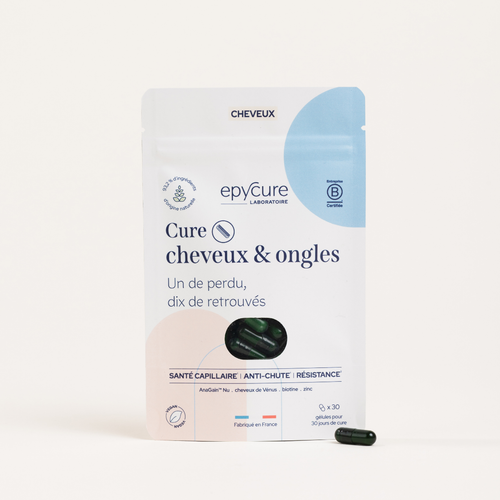
- Hair & Nails Treatment - biotin, zinc, selenium, hydrolyzed keratin and nettle for comprehensive support of hair health
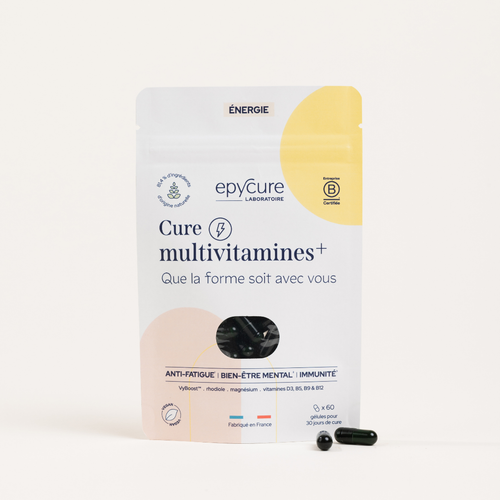
- Essential anti-fatigue - iron, B vitamins including B12, and vitamin C to support energy, vitality and tissue oxygenation
Results observed at the Epycure Lab
Feedback from people who followed the Epycure Hair & Nails Treatment for 3 months reports a visible reduction in daily shedding from the 6th to 8th week, along with improved shine and strength of the hair fiber. Results are gradual and become established over time - a complete hair cycle lasts between 3 and 6 years.
Practical tips for enhancing results
- Protein-rich diet: 1.2 to 1.6 g/kg of body weight per day to provide the necessary amino acids
- Reduce heat: limit high-temperature hair dryers, straighteners and curling irons - or use heat protectants
- Scalp massage: 5 minutes of daily massage improves microcirculation and stimulates the follicles
- Relaxed hairstyles: avoid tight hair ties and choose gentle silk or satin accessories
- Stress management: meditation, breathing exercises, regular physical activity - cortisol is a direct enemy of the follicles
Did you know? The hair follicle is one of the few tissues in the body capable of fully regenerating. Even after several cycles of shedding, a non-scarring follicle can resume its activity if nutritional and hormonal conditions are restored.