Food Supplements During Pregnancy: What You Really Need
Pregnancy is one of the periods of life when nutritional needs are highest - and often the most difficult to meet through diet alone. Nausea, food aversions, dietary restrictions, disrupted appetite… Targeted supplementation during pregnancy is not a luxury: it is often a medical necessity.
Why Nutritional Needs Increase During Pregnancy
During the nine months of pregnancy, the body works to build a complete human being. Requirements for folate, iron, iodine, vitamin D and B vitamins increase by 30 to 100% depending on the nutrient. The fetus takes priority: it draws first on the nutrients it needs, at the mother's expense if intake is insufficient.
Essential Nutrients During Pregnancy
Folic Acid (Vitamin B9) - PRIORITY
The most critical nutrient during pregnancy. Folate plays a central role in the proper formation of the neural tube. Supplementation (400 µg/day) is ideally recommended from 3 months before conception until the end of the first trimester.
Iron
Requirements double during pregnancy. Iron helps reduce fatigue, supports red blood cell formation and normal oxygen transport in the body.
Vitamin D3
Essential for calcium absorption, fetal bone development and the immune system. Deficiency is almost universal in France outside the summer months.
Iodine
Essential for normal thyroid function and the neurological development of the fetus. Requirements increase by 50% during pregnancy.
B Vitamins (B1, B2, B6, B12)
Contribute to normal energy metabolism and nervous system function. B6 helps regulate hormonal activity and relieve nausea.
Magnesium
Contributes to normal psychological functions and helps reduce fatigue. It also promotes relaxation and physical ease.
Probiotics (Lactobacillus rhamnosus GG)
One of the most extensively documented probiotic strains in the world. Beneficial for the mother's digestive comfort and may indirectly support the development of the baby's nervous system.
What to Avoid During Pregnancy
- Excess vitamin A (retinol): teratogenic at high doses
- Unsuitable plants: always check with your doctor
- Excess caffeine: limited to a maximum of 200 mg/day
- Alcohol: no amount is safe during pregnancy
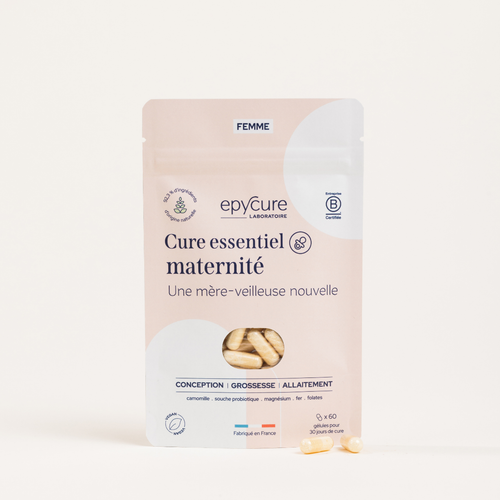
Epycure Essential Maternity Course
A complete formula validated by a toxicology expert, designed to support mothers at every stage - conception, pregnancy and breastfeeding.
For the mother: German chamomile and magnesium (relaxation, unwinding), vitamin B6 (hormonal balance, nausea), Lactobacillus rhamnosus GG 10 billion CFU in gastro-resistant capsules (digestive comfort).
For the baby: vitamin B9 400 µg (neural tube), iron 14 mg (red blood cells), iodine 150 µg (thyroid, neurological development), vitamins B1, B2, B12 (optimal development), vitamin D3 5 µg (bones and immunity). 92.3% ingredients of natural origin. No taste or odor.
Key Takeaways
Folic acid should ideally be started before conception. Vitamin D3, iodine and iron should be covered throughout pregnancy. Probiotic and magnesium support can help the mother get through this period more comfortably. A consultation with your doctor or midwife will help adjust supplementation to your individual situation.
Food supplements. Supplementation during pregnancy should be discussed with your doctor or midwife. Not recommended in case of treatment containing iodine or lithium, or in case of cardiac, kidney or thyroid conditions.
📚 You may also like
- → Cystitis: naturally prevent recurrences
- → Probiotics: benefits and how to choose them
- → Multivitamins: why take them and how to choose
✨ Our Epycure solutions