What are prebiotics?
Before listing the prebiotics that are good for our microbiota, it seems essential to explain this term, which is often poorly understood or even confused with probiotics. Prebiotics are the food for the beneficial bacteria in our bodies, known as probiotics, which populate our digestive system.
As a reminder, a probiotic is a living microorganism (bacterium, yeast, fungus, etc.) that, when consumed in adequate quantities, provides a benefit to the functioning of our body. Natural probiotics are found in fermented foods such as yogurt, kefir, sauerkraut, etc. They can also be consumed as dietary supplements.
Prebiotics are essential for these bacteria, helping them develop and thereby increasing their effectiveness. They help increase the number of beneficial microorganisms and reduce the number of potentially harmful ones. Their consumption therefore contributes to the balance of our intestinal flora and, consequently, to our health. Prebiotics are found particularly in foods rich in fiber.
Their role
The effect of prebiotic foods comes from their fiber content. In fact, fiber cannot be digested by our body alone. This is why it can travel intact through the esophagus and stomach, resisting the digestive enzymes and gastric juices secreted during digestion. Once in the intestine, it comes into contact with increasingly numerous bacteria as it progresses toward the colon. These bacteria can digest dietary fiber and break it down into compounds with beneficial effects on health. Indeed, when probiotics feed on prebiotics, they grow more quickly and in greater numbers, increasing their effects on health. They produce short-chain fatty acids (such as acetic acid, propionic acid, and butyric acid) that help maintain a healthy intestinal barrier. In addition, they regulate the absorption of nutrients by the colon, particularly the absorption of minerals such as calcium, magnesium, copper, zinc, and iron, and vitamins such as vitamin B12. Finally, they help people prone to digestive disorders (difficult digestion, bloating, constipation) and help regulate immunity by strengthening our natural defenses.
Thus, introducing dietary fiber into young children's diets could help diversify their intestinal microbiota and reduce the prevalence of constipation and obesity.
Where can they be found?
Fermentable fiber
Fiber is a component of plant cell walls. It acts like a skeleton that helps them maintain their shape and structure. Fiber belongs to the carbohydrate family, but unlike sugars and starches, our bodies cannot digest or absorb it: it passes through our digestive tract intact. But that does not make it useless—in fact, quite the opposite! Beyond whether it is soluble (which increases satiety) or insoluble (which acts like an “intestinal broom”), what is crucial is fiber's ability to nourish, or be fermented by, our beneficial intestinal bacteria.
In practice? You have plenty of options:
Vegetables: garlic, artichokes, asparagus, beetroot, broccoli, carrots, mushrooms, Brussels sprouts, squash, onions, parsnips, leeks, potatoes, Jerusalem artichokes
Fruit: apricots, slightly underripe bananas, plantains, cherries, lemons, kiwis, coconut, oranges, watermelon, grapefruit, apples, grapes
Legumes: beans, lentils, chickpeas
Whole grains: oats, barley
Seeds and nuts: walnuts, pistachios, flaxseeds, and chia seeds
Polyphenols
Polyphenols are dietary compounds that act as antioxidants but are only very weakly absorbed in the small intestine. As a result, they reach the colon in large quantities, where they interact with our microbiota: they nourish and promote the growth of beneficial bacteria, which in turn break down these polyphenols so that they can ultimately be absorbed and provide us with all their benefits.
In practice? The best sources of polyphenols are spices, cocoa, berries, and dried fruit.
Unsaturated fats
Omega-3 and omega-9 fatty acids are known for their anti-inflammatory properties and their key role in the development of the nervous system. But what is less well known is that they promote bacterial diversity in our microbiota, which is associated with better health.
In practice? Consume omega-9 daily in the form of olives, avocados, or their respective oils, and omega-3 several times a week in the form of oily fish such as salmon, sardines, anchovies, mackerel, or herring.
The benefits of prebiotics for our health and well-being are numerous, so it seems essential to consume enough of them. To enjoy their positive effects, the recommended daily intake is 25 g per day for adults. You can easily reach this amount of prebiotics by adopting a varied, balanced diet rich in fruit, vegetables, grains, and legumes.
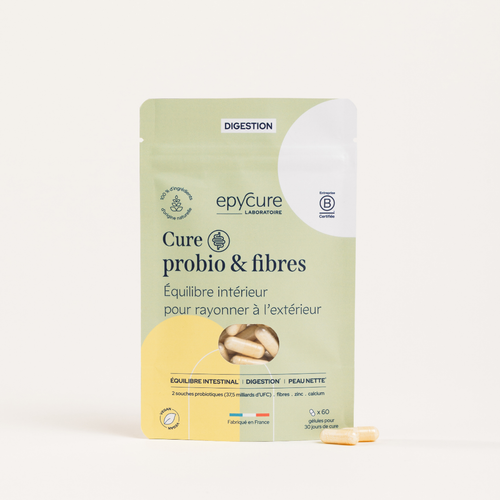
Some people choose supplements combining prebiotics and probiotics, known as synbiotics, to take care of their intestinal flora. There are many different probiotic strains, each acting on a specific issue. To choose the strain that meets your needs, you can ask your doctor for advice.
📚 Read also
✨ Our Epycure solutions